



 14.69°C Kathmandu
Sat, Oct 24, 2026
Columns
When the bell tolls
Delivery will test whether the rabble-rousers can remain relevant amid mounting challenges.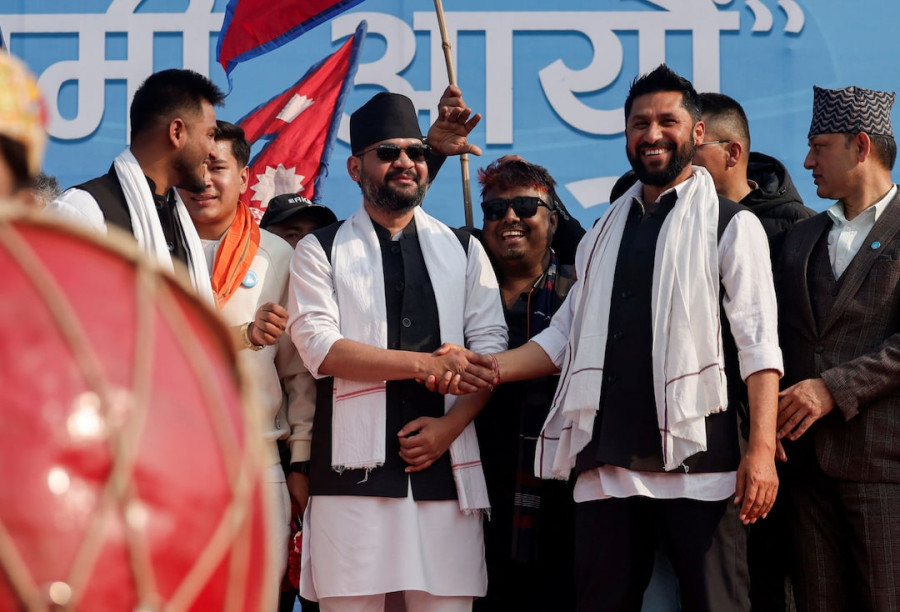
bookmark
CK Lal
Published at : March 11, 2026
Updated at : March 11, 2026 06:49
The deafening toll of the bell in 2026 raises the spectre of numerical arrogance and the twilight of the counterweight that pushed the parliamentary democracy of the country into the long night of three decades in 1959. When the Nepali Congress came to dominate the parliament with a two-thirds majority back then, the entrenched elite of Kathmandu were alarmed. But when King Mahendra staged a royal-military coup, the regression was welcomed by that same elite, and a significant number of Congress lawmakers famously defected to join the regime of the coup-maker.
History, in the lap of the Himalayas, has a habit of folding back upon itself. After the creeping coup of King Gyanendra in 2002 culminated in the royal-military takeover of 2005, some Nepalis were seen lighting lamps to welcome the dusk as the dawn of a new era. The only exception to this pattern of the comfort of the comfortable class was the Maoists’ somewhat weak victory in 2008, which caused genuine apprehension in the haute bourgeoisie. The corporate-style takeover of the Maoists by the CPN (UML) was celebrated as the sunrise of stability, and its inevitable disintegration—upon orders of the court—was welcomed just as enthusiastically.
After the recent electoral wave, however, the emergent elite—a new group rising through the ranks of trading, media, bureaucracy and the ‘new money’ of digital politics—is jubilant. Their new idol is a rapper-technocrat who has seemingly renounced his ethnicity to be subsumed into the dominant majority. Champagne corks have popped in the Sanepa villas, and the party has begun. Let the arrivistes have their fun; they, too will have to face the music once the DJs of populism inevitably take their leave. If the ‘new’ is merely the ‘old’ masquerading in a Bhadgaule topi with crossed khukuris—the national flag draped as a trendy scarf over a pair of noise-cancelling headphones—the elated dancing will inevitably lead to the same uncovered ditches that still pockmark the Kathmandu streets. The monologues may be digital, but the destination remains feudal.
Victorious duo
The founder-chair of the ostensibly ideology-free Rastriya Swatantra Party is Rabi Lamichhane—a media personality who first rose to prominence as a flamboyant champion of the jingoistic ‘Buddha was born in Nepal’ spectacle before reinventing himself as the televised custodian of public grievances. In the era of performative outrage, that transition proved politically profitable. Riding the crest of popular attention, he soon crossed the threshold from studio lights to the corridors of power and briefly occupied the office of deputy prime minister. When the controversy surrounding his dual citizenship surfaced, the American passport was quietly relinquished, and the Nepali identity rediscovered in time for another political innings.
Allegations have lingered that some of Lamichhane’s media ventures had been financed through funds collected from unsuspecting depositors—claims that have yet to find definitive closure in the courts. During the protests of 2025, a band of overzealous supporters reportedly breached the prison gates to escort their leader in what resembled a triumphal procession. Perhaps mindful of the legal consequences of such enthusiasm, Lamichhane soon surrendered to the authorities, though the cases themselves remain unresolved. His political instinct, however, appears undiminished. By informally adopting Balendra Shah as the public face of his party’s insurgent energy, he demonstrated once again a keen sensitivity to the shifting mood of the electorate.
Shah, the former mayor of Kathmandu and a rapper who seemingly stumbled accidentally into politics, had earlier captured public imagination through theatrical defiance of the federal establishment. At the height of his confrontation with the central government, he once warned that he would torch Singha Durbar should the autonomy of the metropolis be curtailed. When unrest later engulfed the capital and flames briefly licked the precincts of the old power centre, the restless crowd searching for a redeemer discovered in him an unlikely symbol of defiance.
Shah declined the immediate lure of the executive office, instead suggesting that the next prime minister be chosen in consultation with the Nepal Army—a proposal that revealed both his distrust of the political class and his instinct for dramatic symbolism. Since then, he has rarely looked back. Under the careful supervision of perceptive publicists, the once rebellious urban icon has undergone a curious political makeover: From a sceptic of federalism to a reluctant convert, and from a hill-centric municipal crusader to a self-styled ‘Madheshi lad’.
In the end, the Lamichhane–Shah tandem may or may not bring the house down. Nepal’s political edifice has weathered many storms before. But their ascent serves as an uncomfortable reminder to the old parties ensconced around Singha Durbar: When institutions lose credibility, the crowd inevitably begins searching for performers who promise a better script. The long-standing triopoly of the Nepali Congress, the CPN (UML), and the former Maoists of the Communist Party of Nepal (Maoist Centre), with the latter swinging between the other two for a share of power, once dominated the political marketplace. Their elaborate game of musical chairs, however, had long ceased to captivate the public, who watched it with growing boredom—and even revulsion. It now lies fractured beyond easy repair.
Parties that once spoke the language of dignity politics have swept off completely from the scene. The rabble-rousers have appropriated the throne. Disruption proved spectacular; delivery will test whether they possess the stamina to remain relevant amid mounting challenges.
Geopolitical poker
While the RSP celebrates its mandate—congratulatory messages from the Indian Prime Minister surely music to their ears—the ground beneath the partially destroyed Singha Durbar remains frighteningly porous. The economy continues to breathe through the lungs of others—specifically, the millions of young Nepalis toiling in the searing heat of West Asia. Nepal remains a ‘Remittance Republic’, its stability hostage to the geopolitical storms of the region. Should the ongoing crisis intensify in that volatile part of the world, the economic tremors would shatter the RSP’s fragile honeymoon. Economic distress is the most fertile soil for the politics of impatience, and a leader who rose on the promise of ‘delivery’ will find that a super-majority cannot print foreign exchange to pay for everything from petroleum products, food and medicine to daily essentials—and even EV cars.
Then there is the Great Game. New Delhi, ever the cautious bookie, likely views this eclipse of the old guard with quiet relief, remembering the cartographic adventurism of the ethnonational chieftain Khadga Prasad Sharma Oli and his longtime political ally, Sher Bahadur Deuba. For Raisina Hill, a ‘technocratic’ government offers the hope of a predictable, less emotive bilateral rhythm, prioritising trade over cartographic corrections or treaty amendments. Beijing, meanwhile, checks its notes in Zhongnanhai with sceptical curiosity. Its decade-long investment in a ‘pro-China’ consensus in Kathmandu, now replaced by a leadership perceived as leaning towards Western institutional models, will not go unmonitored.
But what will ultimately determine the fate of the disrupter-turned-ruler regime of the RSP with a super-majority is its willingness and ability to address the aspirations of the permanent minorities—the Madheshis. The Madhesh-dependent parties may have been electorally wiped out, but as long as their dignity remains denied, the bell may yet toll for those dancing now in ecstasy.
CK Lal
Lal is a writer and political analyst.


Most Read from Columns


Editor's Picks





E-PAPER | October 24, 2026

×