



 14.2°C Kathmandu

Fri, Oct 16, 2026
Columns
To peg or not to peg?
A managed crawl links the Nepali rupee to the Indian rupee but permits adjustments over time.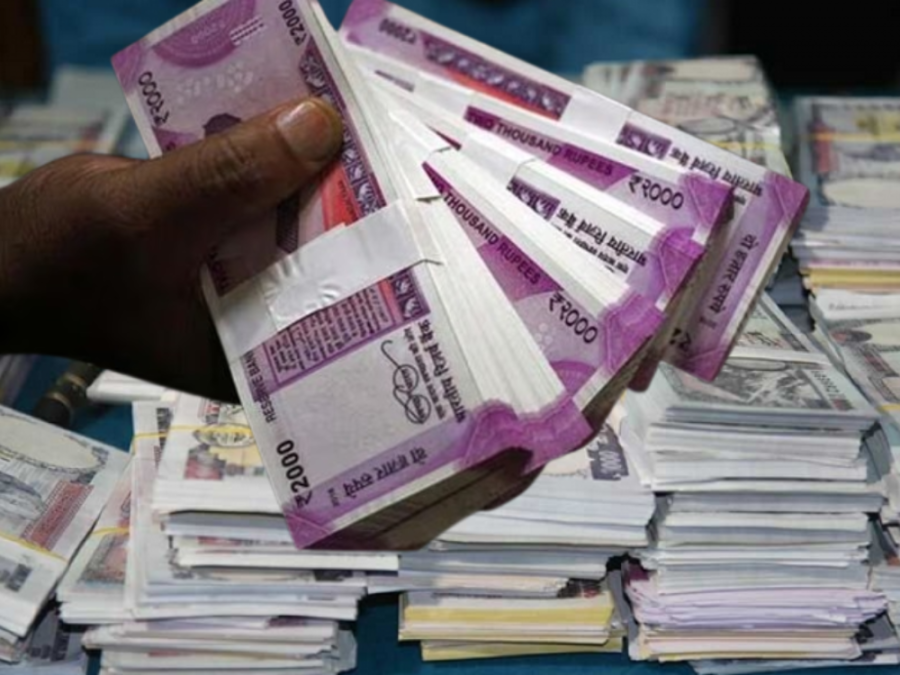
bookmark
Suman Joshi
Published at : March 3, 2026
Updated at : March 3, 2026 07:27
Nepal’s economic story is premised on a script heavily shaped by our neighbourhood. Geography, trade patterns and political history are structural features of the Nepali economy. Perhaps nowhere is this reality more obvious than in the quiet but consequential matter of the Nepal-India currency exchange rate peg.
This peg has been around since the 1960s and has been revised multiple times, usually in response to balance-of-payments stress or exchange-rate misalignments. Over the years, the peg has settled at Rs1.6 per INR1, becoming something of an anchor for traders, bankers and households who instinctively benchmark value in relation to India.
As Nepal grapples with pressure from rising import costs, a stubborn current account deficit and a difficult geopolitical environment, the question of why we haven’t revisited the peg keeps surfacing. Does keeping it actually serve Nepal’s long-term strategic interest, especially when the Nepali rupee floats against other convertible currencies?
The obvious answer is straightforward: The peg has survived because it has been the least risky option for an import-heavy, underdeveloped economy with weak buffers. Yet the deeper answer is more nuanced and central to Nepal’s broader economic evolution.
Enduring logic
Roughly two-thirds of Nepal’s trade either goes directly to India or passes through the country primarily due to logistical reasons. Most of our essential goods, from fuel to food to pharmaceuticals, move through Indian ports, railways and roads. Our largest source of imported goods is India. Our biggest source of informal cross-border trade is, again, India.
Nepal has a massive trade imbalance with a single partner and an extremely narrow foreign exchange market. A peg provides discipline and predictability. It anchors inflation expectations and reduces exchange rate risk in the majority of cross-border transactions.
Floating but anchored
One may argue that Nepal already allows the Nepali rupee to float against other major currencies, so why not fully unshackle ourselves? The argument sounds logical on the face of it, but it misses the core mechanics.
Nepal’s ‘floating’ rates against USD, EUR, GBP and others are not necessarily the product of supply and demand in the domestic forex market. They are derived rates: Banks look at the INR-USD rate and apply Nepal’s fixed NPR-INR peg to calibrate NPR rates against other currencies. There is no real floating market behind these calculations.
This means Nepal effectively runs an anchored exchange rate system. The rupee’s relationship with the Indian currency determines almost everything else. That has been the default and a design choice.
Political debate
Many Nepalis ask whether the peg reinforces geopolitical dependence. It’s a fair question. Currency pegs inevitably tie your monetary policy to the policy of the anchor country. If the anchor country raises rates, you feel it. If it experiences inflation, you import some of it. If it faces a financial shock, your currency trembles. In our case, when India sneezes, Nepal gets the flu.
But the uncomfortable truth is that geopolitical dependence isn’t created by a currency peg, and breaking a peg will not magically produce strategic independence. A country’s economic autonomy is built on diversified trade, fiscal discipline, robust domestic production, strong and credible institutions, etc. More than anything else, currency regimes are tools. And tools should be judged by how well they work, not by what they are perceived to represent.
Windows and perils
There was a context in the 1990s when de-pegging perhaps looked plausible. The 1990 Jana Andolan had cracked open political space. The economy was liberalising rapidly, faster in some respects than in India. The import licence was dismantled, tariffs were being slashed, the financial sector was modernising and expanding, foreign investment rules were easing, and a new generation of private enterprises was emerging. At the same time, India was wrestling with its own BOP crisis. The INR was under stress, foreign reserves precariously low, and the country had to pawn gold to keep the ship afloat.
It was one of those rare windows where it looked like Nepal might leapfrog economically ahead of its neighbours. Against that backdrop, Nepal’s peg began to feel less like stability and more like a lost opportunity.
But these conversations lost momentum as history chose a different script. Nepal’s early reform momentum fizzled. Political instability crept in. Institutions weakened. And as the decade progressed, the first signs of the insurgency began to simmer. The window for bold monetary experimentation closed almost as soon as it appeared.
Fast-forward to 2006. The Maoist insurgency ended, and Nepal entered a hopeful but fragile peace. People were exhausted: emotionally, financially and socially. They had sacrificed too much and gained too little. We needed a confidence boost that could lower prices, make households breathe easier and signal that peace was a turning point for ordinary Nepalis.
A favourable re-pegging, i.e., strengthening the NPR relative to the INR, could have delivered precisely that. Cheaper imports. Lower inflation. A sense that the country was resetting, rebalancing and rewarding its citizens for a decade of suffering. A peace dividend.
However, the macroeconomic fundamentals were too weak. Reserves were shaky. Institutional credibility was questionable. More importantly, the end of the insurgency was followed by a prolonged period of wrangling over a new constitution, which was eventually completed only after the massive earthquake injected a sense of urgency.
Today, Nepal faces a more mundane challenge: an economy stuck in structural rot, a demoralised private sector, weak productivity and institutions that deliver little. Our state machinery is transactional at the top, confused at the bottom, laced with corruption and weak governance all around.
Unhooking the rupee from the Indian currency in the current context would result in economic turbulence. With shallow markets and limited reserves, NPR would experience sharp movements. Even if the fundamentals ultimately favoured stability, the early days would be turbulent. And inflationary pressure could be insurmountable.
Real work lies elsewhere
If Nepal wants real monetary autonomy, structural reforms are required. Strengthening Nepal’s export sector—encompassing hydropower, tourism, food processing, niche manufacturing and computing capacity powered by clean energy—holds significant potential to generate more foreign currency, thereby reducing its dependence on remittances. Modernising the foreign exchange markets by developing robust forwards, swaps and hedging tools is vital. Additionally, establishing direct pipelines to global platforms would enable Nepal to access global markets and enhance its competitiveness.
However, in trying to escape the gravitational pull of geopolitics, Nepal must not forget that relative economic stability is one of its hardest-won assets. The peg, as such, is not the chain holding Nepal back. The chain is its structural weakness. And while a peg may appear old-fashioned, there is nothing wrong with such tools as long as they work.
Managed crawl
But it is certainly not necessary to cling to the peg forever simply because it’s familiar. Nepal should absolutely revisit the peg when needed, but only out of confidence based on economic fundamentals.
When Nepal embarks on that journey of serious structural reforms, we can think of a sensible middle path which could be a rule-based adjustable peg or crawl: A system that keeps the rupee tied to the INR but allows small, transparent adjustments over time. It keeps us anchored but gives us room to breathe. It lets us correct misalignments gradually, rather than through sudden shocks. And it allows the central bank to manage the currency regime more proactively.
Suman Joshi
Joshi is a former banker turned private equity investor.



.PNG&w=200&height=120)

Most Read from Columns

Before you take credit for Khula Manch, read its history
Shah went to the UN to speak for Nepal, then left before he could make the most of it

Bhotekoshi flood wasn’t a freak event. It’s the Himalaya doing what it does

Lesson learned after the death of Ronaldo
Why passive neutrality won’t take Nepal anywhere
Editor's Picks

Constitutional Bench caught in seniority, ‘pick and choose’ dispute

A Dom boy’s long road to becoming a doctor

From blankets to handmade dolls, two foreign women bring comfort to flood survivors

News Analysis: When institutional defence exposes institutional fault lines

It’s a bird … it’s a plane … it’s the Indian ambassador’s farewell tweets
E-PAPER | October 16, 2026

×