



 14.4°C Kathmandu

Fri, Oct 16, 2026
Columns
How public expectations are redefining political legitimacy in Nepal
Following decades of progress, the challenge today is making democratic governance effective.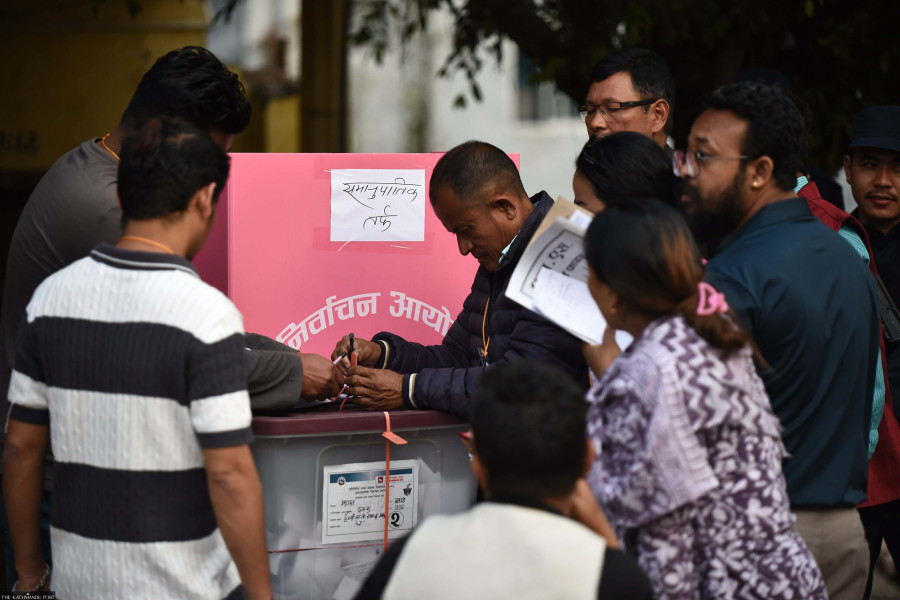
bookmark
Minendra Rijal
Published at : March 11, 2026
Updated at : March 11, 2026 06:47
Nepal’s parliamentary election of 2026 may prove more than a routine electoral cycle. It could mark a pivotal moment when the structure of political competition began to shift noticeably, reflecting deeper changes in how voters evaluate democratic legitimacy. For more than three decades after the restoration of multiparty democracy in 1990, Nepal’s political landscape revolved around a stable constellation of parties rooted in earlier struggles. The Nepali Congress (NC) carried the legacy of democratic constitutionalism forged through resistance to authoritarian rule. The communist movement, particularly the UML, built a disciplined structure centred on social justice and national development. The Maoist movement reshaped the arena through insurgency and republican transition, while Madhesh-based parties articulated demands for representation and federal inclusion. Together, these actors formed the institutional architecture of Nepal’s post-1990 order, structuring electoral competition and governance discourse.
Yet beneath this continuity, systemic strains gradually emerged. Governments changed frequently, coalitions proved fragile, and policy continuity suffered fragmentation. Democratic institutions endured, but governance outcomes appeared incremental rather than transformative. Administrative inefficiencies, corruption controversies and bureaucratic inertia eroded public confidence in effective service delivery. Such tensions are not unique to Nepal; across contemporary democracies, voters increasingly prioritise perceived governance effectiveness over historical party identities.
At the same time, Nepali society underwent a rapid transformation. Urbanisation accelerated, education expanded and labour migration reshaped the economy and expectations. Millions worked abroad; remittances became an economic pillar, while exposure to other systems created benchmarks for domestic institutions. Historical legitimacy retained its importance, but it needed to be matched by competence and tangible outcomes. A younger, globally connected electorate questioned the system’s ability to translate participation into governance that delivers employment, infrastructure and reduced corruption. The emergence of new political actors reflected a broader reassessment of democratic legitimacy.
Changing public expectations
Underlying these electoral shifts is a gradual transformation in public expectations. The electorate that fought to establish and defend multiparty democracy increasingly evaluates political legitimacy not only by commitment to democratic ideals but also by the ability to deliver effective governance. Citizens increasingly demand responsive public administration, transparency and visible progress in economic opportunity and public services. Labour migration has played a significant role in shaping these expectations. Household discussions increasingly compare public services abroad with those available in Nepal, reinforcing the belief that governance outcomes could be improved domestically. Similar dynamics have appeared in other migrant-sending societies, where exposure to different institutional environments reshapes expectations about accountability and governance.
Within this context, new political forces have emerged. Their success reflects a growing willingness among voters to reconsider long-standing partisan loyalties in search of more credible governance. The rise of the RSP illustrates how these evolving expectations can translate into electoral momentum. The party’s leadership combined a message centred on transparency and administrative reform with strong media visibility, enabling it to connect with younger and urban voters. Particularly notable was the psychological resonance of the RSP slogan, roughly translated as ‘Quietly stamp the bell on the ballot’. In Nepal’s paper-based voting system, the slogan guided voters to mark the party’s symbol while conveying a deeper message: Citizens could express dissatisfaction with the political status quo discreetly, without directly confronting entrenched social or partisan expectations. In a political culture shaped by long-standing loyalties, the slogan captured the possibility of a quiet yet decisive electoral shift.
Governance reform and institutional capacity
If changing public expectations have reshaped Nepal’s political environment, the central challenge lies in translating those expectations into effective governance. Electoral competition alone cannot sustain democratic legitimacy unless accompanied by improvements in institutional performance. Nepal continues to face persistent governance challenges, including bureaucratic inefficiencies, delays in public service delivery, corruption and uneven coordination between federal, provincial and local governments. These structural constraints limit the ability of any government to produce consistent policy outcomes. Strengthening institutional capacity is therefore essential. Administrative reform, transparent procurement systems and a professionalised civil service remain necessary components of effective democratic governance. Political leadership must also prioritise long-term institutional strengthening over short-term political advantage.
Democracy at a possible turning point
Taken together, these developments suggest that Nepal’s democratic system may be approaching a critical turning point. After decades devoted to establishing democratic institutions, navigating armed conflict and completing a complex constitutional transition, the central challenge now concerns the effectiveness of democratic governance. Nepal’s political history since 1990 has been marked by notable achievements alongside persistent institutional weaknesses. Democratic institutions have proven resilient despite crises, and the country has successfully transitioned from a monarchy to a federal democratic republic. Yet translating these institutional achievements into stable and effective governance remains uneven. The growing willingness of voters to reconsider traditional party loyalties reflects a broader search for performance-oriented politics. Electoral shifts that elevate new political actors therefore represent more than isolated developments; they signal a deeper transformation within Nepal’s democratic landscape. Political change can also create opportunities for institutional renewal as new actors and electoral realignments introduce fresh incentives for accountability and reform.
Nepal may thus be entering a phase that could be described as ‘democracy after arrival’. The foundational structures of democratic governance are firmly established. The defining challenge lies not in constructing democratic institutions but in ensuring that they function effectively and deliver meaningful outcomes for citizens. If political actors succeed in meeting these expectations, the election of 2026 may ultimately be remembered not as a moment of volatility but as the beginning of a new stage in Nepal’s democratic development—one in which political legitimacy rests increasingly on performance, accountability and the capacity to govern.
Minendra Rijal
Rijal is a Nepali Congress leader and former minister.



.PNG&w=200&height=120)

Most Read from Columns

Before you take credit for Khula Manch, read its history
Shah went to the UN to speak for Nepal, then left before he could make the most of it

Bhotekoshi flood wasn’t a freak event. It’s the Himalaya doing what it does

Lesson learned after the death of Ronaldo
Why passive neutrality won’t take Nepal anywhere
Editor's Picks

Constitutional Bench caught in seniority, ‘pick and choose’ dispute

A Dom boy’s long road to becoming a doctor

From blankets to handmade dolls, two foreign women bring comfort to flood survivors

News Analysis: When institutional defence exposes institutional fault lines

It’s a bird … it’s a plane … it’s the Indian ambassador’s farewell tweets
E-PAPER | October 16, 2026

×