



 14.69°C Kathmandu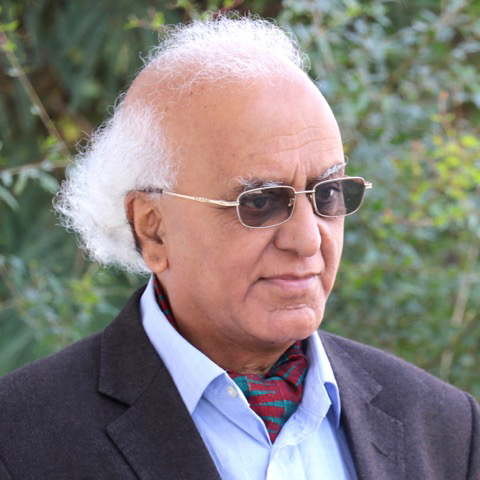

Sat, Oct 24, 2026
Columns
Generational waves within parties
Youth across different parties are trying to bring about positive change.
bookmark
Abhi Subedi
Published at : January 18, 2026
Updated at : January 18, 2026 07:24
The second special general convention of the Nepali Congress has raised some pragmatic, theoretical and popular questions all at once. At first, I took it as a regular political exercise by a major political party in this country. The principal attributes of the old parties are their established conventions and, importantly, the ageing of their leaders. In such discourse, the subject is “lust for power”, in the words of the British philosopher Bertrand Russell, that grips the minds of the octogenarians and septuagenarians—leaders aged 70 to 79. Their control over political parties is currently a widely touted subject. Propelled by this phenomenon, I read many texts about this subject. I was surprised to see how the millennial generation, those who approached adulthood in the early years of the 21st century, and Gen Z have become a force in democratic countries with regular elections.
The events took a dramatic turn as the Congress Central Committee decided to suspend General Secretaries Gagan Kumar Thapa and Bishwa Prakash Sharma from the party for five years. Their felony was calling the special general convention to which the establishment faction had not given consent. The defiant Thapa, Sharma and other rebel leaders called it an unwarranted action and proceeded with the election of the president and the working committee. Amid a huge cheering crowd, the majority of Congress delegates elected a large working committee, with Thapa and Sharma as president and vice-president, respectively.
We are talking about the consciousness that challenges the ossified or entrenched system of leadership that appears to have wrought some miracles at different times. This challenge from the younger generation has come with a force, I would say, like a gale, in a matter of weeks. It is discernible in the formation of political alliances and in calls for the renewal of the political leadership within old parties, such as the Nepali Congress, initiated mainly by the then General Secretaries, Gagan Thapa and Bishwa Prakash Sharma.
The new generation is bent on changing leadership patterns and establishing a system in the party. They hope to do away with certain deeply rooted modes of behaviour of party leadership that have made obscurantism their forte. I am inundated with good essays and books about the rise of young generations and their claim to leadership worldwide. The NC’s special general convention has a history to refer to. The first special general convention was organised by the party under the leadership of Subarna Shumsher Rana in 2014 BS. This convention famously gave the party’s leadership to BP Koirala.
In general, I am only academically interested in the modus operandi of any political party. But the second general convention of the NC has caught my attention for a number of reasons. What I appreciate is the language decency exercised by those performing the second special general convention. What disheartens or even nauseates me is the indecency of the language used by some political leaders and parties. I appreciate Sher Bahadur Deuba for maintaining decency; I have never heard him use indecent language in his speeches. I have always looked at him with positive thoughts. I recall one incident here. The second people’s movement was going on in Nepal in 1990. The British Council Director at the time, Peter Moss, whom I knew very well, once asked me if I knew a person named Sher Bahadur Deuba who wanted to extend his studies in Britain for some more months. What I said to him strikes me today. I said he is a freedom fighter and a young-generation politician who holds promise. Then he made me sign a recommendation letter for an academic position he had prepared. Deuba completed his studies. I don't know if that paper worked. I had accolades for all the freedom fighters, whether they were Congress, Communist or others.
Now I recall this incident and look at the NC imbroglio, with the NC president, Deuba, at the centre. The debate is about age here. Deuba is no longer a young man. He is like me, who is hitting eighty. Now, if I were to write about the glorification of age and spirit, I would do so for the likes of Gagan and Bishwa Prakash Sharma, not for Deuba or any other old leader. The moral of my story is that younger people should lead the NC now. But important leaders who have done so much for the democratic parties and movements should be given due respect, and their exits should be marked with honour and gratitude. I do not pretend to say more because it is the subject of the concerned parties.
I would also like to allude to BP Koirala’s work and courage here. As the motif of my narrative is the debate over generational metamorphosis within the Nepali Congress, I would like to mention the youthful spirit of BP Koirala, who always admired the courage of the younger generation. I would like to take a few lines from a long introduction that I wrote for a book of BP Koirala’s Diary (1951-1956) that I edited for the B.P. Koirala Memorial Trust and titled B.P. Koirala's Diary: Story of Courage and Freedom (2020). I have written, “B.P. Koirala was an active and visionary youth when these diary entries were written.” The diaries “cover B.P.’s political mode of operation characterised by his direct contact with the people, addressing them, energising them, and in some cases, inspiring the poor peasants to revolt against the landlords.” I see no point in his party shying away from the spirit of the ‘visionary youth’.
As an academic and literary person, and mainly a non-partisan, I would like to offer some observations on the politics in Nepal today. All these changes and evocations of the spirit of youth are the result of the Gen Z movement of 2025. It was a gale that ushered in a new times-savvy consciousness in Nepal. The generational consciousness is at once global and local nowadays; it affects the modes of action. Mainly, it brings metamorphoses in our pattern of thinking and doing. What the youths are attempting to do in different political organisations is to bring about positive change. But that demands honesty, courage and decent use of language. The ultimate goal is to establish a democratic political system run by responsible and visionary people who hail from the younger generation and create a culture of loktantrik action and thinking that alone can guarantee the prospects of a bright future. We should sincerely feel we have no time to waste.
Abhi Subedi
Abhi Subedi is a poet, playwright and a columnist.





Most Read from Columns



Editor's Picks





E-PAPER | October 24, 2026

×