



 14.69°C Kathmandu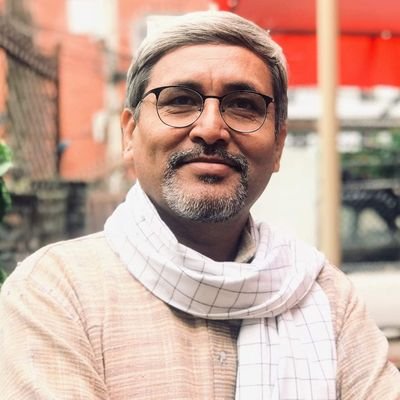
Sat, Oct 24, 2026
Columns
Old questions in new times
Both exaggerated hope in new parties and blind faith in old ones are harmful to the public conscience.
bookmark
Chandrakishore
Published at : January 13, 2026
Updated at : January 13, 2026 06:53
Nepal’s contemporary politics stand at an interesting yet sensitive turning point. On one side are the old political parties that carry pride in historical struggles, movements and sacrifices. On the other side are the new parties that have risen with slogans of “alternative politics”, “new thinking” and “cleansing the system”. Outwardly, this appears as a competition between parties, but at its very centre stand the citizens. The question is not whether the new parties are right or the old ones wrong.
The real question is: What role is the citizen playing in this competition—as a spectator, as a voter, or as a conscious guardian of democracy? The party competition in Nepal is not merely a conflict between new and old parties; it is a test of the quality of democracy, public conscience and the level of civic awareness. If citizens remain mere voters, the competition remains superficial. But if citizens become critical agents, the competition turns into a means of democratic reform.
The old parties are an inseparable part of Nepal’s democratic journey. Several movements became possible under their leadership, but history alone is not enough. Over time, parties that should have demonstrated institutional maturity have begun to appear weak in internal democracy, policy integrity and ethical leadership. Factionalism, opportunism, power-centred politics, and indifference towards citizens’ concerns have pushed them into crisis. This very crisis has sparked deep disappointment among citizens. When disappointed citizens begin searching for alternatives, the emergence of new parties becomes natural. In that sense, new parties are not some sudden miracles; they are the direct outcome of the failures of the old parties.
New parties are born from citizens’ anger, frustration and desire for change. They say, “We are different,” and “All the old ones are bad.” At first, this voice feels fresh because it carries the energy of rebellion. But politics cannot run on opposition alone. It requires vision, policy, organisation and patience. For new parties, the main challenge is how to transform passion into institutional wisdom. Sometimes they simplify complex realities for the sake of easy popularity. While criticising the old parties, they often fail to present their own clear ideology and long-term roadmap. In such a situation, the role of citizens becomes even more crucial, not to become blind devotees, but to become critical supporters.
The rise of new parties is not an ideological miracle; rather, it is the result of the institutional rigidity of old parties, the erosion of their internal democracy and their weak practice of public accountability. Therefore, automatically considering new parties as the solution and old ones as the problem is intellectual oversimplification. Nepal’s political discourse has increasingly shifted from policy-based competition towards claims of moral superiority, i.e., ‘who is pure, who is impure’. This does not enrich democratic debate; it pushes toward polarisation.
Citizens in Nepal are not completely indifferent to politics. Both exaggerated hope towards new parties and blind faith towards old ones are harmful to the public conscience. The quality of democracy depends on the sharpness of citizens’ watchfulness. Elections are the beginning of democracy, not the end. When citizen oversight weakens, old parties become inactive, and new parties become arrogant. Without continuous practice of accountability, competition will be limited to mere power transfer.
The new-old debate is fundamentally an institutional question, not a generational one. This conflict is not about youth versus the elderly, nor new thinking versus old thinking; it is about institution versus individual. Neither type of party will be truly democratic until they commit to institutional rules, transparency and internal democracy. Democracy decays more from silent despair than from rebellion. The pessimism that says ‘they are all the same’ ultimately becomes the fertiliser for undemocratic practices.
Political parties are a means, not the end.
The ultimate guarantee of democracy is neither the constitution nor the parties; it is the conscious, critical, and value-centred citizen. The power to steer the competition between new and old parties towards reform lies precisely here. In Nepal’s political discourse, citizens are often reduced to mere ‘voters’. Election comes, vote is cast, job done. This mindset represents only the minimum definition of democracy. In reality, the citizen is the continuous sentinel of democracy.
The role citizens can play in the competition between new and old parties can be understood at three levels. First, discerning choice. Citizens must choose not parties, but values. Not excusing incompetence in the name of history and not blindly supporting immaturity in the name of novelty, this is discernment. It is the citizen’s responsibility to evaluate not what a party says, but what it has done and what it can do. Second, continuous oversight. The most dangerous situation for democracy is when citizens fall silent after the election. As soon as they win, parties start becoming accountable to power rather than to citizens. Citizens must keep asking questions through the media, on the streets, on social media, and in public debate. No party, new or old, can stand above citizens’ criticism.
Third, in a democracy, the greatest power of citizens is the power to reward and punish. Support parties that do good work and reject those that do bad. But in Nepal, the problem is that citizens often become emotional. Once they give support, they tie a blindfold over their eyes. This tendency has made old parties inactive and can make new parties arrogant.
When the new-old competition moves from healthy debate towards polarisation, citizens’ conscience weakens. The politics of ‘us’ versus ‘them’ begins. Supporters of old parties always consider new ones impractical; supporters of new parties always consider old ones corrupt. Such extreme thinking is fatal for democracy. Citizens must understand that democracy is the management of alternatives, not the search for enemies. Both new and old parties are actors for reform within the democratic structure. Citizens must push towards reform, not turn one into a god and the other into a demon.
If citizens become passive out of despair, old parties will become even more rigid, and new parties too will be infected by the same old diseases. The new generation asks questions because, for the first time, they are directly experiencing not the past, but the failures of the present. The story they are told is–‘We struggled a lot to build this system’. But the reality they see is that the system exists, but opportunities do not; democracy exists, but trust does not; the constitution exists, but justice feels far away. The questions of the new generation are turned into their crime. Yet the generation that does not ask questions is the most dangerous for society. History bears witness: Where questions were suppressed, there was an explosion, and where questions were turned into dialogue, there came reform.
A citizen limited to the ballot box is the weak link of democracy, but a conscious, critical and active citizen is the very soul of democracy. This understanding must guide the competition between new and old parties; there will be competition, but no change. Democratic restructuring in Nepal is possible not by new parties winning, but by strengthening the citizen conscience. When citizens stop asking questions, democracy weakens; when citizens remain critically engaged, both new and old parties are compelled to improve.
We chose multiparty democracy, so no single party can be good enough on its own. Making party politics good is the expectation of citizens. In the past, the necessary intensity of questioning was not applied. In these new times, old questions have to be raised again.
Chandrakishore
The author is a veteran journalist.



Most Read from Columns


Editor's Picks





E-PAPER | October 24, 2026

×