On December 23, 2025, I was in Biratnagar as a resource person for an interaction programme organised for members of the Koshi Province Assembly on the theme ‘Effectiveness of the Provincial Assembly and Intergovernmental Relations.’ The programme centred on a question that increasingly defines Nepal’s federal journey: How can provincial institutions, still relatively young, strengthen legislative performance, enhance the effectiveness of provincial assemblies, improve accountability, ensure better service delivery and foster constructive relations with federal and local levels?
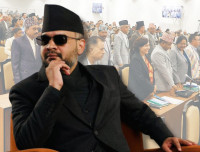
On the sidelines of the programme, I met Hikmat Kumar Karki, Chief Minister of Koshi Province. He reflected on an initiative that, as he noted, had been in his mind since 2018, when he served as the province’s minister for Internal Affairs and Law, but which had only recently materialised. He observed that even modest initiatives often take years to implement within a new federal system. The initiative he referred to was the Chief Minister’s Emergency Service Centre (CMESC), a practical service mechanism designed to operate essential emergency services in an integrated manner through close coordination between the provincial and local governments.
As he explained, the CMESC is intended to ensure effective disaster management, maintain peace and security, provide emergency health and rescue services and guarantee the continuity of essential services during times of crisis. In a country like Nepal, which is prone to floods, landslides, fires, earthquakes and health emergencies, such services are not optional; they are foundational to public trust in government.
To operationalise this idea, the Koshi Province Government issued the Operation and Management Procedure, 2079. The Procedure clearly articulates a core objective: Strengthening intergovernmental coordination by enabling the province, in partnership with two or more local governments, to operate disaster-response services in an integrated and efficient manner. It also seeks to simplify rescue and relief operations through unified management, with service centres operating 24 hours a day.
Under the Procedure, two or more local governments may jointly agree to establish a service centre by committing to cost-sharing arrangements and providing the necessary land. Upon receiving such a request, the provincial government provides technical and financial support. Decisions are guided by practical criteria, population size, risk exposure, resource availability and service demand, rather than political symbolism.
A formal Memorandum of Understanding is signed between the province and participating local governments, including a clear cost-sharing framework. Excluding land costs, the provincial government covers 50 percent of the total cost, while the remaining share is borne by the participating local governments.
The Procedure also specifies minimum infrastructure and equipment requirements: fire engines, support vehicles, an administrative building, a water reservoir for firefighting, disaster-response materials and other essential equipment. Importantly, equipment already owned by local governments must be mobilised through the service centre.
Initially, the programme was launched in FY 2020-21 to establish it in one local government in each of the province’s 14 districts, and financial and logistical support was provided to 11 local governments. However, the approach was later revised, and the operating procedure was amended to implement the initiative under an integrated model.
Institutionally, the model balances local ownership with provincial coordination. The Procedure provides for a director and a monitoring committee chaired by the provincial minister for internal affairs. At the local level, each service centre is managed by an operations and management committee chaired by the mayor or chair of the host local government, with participation from the elected heads of other participating local governments.
The chief minister also indicated that while the initiative currently operates under a procedural framework, there is a clear intention to further formalise it through a dedicated provincial Act.
At present, CMESC operates at three locations in Koshi Province: Rangeli Municipality in Morang District, serving four local governments; Arjundhara Municipality in Jhapa District, serving four local governments; and Aathrai Rural Municipality in Terhathum District, serving two local governments.
Expansion to additional local governments is planned based on demand and feasibility. According to information shared by him, and at his request, the Swiss Agency for Development and Cooperation, through the Provincial Support Programme, will contribute 20 percent of the total cost of the CMESC, with 50 percent financed by the provincial government and the remaining 30 percent jointly borne by participating local governments.
Such a cost-sharing arrangement significantly benefits local governments by reducing their individual financial burden. He also observed that implementing such a programme through shared financing among development partners, the provincial government and local governments is likely a new experience for Nepal. Essential services such as solid waste management, public transport operations, drinking water supply and hospital management should similarly be implemented through cooperation among multiple local governments.
Why integration matters
The Constitution assigns local governments responsibilities ranging from basic health services to disaster management. In practice, local governments respond to floods, fires, landslides and accidents; transport patients to hospitals; and increasingly rely on ambulances, fire engines and even heavy equipment such as dozers. Yet when these responsibilities are pursued in isolation, financial and institutional capacities are quickly overstretched.
This is where the integrated model becomes critical. Cooperation among multiple local governments, supported by the province, offers a more sustainable and effective solution. Cost-sharing improves service coverage, avoids duplication and strengthens intergovernmental relations. In this sense, the CMESC is not merely a service delivery initiative. It demonstrates the province’s functional relevance within the federal system.
Moreover, no local government, particularly smaller or resource-constrained ones, can realistically implement all constitutionally assigned functions alone. Cooperation, partnerships and coordination are necessities.
Earlier, while serving at the former Ministry of Local Development, I was assigned to observe fiscal decentralisation challenges and observed that districts such as Parsa, Bara, Rautahat and Kapilvastu fell into financial distress due to excessive spending on heavy equipment. Separately, Birgunj Metropolitan City has faced overstaffing pressures in sanitation services, reinforcing the need for corrective models like the CMESC.
Rangeli Municipality Mayor Dilip Kumar Agrawal captured the essence of the model. For a single local government, he said, maintaining fire engines and similar emergency equipment is financially burdensome and unsustainable. Integrated models are the only realistic way forward. Even without external support, providing emergency services remains a local responsibility; provincial partnership simply makes that responsibility achievable.
The CMESC is more than a sectoral innovation. It is a working model of cooperative federalism, where the province plays a catalytic role by providing vision, coordination and capital investment, while local governments collaborate, share costs and deliver services closer to citizens.
In the policy and programme for the current FY, a provision has been included to rename the CMESC as the Koshi Emergency Service Centre, and this change has been explicitly mentioned in the budget speech. According to officials of the Ministry of Internal Affairs, steps have also been initiated to replace the existing procedure with an Act to provide a stronger legal framework.
Nepal’s federalism succeeds not through slogans but through practice. Koshi Province’s Emergency Service Centre demonstrates how cooperative federalism works when provinces act as catalysts, providing coordination, investment and an enabling framework that allows local governments to collaborate, share costs, and deliver tangible public services through trust and partnership.




 20.85°C Kathmandu