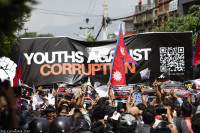
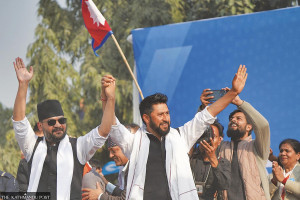
The recent Gen Z protest in Nepal is the result of a deep frustration with corruption, economic inequality and a lack of transparency. What distinguished it from other protests was the participation of youths seeking to reshape a stagnant political culture. A movement that seemed to have rediscovered Nepal’s democracy and conscience through the voices of the young was subsequently infiltrated by those opposed to democracy with their own agendas. This shift not only obscured the protest’s initial goals but also raised significant concerns about its long-term implications for democratic stability.
The rapid formation of different Gen Z forums and alliances during this period of unrest, with some singularly focused on establishing a directly elected executive, has questioned the true nature of their movement, particularly because this issue was never part of the grievances that ignited their protest.
Establishing an accountable government after the upcoming March elections, the primary mandate of the current interim government, stands obscured by growing demand for a directly elected executive. This proposal, presented by some Gen Z alliances, entails a significant dismantling of Nepal’s parliamentary system and risks becoming a barrier to the electoral process.
Of greatest concern is the potential impact on citizen participation. While often presented as an effort to enhance democratic choice, it may, in practice, restrict meaningful public engagement by centralising authority and marginalising parliamentary deliberation. In this regard, the proposal for a directly elected executive extends beyond a mere policy disagreement, posing a broader threat to participatory democracy, accountability and the constitutional framework. What started as a civic awakening, led by citizens, especially young people—seeking accountability and change—has now turned into a heated debate about the constitution. The main question is: Is the rising demand for change a true push for democratic reform or an attack on the principles that protect democracy?
The confusion primarily lies in the proposal to directly elect an executive, which promises cleaner governance, supposedly in line with Gen Z, and carries profound constitutional implications. A parliamentary system is a democratic practice that balances power and promotes inclusiveness in the nation. Replacing it with a centralised executive authority undermines the constitution.
As rebellious Gen Z-ers, it is difficult to believe that change is possible only by being regressive and burning down public assets or by disregarding national institutions. However, it is unlikely to establish or strengthen democracy by bypassing the constitution in pursuit of political stability. The need for a strongman system is real. But so are its implications. We cannot ignore the fact that Nepal, under a directly elected executive, might descend towards a centralised state like North Korea. The repercussions of an elected executive with sweeping power turning out to be intolerant, divisive or authoritarian are immense. Five years under a regime that deceives the public with charisma and false promises is unimaginable.
Unlike in a parliamentary system, where lawmakers can change the head of the executive as and when required through internal mechanisms that abide by the constitution, a directly elected executive leaves no democratic escape path until the next election. There are instances where the executive head, former prime minister KP Sharma Oli, although subordinated by the parliament, turned out to be an arrogant and deceitful leader, which alarmed the people regarding the centralised system.
Past governments were indeed corrupt, some prime ministers relatively ineffective, and at times, political parties have also failed in their democratic responsibilities. But the strength of the parliamentary system lies in its flexibility. Though citizens cannot directly change a prime minister, they can put pressure on their elected representatives. They can mobilise opinion and demand accountability. In a centralised system, these channels of influence diminish drastically.
In a democracy like Nepal, the challenge lies not in the parliamentary system itself, but in the individuals who operate within it. Democratic practices cannot thrive without accountable political parties. However, reform demands a commitment to the nation’s conscience and people’s will. Parties must modernise by prioritising transparency, integrity and public service over self-interest. Without ethical leadership and genuine internal reform, even the strongest institutions cannot ensure effective governance or restore public trust.
However, proposals for systemic change often emerge as a readily available solution to public frustration, potentially diverting attention from the more profound and challenging endeavour of political reform. Replacing parliamentary governance with a directly elected executive might obscure institutional decline rather than resolve it. In the absence of ethical leadership, internal democracy and adherence to constitutional boundaries, any alternative system is prone to reiterating the same shortcomings within a different framework. Consolidating executive authority might create the impression of resolute governance, yet it simultaneously diminishes accountability and constrains opportunities for disagreement, deliberation and remedial measures.
The desire for political transformation has become both urgent and unavoidable. The aspirations of Gen Z are genuine, timely and reflective of deep frustrations with corruption, inequality and ineffective governance. However, these aspirations must be anchored in a sound constitutional understanding rather than driven by reactionary solutions. The debate, therefore, is not about whether Nepal needs change; change is undeniably necessary, but rather about the form it should take and the long-term costs it may impose on democratic institutions, political stability, and constitutional values.
The effective and optimal utilisation of Nepal’s parliamentary system stands as the most promising pathway for advancing the country’s democratic development. Rather than casting aside this system because of the failures of certain individuals who have held leadership roles, our efforts should be redirected towards fortifying its institutions. This involves enhancing legislative accountability and ensuring robust mechanisms for checks and balances. Abandoning the framework of the parliamentary system in favour of a potentially authoritarian regime poses significant dangers. Such a shift could lead to a dangerous concentration of power, a deterioration of oversight, and the marginalisation of the diverse voices that represent the nation.
As Nepal navigates its journey toward progress and reform, it is imperative to remain vigilant in protecting the constitutional foundations of its democracy. These foundations must not only remain intact but also be resilient and authentically reflective of the will and diverse perspectives of the Nepali people. In doing so, we can ensure that democracy thrives and evolves in ways that benefit all citizens, rather than succumbing to the pitfalls of authoritarianism or ineffective governance.




 19.73°C Kathmandu