



 14.81°C Kathmandu

Sat, Oct 24, 2026
Columns
Securing Gen Z’s legacy
Gen Z’s protest earned them the right to be seen and heard, not the right to rule or govern.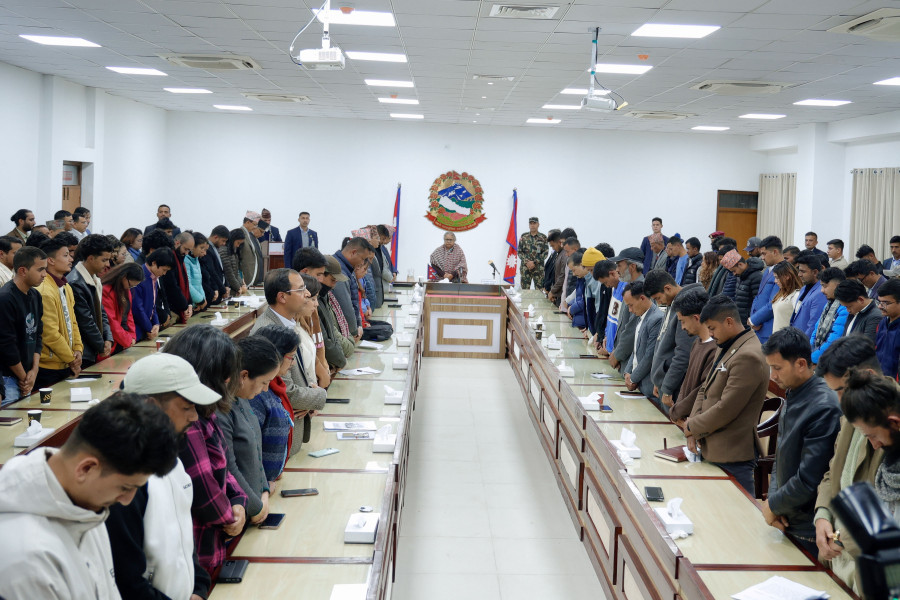
bookmark
Bishal Thapa
Published at : December 18, 2025
Updated at : December 19, 2025 05:24
When Gen Z leaders packed into the conference room with the prime minister and ministers to sign the 10-point agreement earlier this month, the distinction between some of this new breed of Gen Z leaders and the old band of discredited politicians was hard to see. Gen Z leaders exulted, bickered, gave speeches, screamed, yelled, indulged in histrionics like tearing up the agreement and engaged in all sorts of formality, much like their older discredited counterparts would have done.
The 10-point agreement formally classifies the September protests as Jana Andolan (People’s Movement), making it the third People’s Movement in Nepal’s history since 1990. This would also mean that a total of 29 points have been agreed between the government and protestors in the last 20 years (12 points in 2005 + 7 points in 2007 + 10 points now).
The number three—as in the 3rd People’s Movement—is itself a tricky number whose significance depends on how you look at it. If, for example, you believe in the superstition related to sports, like baseball, three can be an ominous number—three strikes and you are out. In Vedic numerology, which is likely closer to our spiritual state of mind, the number three represents divine wisdom, truth and optimism.
The quandary over the number three begs the question: Will Gen Z leaders emerge as a different breed, or will they be more of the same power-hungry, self-obsessed, egotistical, corrupt, often pot-bellied politicians that they were seeking to discredit and remove?
That answer, however, may have less to do with divine numerology. Rather, it will depend entirely on how Gen Z leaders interpret the scope and meaning of their protests, and how they utilise the transformative potential that it unlocked.
Scope and meaning
It is disheartening to see many Gen Z leaders politicise the movement. They have been using its success to justify a call for radical changes to the constitution, such as a directly elected executive, the return of monarchy, and the end of federalism and secularism.
The September Gen Z movement was a spontaneous outpouring, an unprecedented public outburst that represented the accumulated disappointment, disenchantment and frustrations that many people—not just Gen Z—had with the political class, establishment and privileged rich elites. It was not a political movement in support of any ideology, or for that matter, for any specific policy. The movement had no leader, let alone an ideology.
Many of the constitutional changes being discussed, such as a presidential-style executive system, monarchy, or reversing federalism, perhaps do warrant honest debate and discourse on whether they could be better alternatives to the current system. Securing these alternative forms of government or other political ideologies, however, was not the objective of the protests.
Using the success of the movement to push changes to the constitution or other political ideologies would be a betrayal of the Gen Z protests. It would betray the many heroes who died during the protests.
By inserting demands for constitutional changes, Gen Z leaders risk allowing fringe elements to hijack their movement’s success. Already some radical fringe elements, like Durga Prasai, have been rehabilitated in the mainstream and are commandeering a bigger share of the discourse because they are championing such constitutional or ideological changes.
Did the young Gen -Zers sacrifice their lives in the protests to support fringe elements to achieve their political interests? If not, Gen Z leaders must do a better job of honouring their martyrs by remaining true to the objectives of the movement. They cannot become like our old discredited political leadership, who upon gaining power forget what they were fighting for and those that sacrificed to bring them to power.
Many Gen Z leaders have transitioned into political roles. They have joined or started political parties representing a wide range of ideologies and policies. Many of them will no doubt go on to be inspirational revolutionary leaders, or so they hope. But the movement wasn’t about providing Gen Z leaders a pathway to power. The power of the Gen Z protests was civil activism—a force that can get governments to correct course.
I hope many Gen Z activists will continue to remain as ordinary civil society leaders, as conscious everyday leaders without political authority but ready to help keep the government in check. I hope they will explore and pursue ways to institutionalise and strengthen civil society participation.
Justice
The Gen Z movement comprised violent protests. The 10-point agreement with the government classifies it as People’s Movement, providing it a form of legitimacy and immunity for the violence. But that immunity offered by the agreement cannot be a blanket for all levels of violence. There must be greater effort to demand investigation into the protests and prosecute criminal acts.
Gen Z leaders have been correct in demanding investigations into the actions of the KP Oli government of the time, particularly around its handling of the protests. The government owes an explanation on why protestors were killed, and those responsible must be held accountable to justice.
Gen Z leaders must be equally honest in demanding a fair investigation into the protests. They cannot be hypocritical like the old, discredited politicians, who applied a set of rules for everyone else and, very conveniently, none for themselves. Gen Z leaders must demonstrate a higher level of moral and personal integrity. Protests and criminality can be separated. Criminality should be prosecuted.
International media are increasingly reporting that the protests were planned with intent of criminality. Such assertions undermine the legitimacy and acceptability of the Gen Z protests. Fair, honest and complete investigations are the only way to protect the purity of the movement’s intent and the memory of the martyrs.
There are many approaches and models for conducting these investigations. Without proper equipment and training, Nepal’s investigations are already falling short. These investigations must be supplemented and enhanced.
Reconciliation
The wounds of the violent Gen Z protests are not just borne by the buildings that were razed to the ground or by those that were beaten, terrorised (digitally or physically) or killed. These wounds run deeper, forming a lasting imprint in our social psyche that will shape how we think, act and are motivated for a long time into the future.
There is much to learn from the peace process following the Maoist movement. The Truth and Reconciliation Commission offered a model for investigating war crimes, human rights abuses and criminal behaviour. But that concept and model remained only an idea and was never fully implemented.
Two decades later the buildings that burned and the violence that ensued in Gen Z were a direct consequence of the lingering failure of the peace process following the Maoist movement. We cannot risk leaving those wounds of the Gen Z movement to fester. Gen Z leaders must heal those wounds.
Bishal Thapa
Thapa is an energy sector professional.





Most Read from Columns




Editor's Picks





E-PAPER | October 24, 2026

×