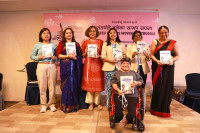
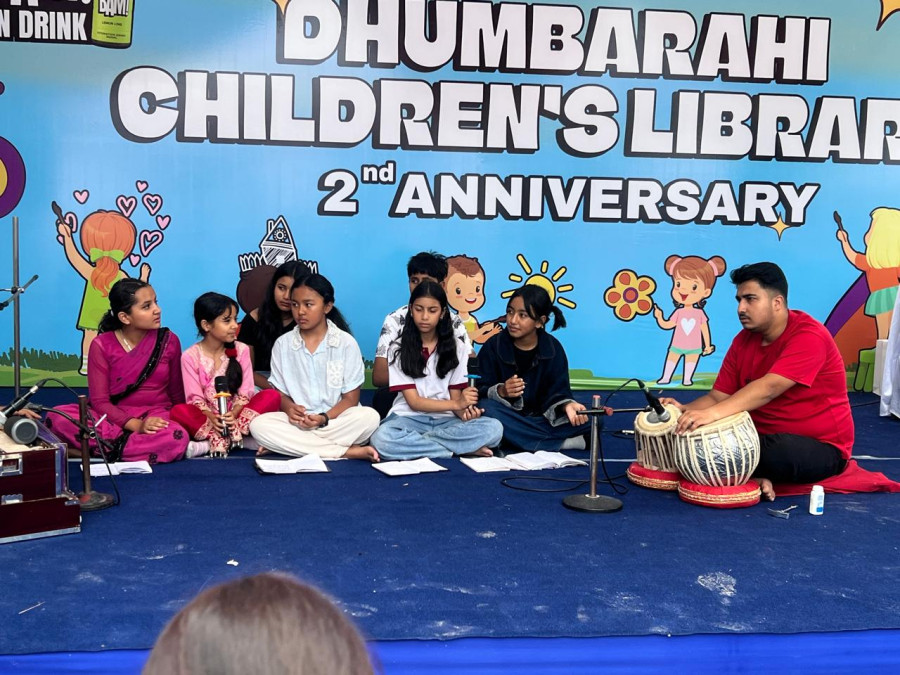
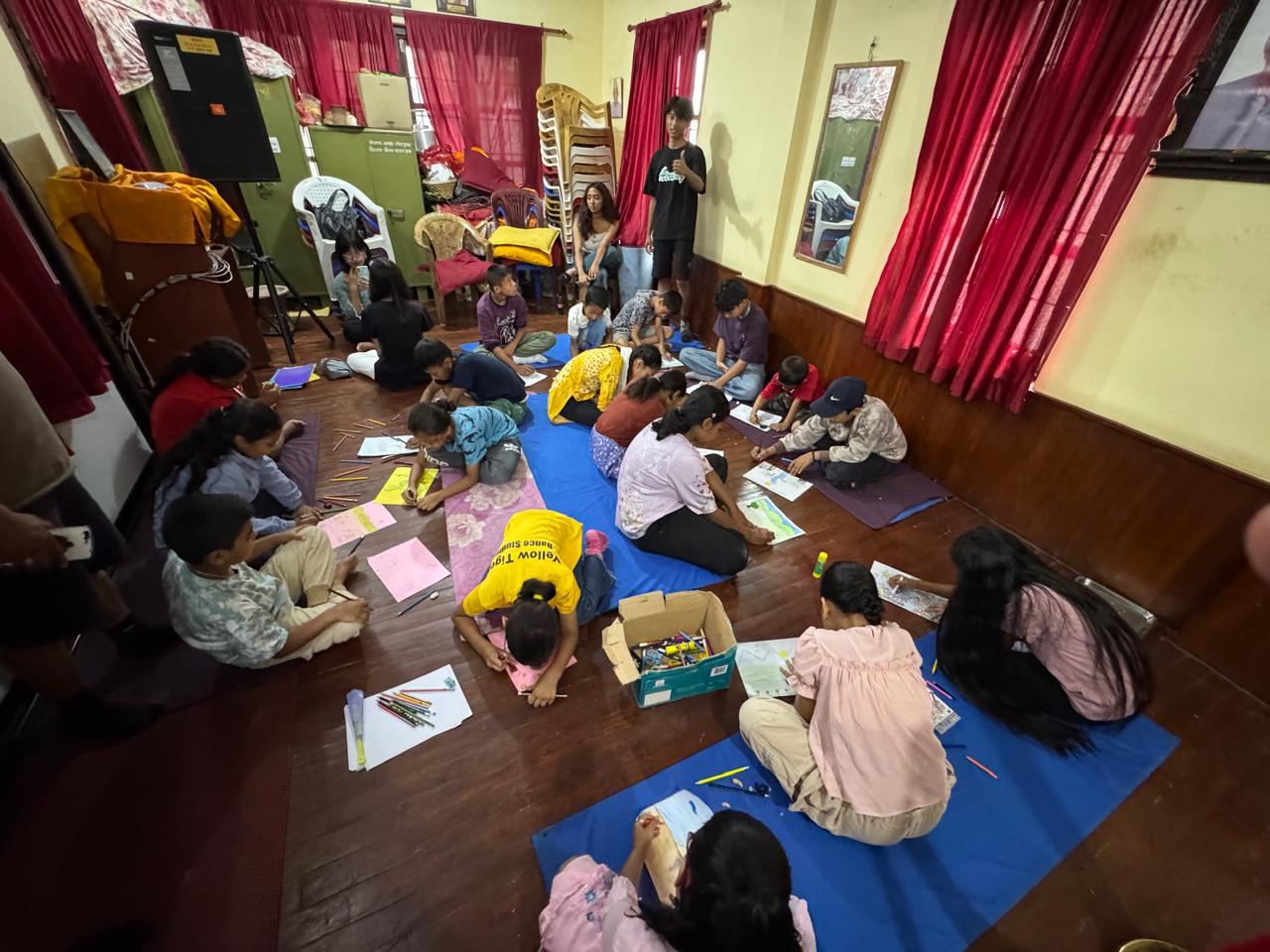
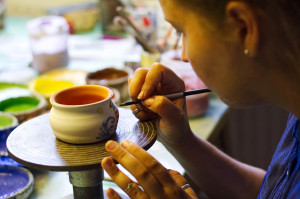
The Dhumbarahi Children’s Library marked its second anniversary with activities organised largely by young volunteers, celebrating a community built around reading and sharing. Photos: Courtesy of Abhigya Kumar Shrestha
On Saturday, the second anniversary of the Dhumbarahi Children’s Library brought together young readers, artists, dancers, debaters and volunteers for a celebration that reflected the very principle on which the library was founded: children creating opportunities for other children.
The day included competitions, performances, games and creative stalls. Yet the significance of the celebration lay not simply in the number of activities it offered. Its most distinctive feature was the role children themselves occupied throughout the event. They appeared as organisers, volunteers, performers, artists and community builders.
This spirit can be traced back to the library’s beginnings. Founded by siblings Skanda Swar and Saharsha Swar, the Dhumbarahi Children’s Library emerged from a recognition that books gain greater value when they are shared.
Saharsha, a seventh-grade student at Ullens School and the library’s co-founder, recalled that he and his sister had accumulated many books at home. Rather than leaving them on their shelves, they decided to make them available to children in the community. Every Saturday, Skanda began taking the books to Dhumbarahi Secondary School, where local children could borrow them.
The system was designed to encourage reading and also to cultivate responsibility. After successfully returning a borrowed book, the reader became eligible to borrow two more. In this way, trust was gradually rewarded with greater access.
Two years later, the anniversary celebration demonstrated how far that original idea had travelled. Throughout the day, participants took part in dance, singing, debate, painting, story-writing and quiz competitions.
The presence of student volunteers further strengthened the event’s child-led character. Students from Xavier International School, Rato Bangala School and Ullens School operated stalls and helped conduct activities for younger participants.
The Interact Club of Rato Bangala organised the drawing and story-writing competitions.
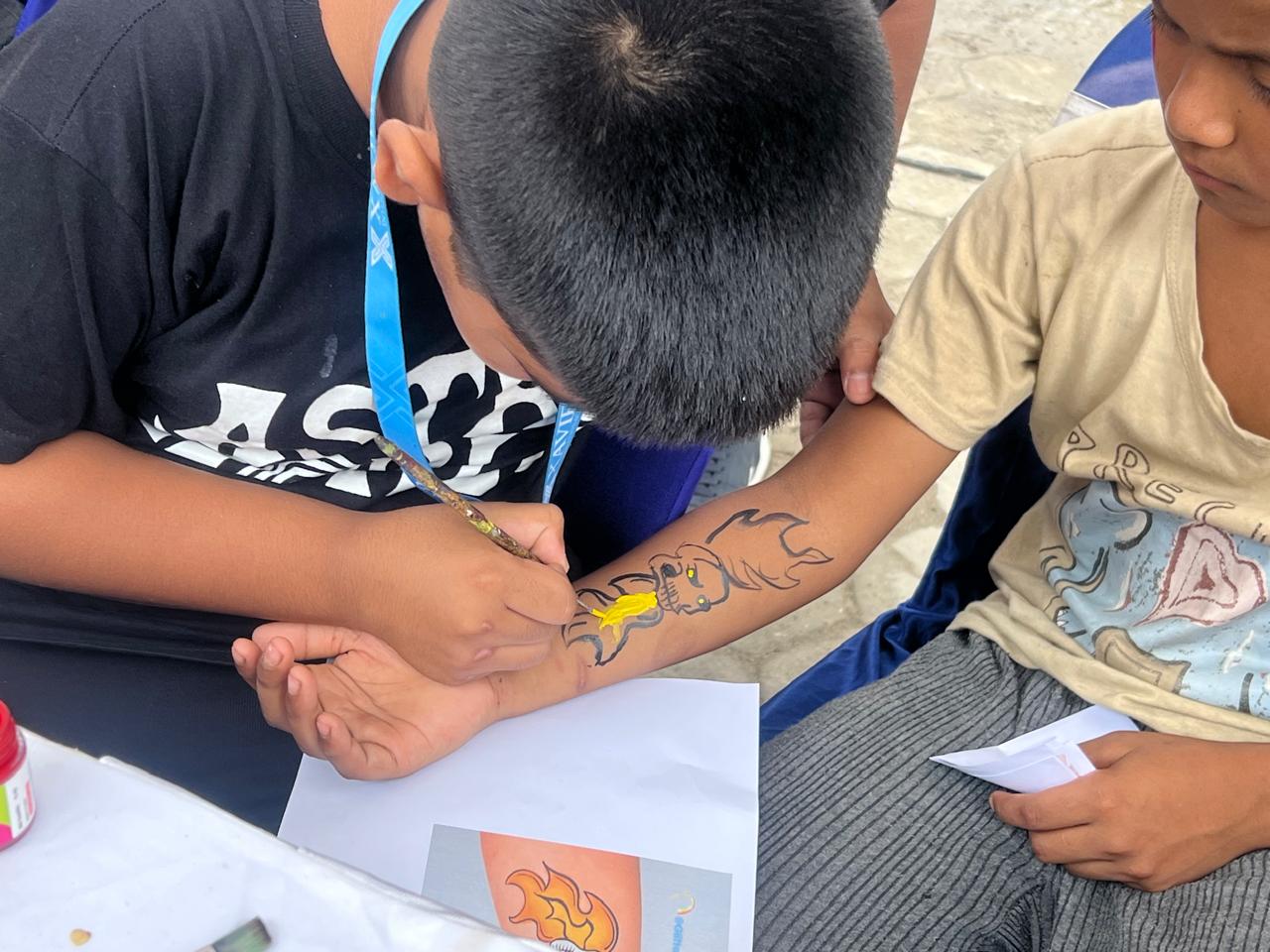
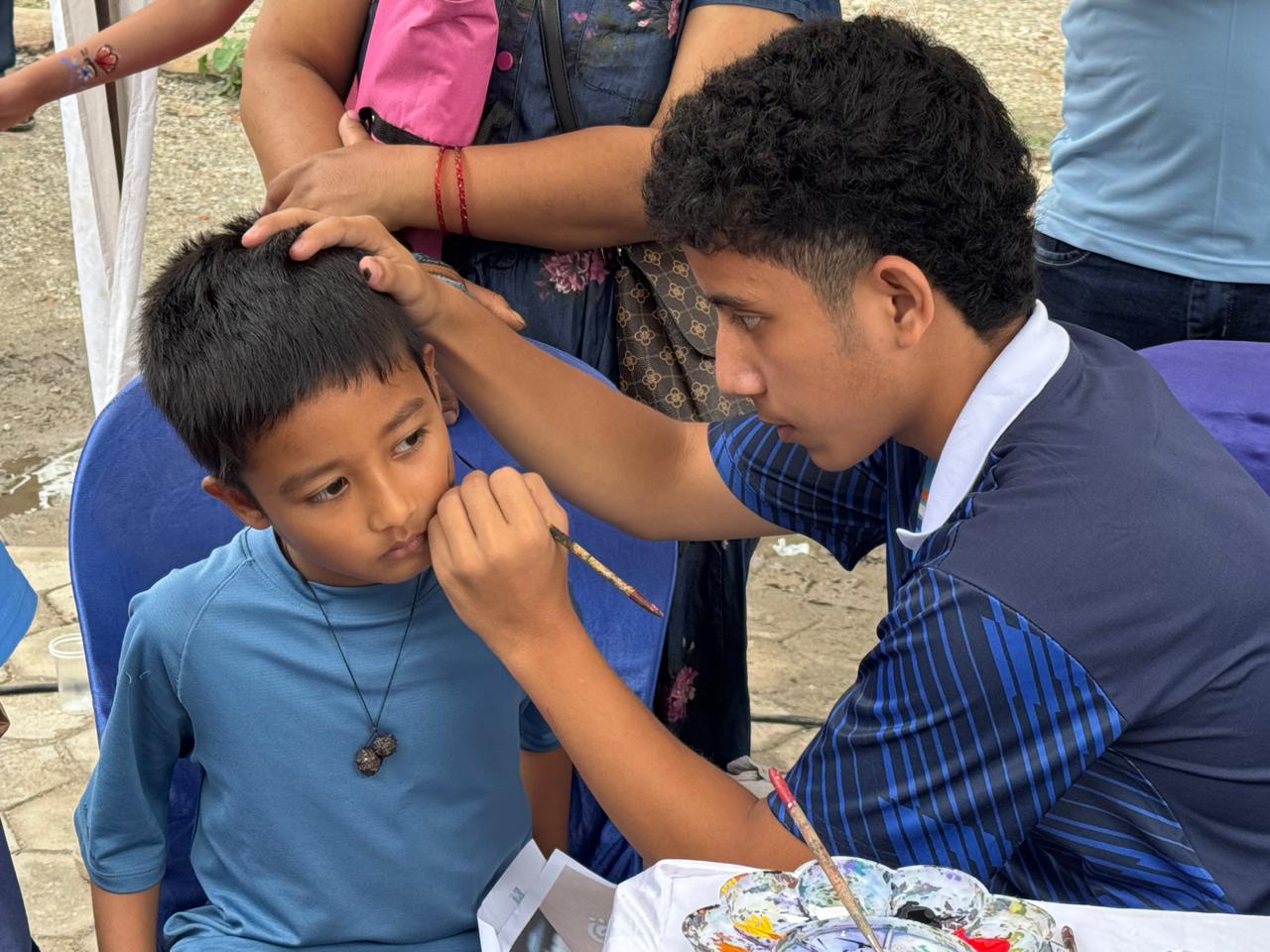
Similarly, students from Xavier International School took responsibility for the face-painting stall. Eighth-grader Anmol Shrestha joined the school’s art teacher and fellow students in painting a variety of designs on children’s faces. Some participants selected decorative images, while others chose flags representing the teams they support in the ongoing FIFA World Cup.
Anmol described the group’s purpose with a phrase that captured both the literal and emotional value of their work. Their motive, he said, was “to paint smiles on everyone’s faces.”
Throughout the venue, children cycled, played games, climbed an inflatable slide, and made bracelets, while a musical performance and a magic show entertained both children and adults. Lunch was also provided for attendees.
The presence of student volunteers further strengthened the event’s child-led character.
However, behind the excitement of the anniversary stood the long-term influence of the library itself.
“I have been visiting the library regularly for the past two years, and it has helped me understand more about the world,” said ten-year-old Pratigya Khatri, who studies at a nearby school. “I prefer physical books because they are more comfortable for my eyes than reading digitally.”
For Khatri, however, the library offers more than access to reading material. She also values the people she encounters there, explaining that each visit teaches her something new. At its best, a library is a social and intellectual space where curiosity is encouraged through conversation, guidance and repeated participation.
“Libraries like this are valuable for children who want to learn more,” said eighth grader Uttam Bhaiya Yadav while making a bracelet at one of the stalls. “I enjoyed the dance competition the most because I love dancing, and I believe it is important for a child’s overall development.”
Most of the organisers and volunteers were middle-school and high-school students. With support from adults, they conducted competitions, managed stalls, performed and welcomed younger children into the programme.
Sponsors, including Juice Jelly and Bam Bam Drink, supported the anniversary celebration. Still, its character came largely from the children who contributed their books, time and skills.
The Dhumbarahi Children’s Library began with two siblings looking at their own collection of books and asking how it might benefit someone else. That question has since expanded into a community initiative where children can read, develop their interests and learn from their peers.
The anniversary reflected the same idea on a larger scale. From the competitions and performances to the stalls run by student volunteers, children were involved at nearly every level of the celebration.
It was, quite simply, an event by the kids, for the kids.




 26.12°C Kathmandu