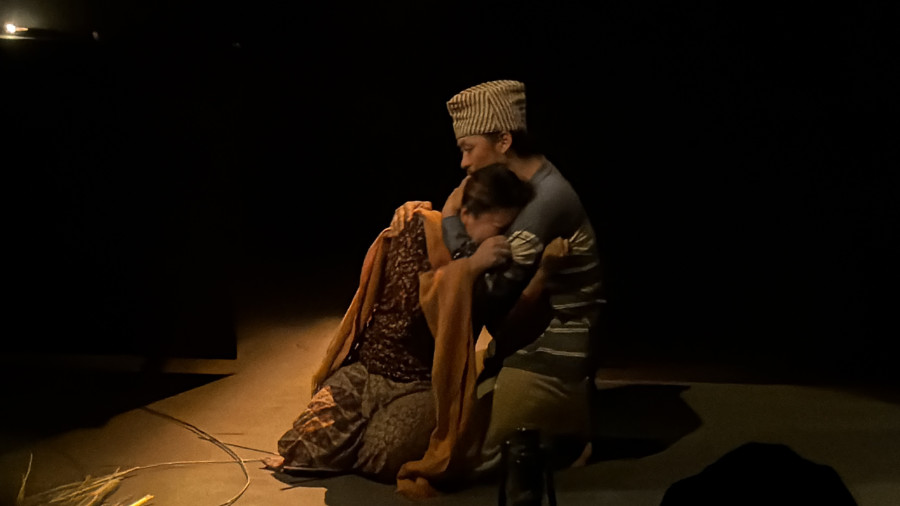
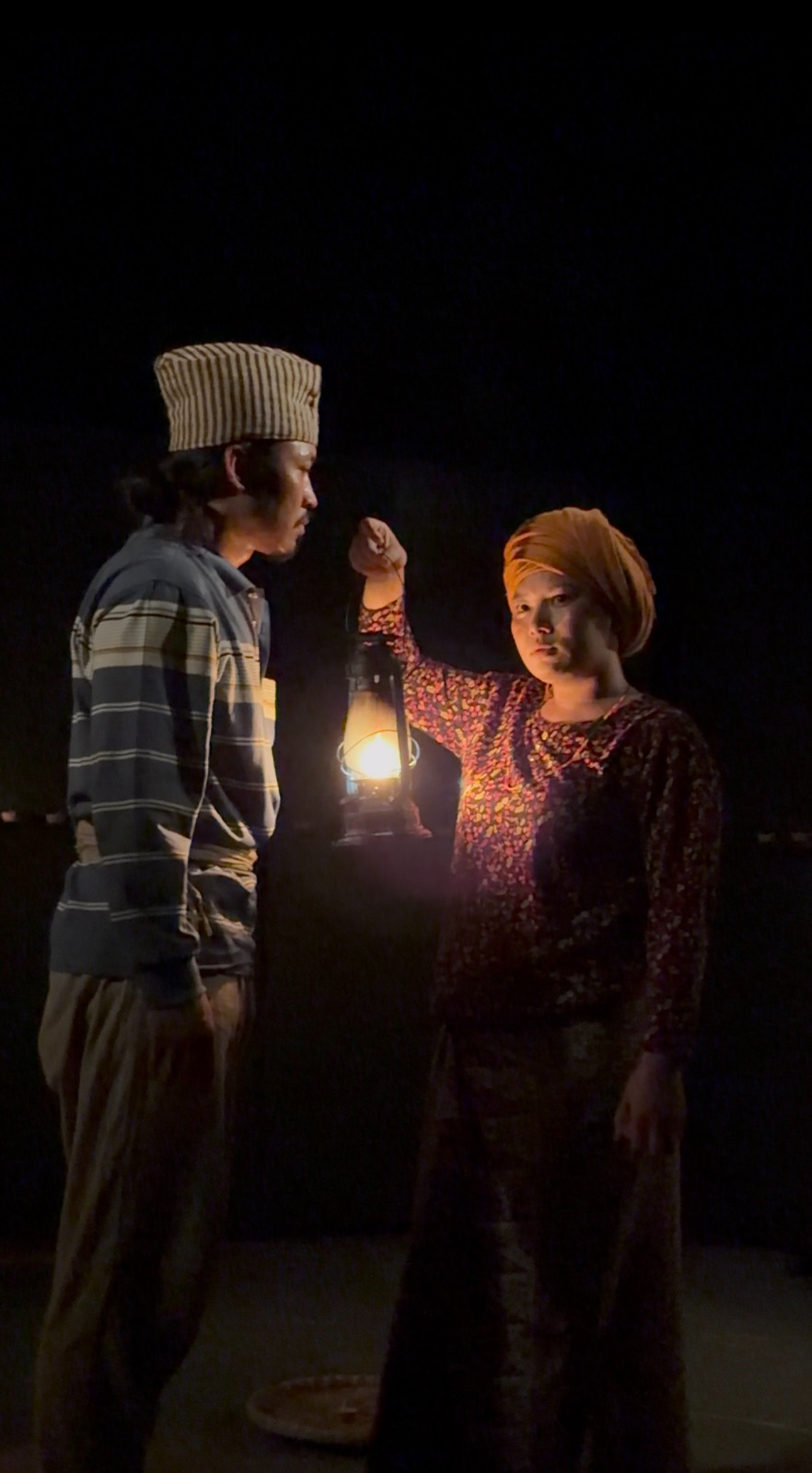
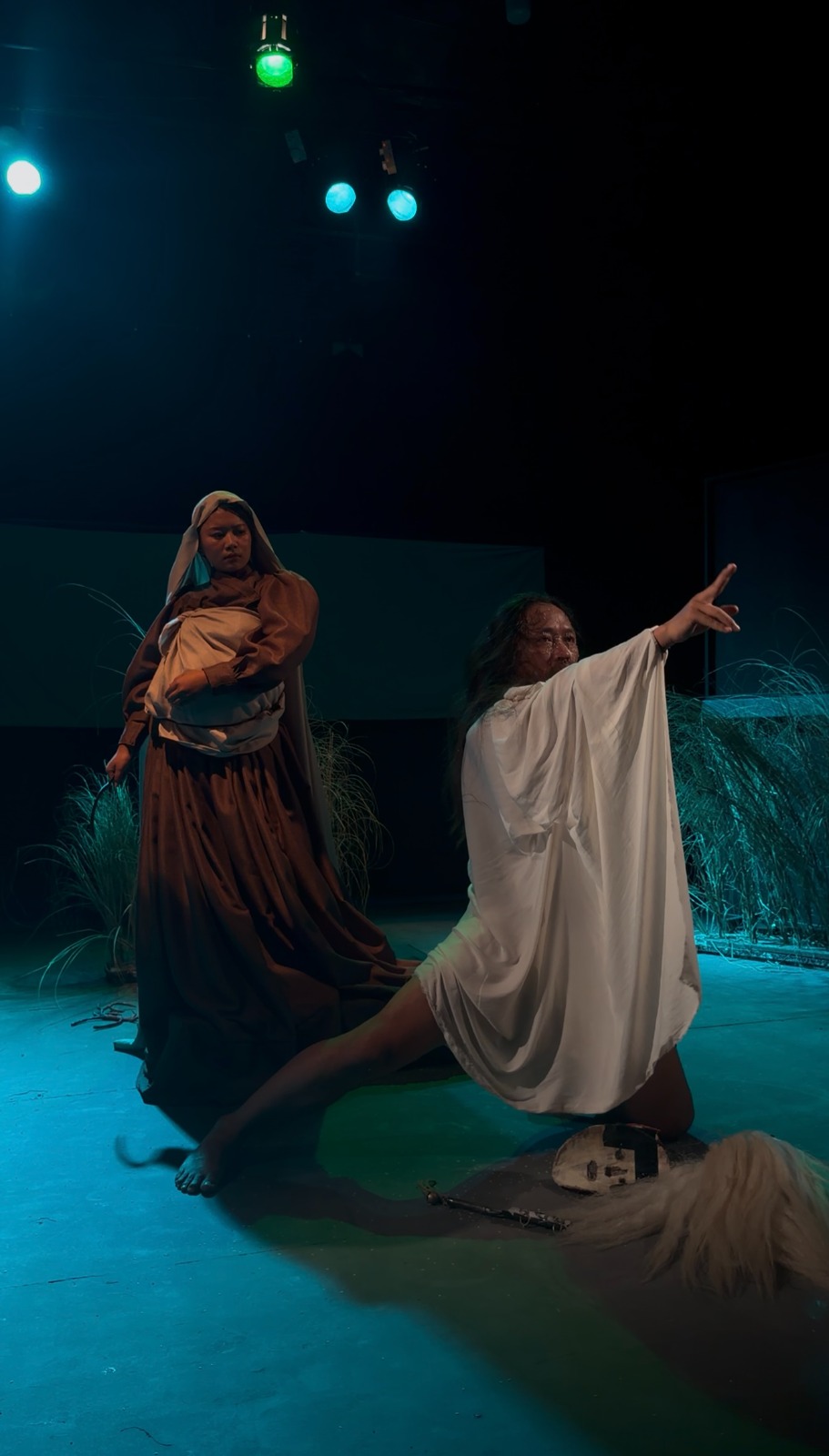
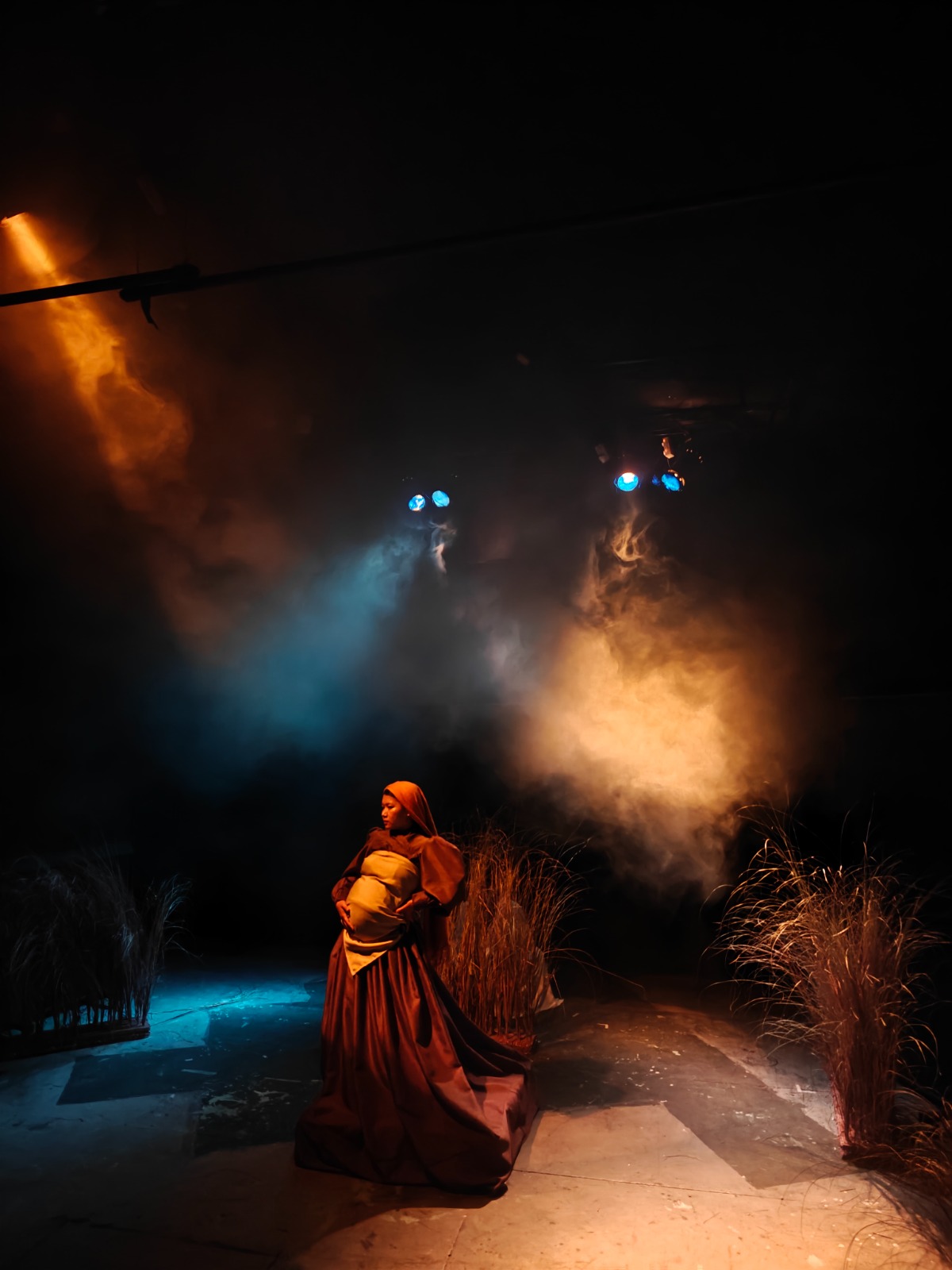
Like the selroti at its centre, the play circles back to grief, love and forgiveness through tales drawn from mythology and lived experience. Photos: Courtesy of Katha Ghera and themilsonproject
An estranged couple meet on what would have been their daughter’s 10th birthday. Their daughter has passed.
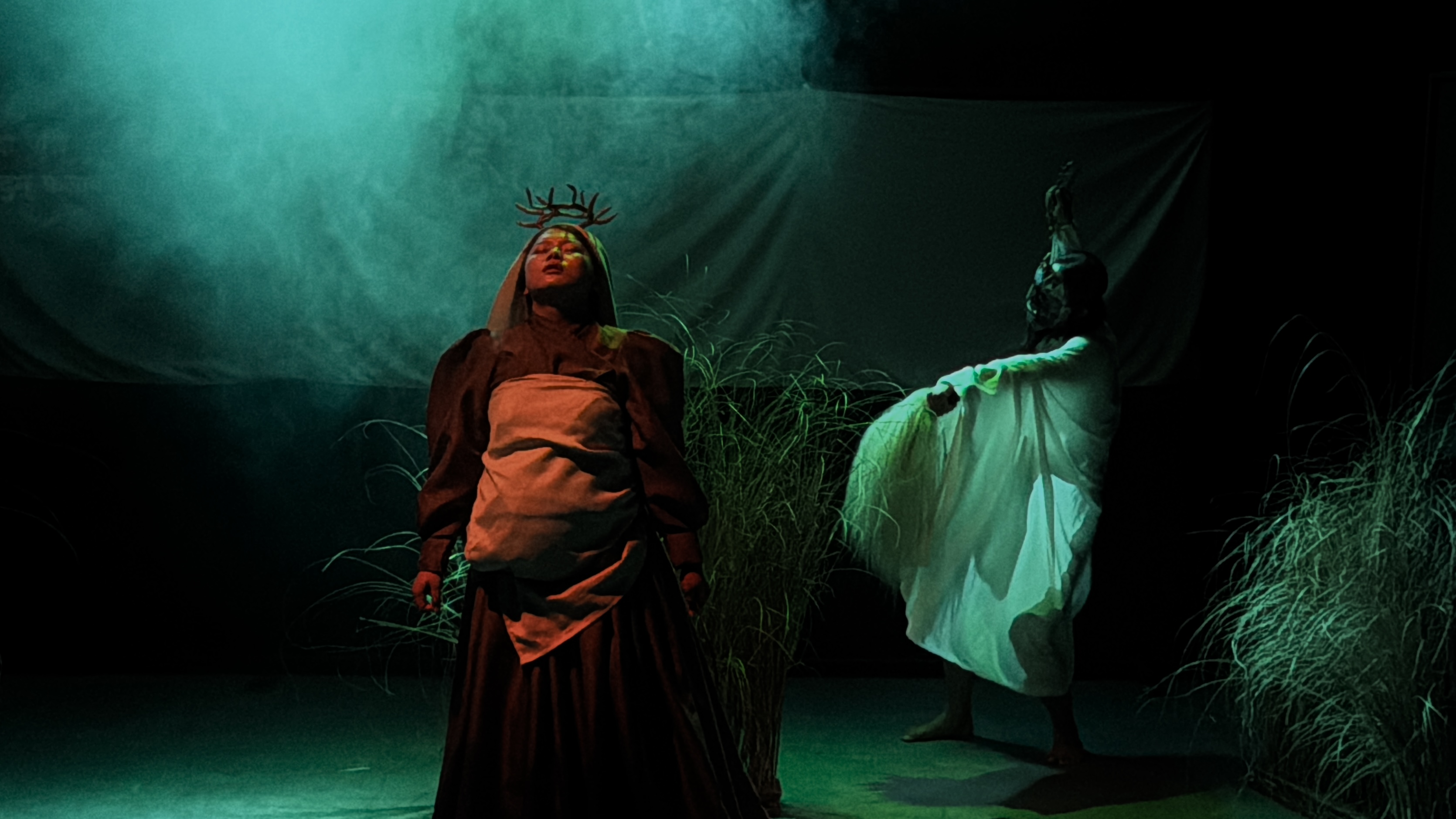
The play is set less than two years after September 9, 2025, when they lost their only child. The couple, played by Bedana Kheresungma Rai and Prayash Bantawa Rai, have been divorced for over a year. The ex-wife sits on a chair in her ex-husband’s one-room apartment while he prepares ‘selroti’ for her. Waiting outside in the car is the woman’s current wife. As the two begin to slowly converse, sharing cigarettes and stories, tension and suspense build in the room.
It becomes clear they have a few things to work through. The wife tries to leave many a time, and yet every time she is pulled back by something her once-lover says. Despite her better judgment, driven by her need for resolution, she drives at the main points of contention.
In addition to the music, the stage is also meaningfully set.
Both partners, Bedana Kheresungma Rai and Prayash Bantawa Rai, convincingly portray the psychological complexities of their respective characters. Neither husband nor wife has moved on from the other. The latter tries and fails repeatedly to set boundaries, while the former pushes the envelope. And right in the middle of the estrangement, grief and moral ambiguities is a big secret.
“Bajey used to say selroti is a good gift for travellers. Making the selroti is also a story of travel, but the nice thing is, you start where you end. You always come back,” the ex-husband says. In a similar vein, the play will eventually return to this couple, but in the meantime, viewers are told two more stories—the story of ‘Sumnima and Paruhang’ from the Kirat Mundhum and the story of ‘Thebe’, a folktale from eastern Nepal.
The play is divided into three acts, referred to as ‘chapters’ in the production. Both mythological stories feature moving performances from the same actors as in chapter one. The acting duo is highly skilled at conveying the heightened emotions of the stories, particularly with their delivery.
Both Thebe’s story and Sumnima and Paruhang’s are told once, with a short film projected on the curtains between the acts, and subsequently retold on stage. This move is used to familiarise audiences with the stories. The films shown between acts are all the more important given that the story of Sumnina and Paruhang, which makes up the second act, is delivered completely in the Bantawa language with Nepali subtitles, and when Thebe’s story is presented on stage for the third act, it is retold in the context of the Maoist civil war.
Milson D Chamling’s production must be commended for showcasing the Bantawa language and telling stories from the Kirat homeland.
Additionally, Anurag Koinch’s original background scores demonstrate considerable versatility and greatly enhance the viewing experience. The scores effectively swell the emotions presented on stage, whether it’s sombre reflection or intense melodrama. For instance, the score in Act Two, during the peak of Sumnima’s and Paruhang’s conflict, is noteworthy for adding to the ferocity.
In addition to the music, the stage is also meaningfully set. Take, for instance, the doorway in Act One. The doorway is set to the leftmost end of the stage. Adjacent to it is a gridlocked metal frame. The leftmost corner is a place of contemplation and confusion. Every time the ex-wife gets up to leave, she finds herself behind the metal frame, lured in by a question or comment.
The woman’s dilemma, whether she is in or out, is both figurative and literal. The man also finds himself at the doorway on occasion, speaking to the woman at times and alone at others, working through his feelings. When standing by the door, the characters seem as if they were in a cage, an image that is definitely not unintentional.
Katha Ghera’s production ‘The Taste of Selroti’ captures the viewer’s full attention as it moves across different narratives, times, and settings. Given the many stories told, what the play is exactly about is a difficult question to answer. Common across the stories are the themes of conflict between partners.
Characters are at times scarce in their words and at times accusatory. And in every case, the characters are dealing with loss or seemingly impending loss.
The play makes meaning out of the real pain and suffering of bygone conflicts, political and personal, using stories of old. The ‘bad’ has always been part of life, viewers learn. And through the myths and stories, audiences are told that the one remedy for the pain is to understand and forgive. The characters, when they exhibit these virtues, seem to find resolution; in their dearth, they are left to suffer.
The Taste of Selroti
Written and Directed by Milson D Chamling
Where: Kausi Theatre, Teku
When: Until July 12, 5:15 pm every day, off on Tuesdays, and 1:00 pm on Saturdays.
Rivash Rijal is a culture and lifestyle intern at the post. He is also a rising senior at St John's College in Santa Fe, NM. He will be graduating from the class of 2027 with a BA in Philosophy, Literature and Natural Sciences.




 16.78°C Kathmandu