Many people carry certain beliefs about themselves as if they are permanent truths. “I am anxious.” “I am difficult.” “I am not expressive.” “This is just who I am.” But psychology suggests that what we call identity is often more complex than a fixed personality. Many behaviours people mistake for their true selves may actually be learned responses shaped by experience, coping mechanisms, or repeated emotional patterns that once helped them survive, belong, or feel safe.
Namrata Singh Chhetri, psychologist, mental health practitioner, trainer, and lecturer, sheds light on how identity is shaped by childhood experiences, trauma, social environments, online spaces, and repeated patterns of validation or rejection.
Many people say, ‘This is just who I am. How often is that true, and how often is it a learned pattern?
In psychology, what we call personality is often a combination of temperament and learned adaptability. Some characteristics, such as sensitivity or sociability, may remain relatively stable. But many behaviours that people believe are permanent are actually repeated responses that once worked in specific situations.
Over time, repetition begins to feel like identity. A person may respond in the same way for so long that the behaviour becomes automatic. This familiarity gives the pattern an appearance of permanence.
So, it is rarely “just who I am” in a fixed sense. More often, it is “what I learned to be in order to cope, belong, or stay safe.”
Can people mistake their coping mechanisms for their personality?
Yes, this happens frequently. Coping mechanisms are ways of handling emotional difficulty. These may include avoiding conflict, staying silent, becoming overly helpful, or remaining emotionally detached.
When these strategies are used for a long time, especially from childhood, they stop feeling like strategies and start feeling like identity. People may not think, “I learned to shut down emotionally.” Instead, they say, “I am just not expressive.”
Over time, coping becomes identity because it is repeated, reinforced, and accepted without much questioning.
How do childhood experiences, family roles, and social environments form the patterns people carry into adulthood?
Biological, psychological, and social factors all play an important role in shaping behaviour. Parenting styles also influence how these roles and behaviours develop.
We are social beings. We do not grow up in isolation; we grow into roles. Someone may become “the responsible one,” “the peacemaker,” “the problem child,” or “the invisible one.” These roles often develop as adaptations to family dynamics.
Social environments then reinforce these roles through rewards and punishment, such as attention, approval, criticism, or rejection. Over time, these roles become internalised scripts. They begin to guide a person’s thoughts, emotions, and behaviour even when the person is no longer in the original environment where those roles were formed.
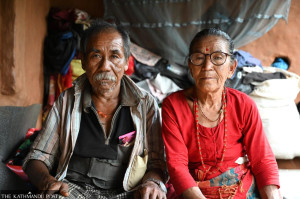
Psychologist Namrata Singh Chhetri Courtesy of Namrata Singh Chhetri
You have worked in trauma intervention, grief counselling, and psychosocial support. How can trauma or loss shape a person’s sense of self?
Trauma and loss do more than create memories. They can reshape how a person sees themselves and the world.
People who have gone through traumatic experiences may develop heightened alertness, emotional numbness, mistrust, or self-blame. These responses are often protective at first, but over time, they may begin to look like personality traits.
Grief can also reshape identity. When someone loses a person, role, relationship, or sense of stability that helped define them, they may no longer recognise themselves in the same way. The mind adapts by creating new protective frameworks.
Some people become guarded, detached, or hyper-independent. These may appear to be fixed traits, but they are often survival responses.
Why do people keep repeating the same emotional reactions, choices, or relationship patterns even when those patterns hurt them?
The brain often prefers familiarity over uncertainty, even when familiarity is painful. People may unconsciously recreate emotional situations they already know because the unknown feels more threatening.
Repetition can also be the brain’s attempt to resolve unfinished emotional experiences. Even painful patterns may contain moments of validation, control, or attachment, which makes them difficult to break.
How do labels like ‘I am anxious,’ ‘I am avoidant,’ ‘I am difficult,’ or ‘I am not good enough’ affect the way people understand themselves?
Labels can sometimes provide clarity. Naming an emotion or experience can help people feel less confused and less alone. But labels can also become fixed identities.
When a temporary emotional state becomes a permanent identity, flexibility is reduced. Instead of saying, “I experience anxiety,” a person may begin to believe, “I am anxiety.” That shift quietly shapes behaviour, choices, and expectations.
Over time, people may act in ways that confirm the label, even when change is possible. That is why it is important to separate the person from the experience. Saying “I experience anxiety” leaves more room for change than saying “I am anxious.”
How do repeated experiences of validation, rejection, comparison, or criticism shape a person’s identity?
Repeated emotional experiences shape internal expectations. They influence how a person sees themselves and how they expect the world to respond to them.
Frequent criticism can create a harsh inner voice and a tendency to expect rejection. Consistent validation can build confidence, but it can also create dependence on external approval.
Even in safe situations, repeated rejection can make a person anticipate rejection again. Over time, these experiences become internalised. They form self-talk, beliefs, and behaviours that continue long after the original experiences have passed.
Is there such a thing as a fixed “true self,” or is the self something we continuously construct through memory, habit, and experience?
Most psychological perspectives do not support the idea of one fixed, unchanging self. The self is better understood as a process rather than a static entity.
Identity evolves through memory, relationships, biology, repeated behaviour, and lived experience. There may be core tendencies, but the self is continuously constructed and reconstructed over time.
We are not fixed beings. We are changing patterns shaped by experience.
What would you say to someone who feels trapped by the belief that they cannot change because “this is just who I am”?
That belief is usually based on repetition, not truth. When something has been practised for years, it feels permanent even if it is not.
Identity is not a locked door. It is more like a well-worn path in the brain. We do not erase that path immediately, but we can create new ones alongside it.
Change rarely begins with a dramatic transformation. It starts with small interruptions in familiar patterns, repeated long enough until they begin to feel normal. Change does not require becoming a completely different person overnight. It begins with noticing automatic behaviour and choosing, even slightly, to respond differently.




 27.12°C Kathmandu