Landslide survivors spend week at health post as relief remains stalled
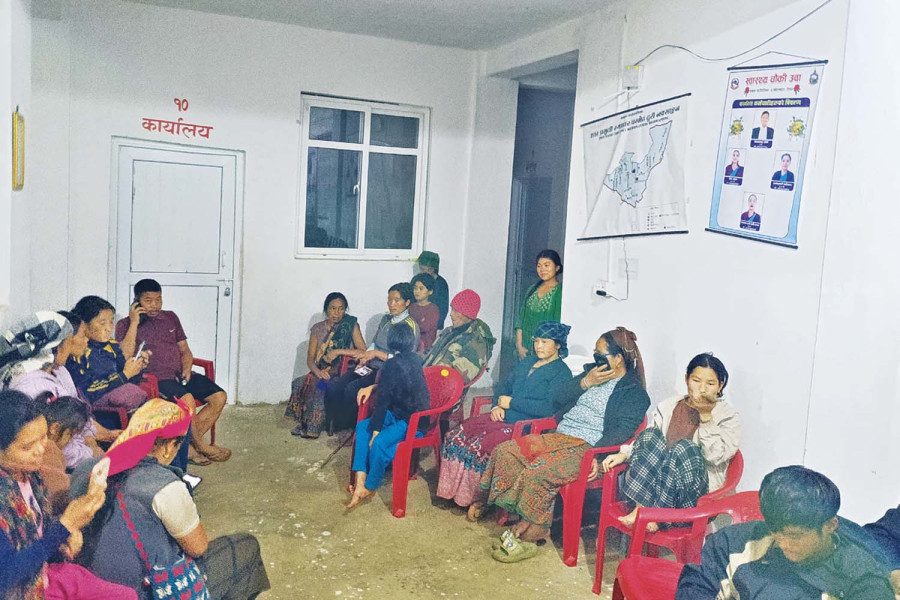
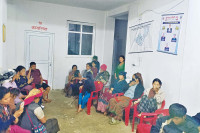
Multiple landslides block road at dozens of places, leaving 20 survivors without adequate food, clothes and other essentials. Displaced people take shelter at a health post in Thawang-5, Kotalbara, Rolpa. Photo: Courtesy of Nim Subedi
Duk Pun Magar, 54, of Kotalbara in Thawang Rural Municipality-5, lost his home and a family member to a landslide on August 13. Since then, he has been spending his nights at a nearby health post.
“I was involved in the rescue efforts in the aftermath of the landslide,” he said. “Since I had no home to return to, I have been living here.”
Eight days after the devastating landslide killed 13 people in Kotalbara, displaced families are still spending nights at a local health post while relief supplies meant for them remain stalled along a blocked road.
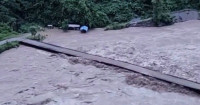
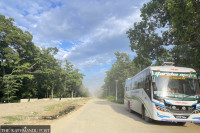
Multiple landslides have blocked the road to the health post at dozens of places, leaving food, clothes and other essentials at Mabang, Pobang and Phuliban.
Buddhi Gharti Magar, chairman of Thawang-5, says the road is unlikely to reopen soon, and moving the supplies by foot would require around 200 porters.
“None of the relief materials collected in the survivors’ names has reached here,” he said. “A lot of the supplies are heaped up along the way. The ward office and villagers have been trying to make up for the shortfall.”
The immediate needs of survivors have so far been met through food and other materials provided by the local unit, its residents and survivors’ relatives. Relief brought to Kotalbara by a joint effort of the rural municipality and the Nepal Red Cross Society has been exhausted.
Local representatives have complained about poor coordination among relief providers. Individuals and organisations have been collecting aid without informing the ward office in advance, making it difficult to know what is coming and what is needed.
“We ask the relief providers to give us a list of the materials they have collected,” said Gharti Magar. “But we do not have complete information about those collecting relief. If we were informed beforehand, we could coordinate with the local administration.”
The district administration has instructed relief organisations to follow a one-door system to prevent duplication and ensure that assistance reaches genuine survivors. Assistant Chief District Officer Ghanashyam Gautam said the administration is monitoring implementation and had instructed the district road infrastructure office to clear blocked sections.
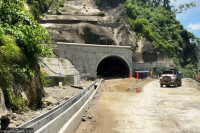
Relief supplies collected for landslide survivors remain stranded along blocked roads, forcing displaced families to spend nights at a local health post.
“The aim is to prevent duplication in relief collection and distribution, ensure that genuine survivors receive what they need and make proper use of the assistance received,” said Gautam. “We have also instructed the road infrastructure office to open the blocked road.”
The administration has also asked all organisations involved in relief collection and distribution to submit details of aid collected and distributed.
Survivors, however, complain that official support has been inadequate.
‘There is no other alternative to the health post,” Mek Bahadur Roka, who is taking refuge at the health post, said. “Our residential house collapsed in the landslide, and now it is difficult for us to live here without adequate support.”
With his secondary house also at extreme risk from the landslide, Roka has appealed to the government to build houses in a safe location for those in distress.
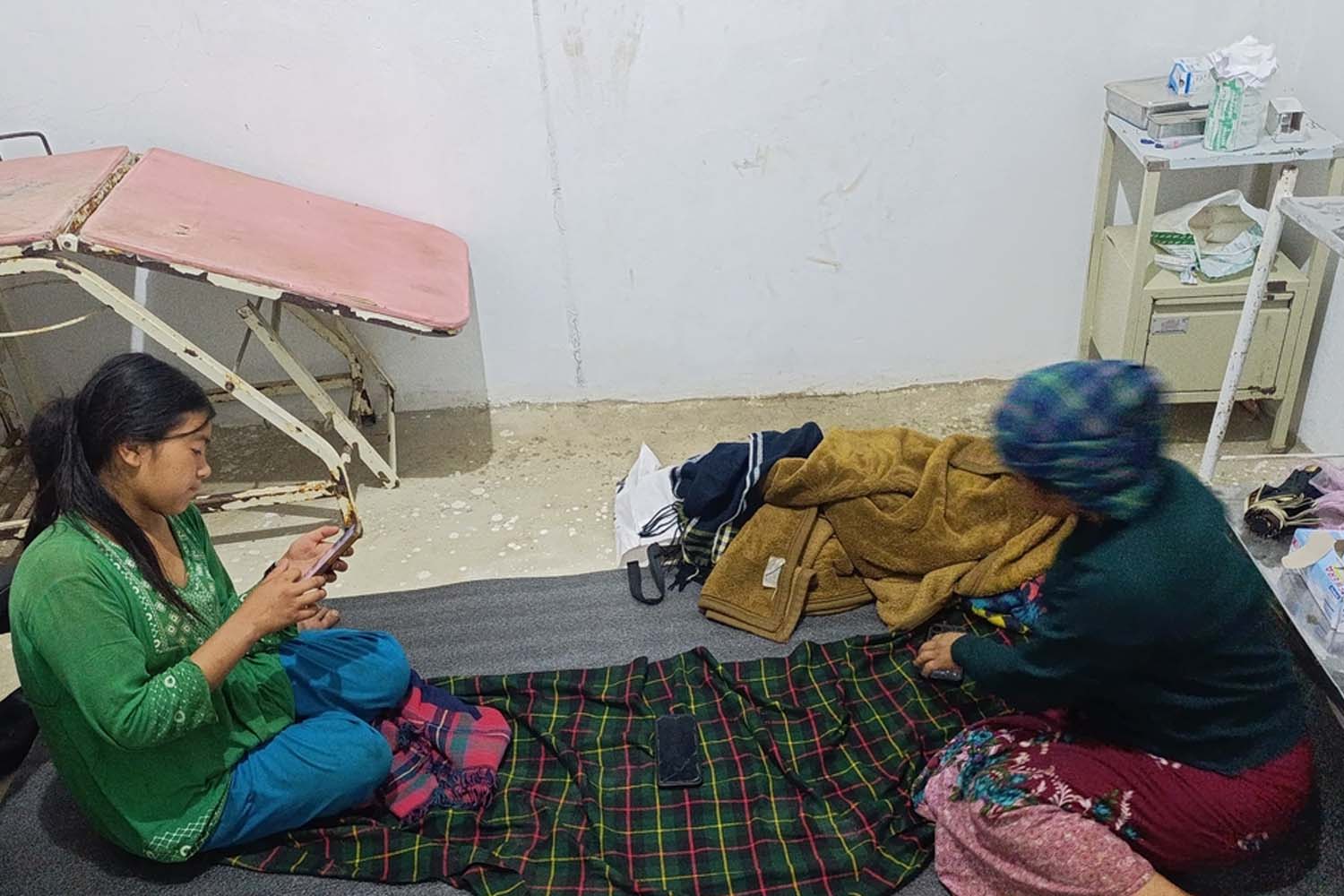
Ten displaced families, comprising 76 people, are currently affected in Kotalbara. Some houses were destroyed, and others have become unsafe to reside in. As a result, 15 to 20 people from six or seven families have been sleeping at the health post. The numbers have been fluctuating as families move out when other families offer them refuge.
Health post in-charge Nim Subedi said the facility had opened its rooms, including office space, to displaced people at night. “We have been helping displaced families spend the night in rooms at the health institution,” said Subedi. “Even after so many days since the landslide, apart from efforts at the local level, there appears to have been little effort to provide relief and shelter or reopen the road.”
According to ward officials, rice is being bought from local shops and distributed to each affected family. Residents of neighbouring Upper Uwa and other villages have also been providing vegetables.
Meanwhile, survivors have no alternative to the health post.
“It is impossible to go elsewhere during the rainy season,” Norsang Gharti Magar, another survivor taking shelter at the health post, said. “We will stay here during the monsoon and think about the future later.”




 15.14°C Kathmandu