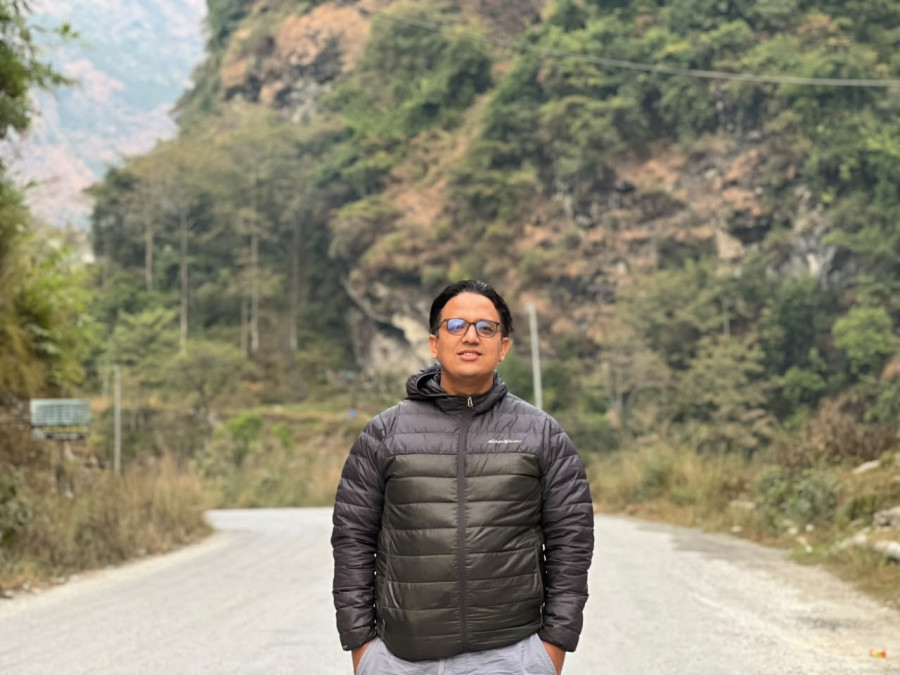
How Dijup Tuladhar uses AI as part of his everyday toolkit
Tuladhar, a senior principal product designer at Infinite Computer Solutions and the founder of Chordpedia shares how he uses AI for researching a problem, exploring ideas, writing and analysing.
Working in US healthcare means I frequently encounter terminology and systems that are unfamiliar in the Nepali context. Previously, understanding a new healthcare concept could require hours or days. Now, I can use AI to break down unfamiliar concepts.
I still verify important information through reliable sources. But AI has shortened the distance.
Building Chordpedia
I founded Chordpedia in 2015 after struggling to find chords for Nepali songs online. The biggest challenge was always execution. AI has changed that equation.
With AI-assisted coding and tools such as ChatGPT, I can move from an idea to a prototype or working feature much faster.
Design and prototyping
Tools such as Figma Make, Lovable and Stitch have changed how I move from an idea to something tangible.
Previously, there was a long process between having an idea and being able to interact with a prototype. Now, I can describe a problem, explore different approaches, generate a prototype, interact with it, identify problems and make changes almost immediately.
However, AI has made the process of designing faster yet hasn't necessarily made deciding what to design easier.
User research and feedback
I use AI to process large amounts of user feedback and identify patterns. It can group similar responses, summarise what users are saying and help him look at competitors from different perspectives.
I look at AI as an assistant. AI can help identify patterns and ask questions, but it cannot always understand the context behind a decision—including users, business priorities, organisational culture and technical limitations.
Everyday life
AI is not limited to my professional life. I also use it for travel planning, learning, comparing options and solving technical problems.
One of my favourite things to do is to use AI to challenge my own thinking.
Instead of asking AI to agree with an idea, I ask it to explain why the idea might be wrong, what I could be missing and what an opposing perspective might look like.




 20.85°C Kathmandu