Only 53 percent of UML workers renew party membership
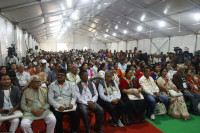
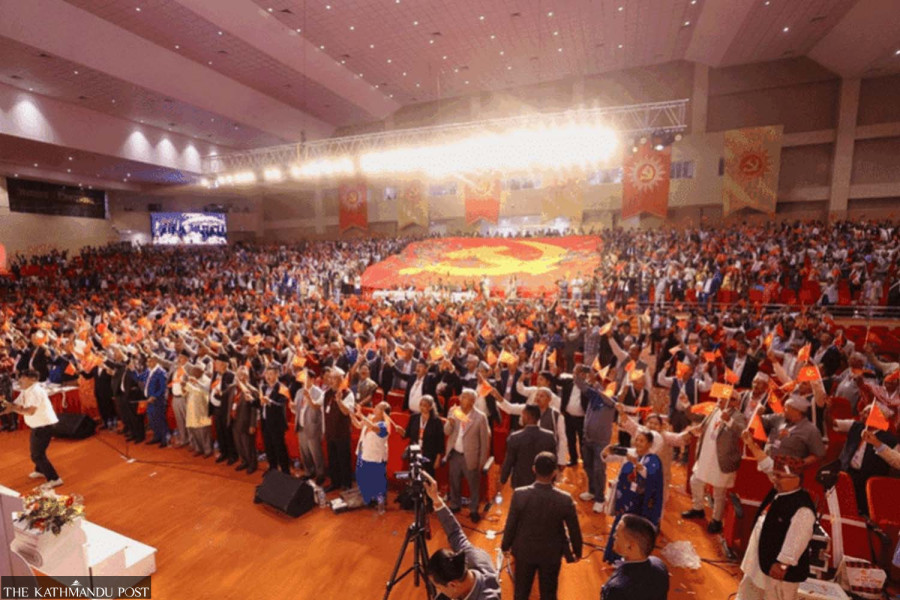
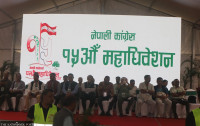
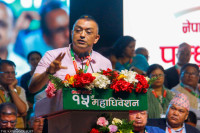
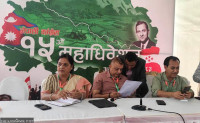
More than 327,000 members have yet to renew, as party leaders cite dissatisfaction, few opportunities for young cadres and a push to clean up outdated membership rolls. Post file photo
The number of CPN-UML members has fallen sharply, with only about 53 percent of committed workers renewing their membership, as the party struggles to rebuild its organisation shaken after last year's Gen Z movement.
According to figures provided by provincial committees, 359,000 members renewed their membership by the mid-August deadline. The figures are still being updated, party officials said.
The party had 686,700 members on its rolls, meaning that around 327,000 have not renewed their membership.
UML leaders attribute the low renewal rate to growing dissatisfaction among some cadres, a lack of opportunities for those who have not benefited from the party’s organisational structure, and limited space for younger members.
The party led by KP Sharma Oli was in power in a coalition government with the Nepali Congress. The September revolt ousted Oli as prime minister last year.
In the general convention held in December last year, Oli was reelected the party chair, despite the message of the movement that a younger generation should lead Nepal’s traditional political parties.
The March elections held earlier this year left the party a distant third force, as an overwhelming majority went in favour of the Rastriya Swatantra Party. The Nepali Congress also shrank to a much smaller size, even as it holds the second place in the federal parliament.
The spectacular fall in popular vote—to 1.45 million from 2.84 million in the 2022 election—led the UML to reexamine its organisational base. Leaders call the renewal process a test of the listed members’ commitment to the party, especially following its loss of support base as seen in the March elections.
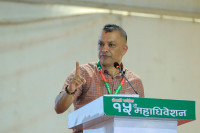
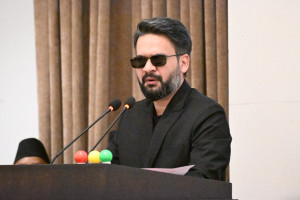
UML General Secretary Shankar Pokharel says the party needs policies that give both older and younger members a sense of future within the organisation.
“We need to create conditions in which young people see their future in the party,” Pokharel told Kantipur last week. “That is possible only through restructuring the party.”
Pokharel, who is also the secretary of a panel led by vice-chair Ram Bahadur Thapa for party restructuring, has proposed a system that brings three generations together and creates a swift mechanism for leadership development and transfer.
A breakdown of the membership renewal figures shows a uniform pattern of update.
The Sudurpaschim Province has recorded the lowest renewal rate. Of 63,110 members, only about 17,000 sought renewal. Provincial secretary Ran Bahadur Chand said the tally could rise to around 21,000 after paper renewals are entered into the system.
In Koshi Province, 62,000 of 114,766 members went for renewal, putting the rate at about 54 percent. Madhesh recorded 60,000 renewals from a membership size of 156,195. Provincial secretary Manoj Paudel said the rate could cross 60 percent.
Paudel said the lower figures point to a tighter verification process. In the past, he said, a single person could renew membership for hundreds of people, whereas members are now required to renew in person.
Bagmati recorded about 66,000 renewals from 114,566 members. In Gandaki, 30,500 of the 56,052 members had renewed their status, although provincial leaders expect the figure to approach 60 percent after further updates.
Lumbini reported about 42,000 renewals from 80,579 members, a rate of 52.12 percent. Karnali recorded about 28,000 renewals among 48,538 members, or 57.69 percent.
In Kathmandu Valley, the capital committee covering Kathmandu, Lalitpur and Bhaktapur reported 23,500 renewals from 39,159 members, or about 60 percent. The party’s liaison department, which represents members from outside districts living in Kathmandu, reported more than 8,000 renewals from 13,783 members.
UML Secretary and Organisation Department chief Bhanu Bhakta Dhakal described the renewal drive as encouraging but said the final nationwide figure was still being compiled.
“The membership renewal has been encouraging. Updated figures from the provinces have yet to come,” Dhakal said.
He said the party was also cleaning up its membership records, particularly in Madhesh, where large numbers of people had previously been enrolled in bulk.
The latest figures are well below the numbers claimed by the UML in previous years. At its statute convention in Godawari, Lalitpur, in 2025, General Secretary Pokharel reported 662,961 members after renewal.
Before that convention, the UML had claimed more than 1.26 million members. After verification and updating, the figures fell to about 682,000, with 662,961 members recorded as having renewed ahead of the convention.
The latest figures suggest the party is experiencing a significant contraction in its active membership base. Krishna Pokharel, a professor of political science, said the party leadership’s policies and working style shape the mindset of ordinary members. He said UML chair Oli had failed to inspire cadres, both in and out of government.
“Cadres assess their future by looking at the leadership. If they believe the leadership can take the party forward, they remain engaged,” he said. Repeated failures also eroded the leadership’s appeal among voters and cadres.
Pokharel said honest members had become disillusioned after seeing opportunistic leaders benefit from party positions while their expectations went unmet. “Some cadres may have left after seeing little prospect of the UML returning to power,” he added.




 20.85°C Kathmandu