Untapped potential leaves Karnali a tough land for residents
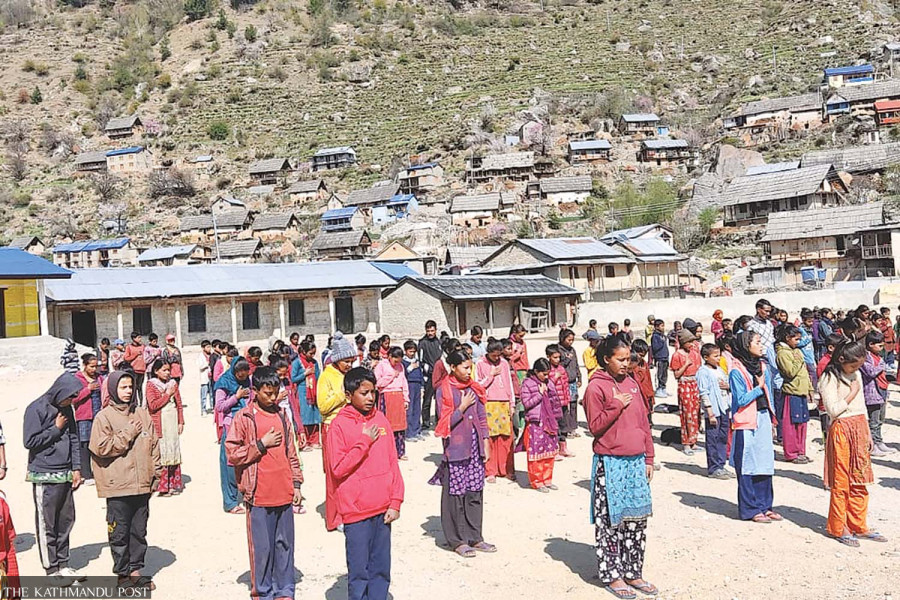
Hunger prevails among nearly 2 million people as the province has an annual food deficit of about 25,000 metric tons. A school assembly in Kalikot. Poverty, long distances to schools and parents migrating to India for work are hampering education in Karnali. Post file photo
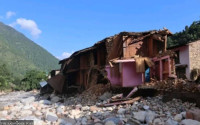
Prem Bahadur BK of Nalgaad Municipality-4 in Jajarkot lost his house in the November 2023 earthquake. His family spent nearly four months under a tarpaulin and has been living in temporary shelter for about two and a half years.
Of his family of eight, only he and his wife Subhadra remain at home. Their two sons have gone to India along with their families.
“There is no house and no reliable work. The grains from our three ropanis of hillside land do not feed us even for three months,” said Prem Bahadur. “We have spent two-and-a-half years waiting for a new house, but we still do not know when it will be built. Our sons send Rs8,000 to Rs10,000 a month, and that is how we manage.”
Karnali has abundant natural resources and clear economic opportunities, but much of its population remains trapped in poverty because those opportunities have not been turned into jobs, production and reliable incomes.
According to the Nepal Living Standards Survey 2022-23, Karnali’s poverty rate is 26.69 percent, compared to the national average of 20.27 percent. Its per capita income is about $1,108, against the national average of $1,535. Kalikot, Mugu and Humla are among the country’s poorest districts, according to the National Planning Commission’s latest report on human poverty.
Junichande Rural Municipality in the remote Karnali district has the country’s highest local-level poverty rate, according to local officials citing census, living standards and small-area poverty data. Rural Municipality Chairman Bed Bahadur Shahi said 77.89 percent of its 23,771 residents live in poverty and about 80 percent of its young people work in India.
Karnali’s employment problem is closely linked to its low production. The 2021 census recorded a population of 1.69 million, with 69.8 percent economically active. Yet only 41 percent had worked for more than six months during the year. The Provincial Planning Commission’s economic survey 2024-25 puts the unemployment rate at 46 percent.
At least one member of 62,728 of Karnali’s 366,000 households was living abroad, according to the 2021 census. The provincial government’s Chief Minister Employment Programme, launched in 2018 to create local jobs, has spent nearly Rs6.95 billion, but the government does not have a consolidated record of how many people received work or for how many days.
Hydropower, medicinal herbs, tourism, agriculture and other natural resources could provide the foundation for a stronger provincial economy. Yet weak infrastructure, limited employment, poor access to education and healthcare, low farm output and dependence on food brought in from outside continue to hold back Nepal’s biggest and remotest province.
The problem is not a lack of resources but Karnali’s inability to turn them into productive economic activity. Poor infrastructure, weak public services, limited investment and a lack of jobs have left much of the population dependent on subsistence farming, government support and migration for work.
Sociologist Amar Bahadur Oli said Karnali’s weak performance in life expectancy, education and income was keeping multidimensional poverty high. Infrastructure projects were also often built without proper master plans.
“Agricultural production, protection and development of native crops, and the collection, processing and marketing of medicinal herbs have all suffered from weak planning,” said Oli. “Roads are the basis of development, but roads in Karnali are not yet reliable, affordable and accessible enough.”
Food insecurity
Palden Tamang of Mugum Karmarong Rural Municipality-1 in Mugu spends much of the year worrying about securing rice for his household. Extreme cold and a lack of irrigation allow only one crop—of barley—each year. His nearly seven ropanis of land have remained barren for four years.
“However much we plant, it does not produce enough. So we depend on food brought from outside,” said Palden.
His neighbour, Chhiring Tamang, has also relied on outside food for nearly two decades. Once a year, the family travels to a market on the Chinese border to buy enough food for the year.
“The Chinese border is closer than the district headquarters, and food is cheaper there,” said Chhiring. “But food is not available throughout the year, so we buy what we need for the whole year at the one market.”
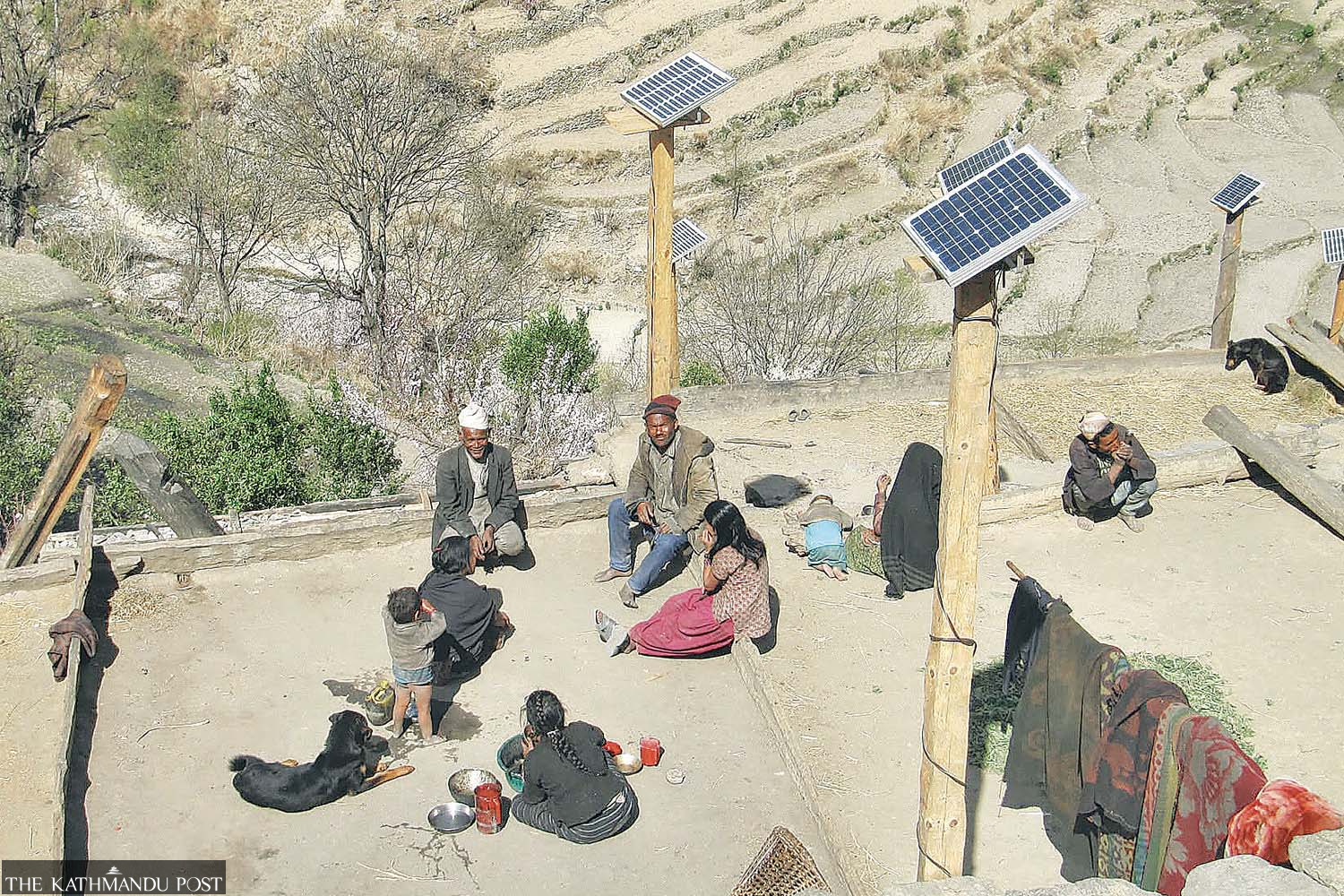
People go about their day in the sun in Salim village in Mugu district in this undated photo. Post file photo
Karnali has an annual food deficit of about 25,000 metric tons, according to the provincial Ministry of Land Management, Agriculture and Cooperatives. The province needs around 352,000 tonnes but produces only 326,000 tonnes. Of the roughly 299,339 hectares of cultivable land, only 73 percent is being farmed.
Agriculture expert Keshav Sharma said only about 31 percent of cultivated land has adequate irrigation.
“If all cultivable land were used in production, Karnali could become self-sufficient in food and vegetables,” said Sharma. “But farmers still lack enough government support in technology, manpower and marketing.”
Herbs don’t convert into cash
Medicinal herbs are another major economic opportunity in Karnali, but collectors receive only a small share of their value.
Surbir Budha of Barekot Rural Municipality-4 in Jajarkot has collected yarsagumba in the high pastures of Dolpa for nearly 20 years. This year, he and his wife spent about Rs70,000 on equipment and travel and earned only about Rs100,000.
His neighbour, Juddha Bahadur Budha, invested around Rs50,000 and earned no more than Rs120,000.
“Considering the hardship of going there and returning, we should earn at least Rs300,000,” said Juddha Bahadur. “But if we stop, we lose the work we have done for years. With no other business, there is no alternative.”
In Humla, setak chini, a valuable medicinal herb, collected in Nekpagaun last winter got spoiled as snowfall prevented its processing. The province lacks adequate collection, storage and processing centres, leaving collectors dependent on outside traders.
Trader Karna Bahadur Nakal said most herbs have to be sent to Nepalgunj for processing. “Local collectors sell chiraito for Rs500 a kilogram, but traders sell it in Nepalgunj for Rs950,” he said.
The provincial Forest Directorate estimates that about 30 percent of herbs produced in Karnali are wasted each year. About 145 species of medicinal herbs are found in the province, and around 1.025 million kgs was exported last year.
Education still a struggle
Education remains another weak link.
Kalikot student Kalpana BK, from Janata Secondary School in Shubh Kalika Rural Municipality-1, initially failed two subjects in the Secondary Education Examination last year and passed only after taking the supplementary examination.
“There are no subject teachers in the village and the courses are not taught fully at school,” she said.
The school had no permanent teachers for grades 9 and 10. Of the 30 students who took the SEE from the school last year, only 10 passed in the regular format. Across Karnali, 32,336 students took the SEE, with only 59.6 percent passing.
There are 4,993 teacher vacancies in Karnali’s 2,931 community schools. The 2021 census recorded 677,048 children in the province, with 7.1 percent outside school.
Senior education officer Balbir Sunar said poverty, long distances to schools and parents migrating to India for work were among the main reasons children remained out of school.
Healthcare challenges
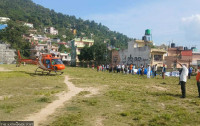
Weak health services mean serious patients in Karnali sometimes have to be airlifted to Surkhet or beyond.
As many as three pregnant or postpartum women are medevaced each week. Fifty-four women were rescued by air last fiscal year, taking the total number of such rescues from the province to 302. Each rescue costs between Rs300,000 and Rs800,000.
Although the service has helped reduce maternal deaths, serious gaps remain. Annual maternal deaths have fallen from 33 before the air ambulance programme to 12, according to provincial health officials. Eleven women, however, died during childbirth last fiscal year.
Karnali also faces a severe shortage of specialist doctors. Provincial Hospital Surkhet can operate 500 beds but provides only 300 because of staff shortages. Of 14 sanctioned specialist posts, only one is permanently filled.
Only 463 of 908 sanctioned health posts in the province are occupied, while 60 specialist positions remain vacant across eight districts. Thirty-five percent of women still give birth at home, according to the 2021 census.
Tourism potential marred by infrastructure shortage
Tourism offers another route to jobs and local income. Rara and Shey Phoksundo attract growing numbers of visitors, but poor roads, limited accommodation, unreliable communications and weak services prevent many tourists from staying longer or returning.
Rara received 19,457 visitors in the 2025-26 fiscal year, up from 17,000 the previous year. Tourism entrepreneur Chandra Prakash Sharma said poor roads, a lack of quality hotels and weak telephone and Wi-Fi services continue to discourage visitors.
“There is no question about Rara’s beauty—it captivates everyone who visits,” said visitor Shailendra Oli. “But the rough and risky roads, coupled with inadequate accommodation and food facilities, make you reluctant to return after visiting once.”
Shey Phoksundo faces similar problems. Last fiscal year, 17,000 tourists visited the lake. Located at an altitude of 3,650 metres, it can be reached only after a two-day trek from Dunai, the district headquarters of Dolpa.
Wasted hydropower potential
Karnali has an estimated hydropower potential of 18,000 megawatts, but only about 10 MW is currently generated.
The 106 MW Jagdulla hydropower project in Dolpa had still not started construction six months after its contract was signed. The 900 MW Upper Karnali project has yet to secure investment, while the 410 MW Nalgad reservoir project and other schemes face delays.
According to the Provincial Planning Commission, only 33.39 percent of Karnali’s population has direct access to electricity, while 67 percent still relies on traditional lamps and solar power.
“Until electricity reaches every household, infrastructure development in Karnali will be incomplete,” said Ashok Nath Yogi, a former member of the commission.
A natural gas deposit discovered in Dailekh is another major economic opportunity. About 80.7 billion cubic metres of natural gas was confirmed at Jaljale in Bhairabi Rural Municipality-1 a year ago. But progress towards commercial production has stalled.
Tied to federal support
Karnali’s dependence on the federal government is a clear sign of its weak economic base.
The province has introduced budgets totalling Rs299.74 billion since its establishment, but its own internal revenue has amounted to only Rs4.27 billion. It has received Rs112 billion in federal grants.
Mukunda Sharma, an associate professor at Mid-Western University, said the province had little choice but to depend on federal transfers because its own revenue base was small.
“Revenue sources have not been properly identified and the tax collection system is still weak,” he said.
Provincial treasury controller Ratna Prasad Subedi said provincial revenue was insufficient even to cover routine administrative expenses, leaving an annual shortfall of about Rs8 billion




 23.63°C Kathmandu