RSP chair Lamichhane tells CIAA to act if government officials obstruct its work
Chief anti-graft commissioner Rai admits the government had engaged them in a discussion on passport prosecution. Lamichhane says the CIAA should pursue anyone, including government officials, if evidence shows they interfered with its work.
Prime Minister Balendra Shah and his secretariat have come under parliamentary scrutiny over allegations that officials of the Commission for Investigation of Abuse of Authority were held at the Prime Minister’s Office for seven hours and pressured to prosecute officials in a passport procurement case.
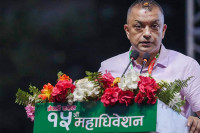
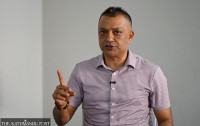
Rabi Lamichhane, chair of the ruling Rastriya Swatantra Party, said on Thursday that obstructing the CIAA’s work was an offence. He urged the constitutional commission to act if the government had interfered with its investigation.
Speaking at a meeting of the State Affairs and Good Governance Committee, Lamichhane said that, as the leader of the party running the government, he would not object if the CIAA took action against anyone found to have obstructed its work.
“I want to tell the entire CIAA team that if there has been any weakness on the part of our government and if that has created any obstruction to your work, creating obstacles to investigation and prosecution is itself a form of crime,” Lamichhane said. “If you have clear grounds, reasons and evidence of such a problem, you can proceed with the necessary action.”
Lamichhane said the ruling party would not exert pressure on the commission if anyone was found to have interfered with its work.
“If there are people involved in such activities and you have the grounds and reasons, you will face no pressure or influence of any kind from us,” the RSP chief said.
He also said the government had a responsibility to ensure that constitutional bodies such as the CIAA could work independently and without interference.
Shah and his secretariat have been accused of summoning CIAA officials, including Chief Commissioner Prem Kumar Rai, to the Prime Minister’s Office on June 15 and keeping them there for around seven hours while pressuring the commission to prosecute officials in connection with a passport procurement contract.
Shah took up the issue at the RSP general convention in Chitwan on June 21, saying that the CIAA could be questioned for five hours and, if necessary, for five years.
“If the CIAA [leadership] needs to be held for five hours to answer questions and give advice, then we can keep it for not just five hours, but five years, if necessary,” Shah said. “We will not do anything against the rules.”
The CIAA had not publicly commented on the alleged incident until Thursday.
Chief Commissioner Rai said the CIAA had been invited to the Prime Minister’s Office for discussions on the passport issue.
“The prime minister may have invited the concerned parties for discussions and suggestions on the passport issue. We also participated in the discussion,” Rai said. “Some areas requiring improvement were identified, and some improvements were subsequently made.”
Rai said the case had already been registered and prosecuted.
“As the case has already been registered and prosecution taken place, the legal aspects are now for the relevant authorities to deal with,” Rai said, elaborating on the legality of the PMO meeting. “The prosecution document itself clearly states the grounds on which the case was pursued. Therefore, I do not want to go into the matter unnecessarily.”
Responding to allegations that the prosecution had been initiated under pressure from the Prime Minister’s Office, Rai said the case had not been pursued without legal grounds.
“Looking at the relevant documents, it is clear that the prosecution was not initiated without grounds or without shortcomings being identified,” he said.
The prime minister’s secretariat has also been accused of pressuring the CIAA to file a case against officials deemed responsible for irregularities in the passport procurement process and to seek arrest warrants against them.
Officials at the commission were reportedly pressured into arresting Tirtha Raj Aryal, director general of the Department of Passports, and Sunil Kumar KC, a director at the department.
Lamichhane’s comments come against that backdrop. He said the CIAA should act if it believed the government or people associated with it had obstructed the commission’s work.
Rai attended the committee meeting along with commissioners Jaya Bahadur Chand, Hari Paudel and Sumitra Shrestha Amatya and senior CIAA officials.
Opposition lawmakers asked the anti-graft officials to explain what had happened at the Prime Minister’s Office and whether the commission had been subjected to pressure. Some lawmakers stressed that the CIAA should be allowed to work independently.
Harka Raj Rai, chair of the Shram Sanskriti Party and a committee member, said concerns over the alleged pressure on the CIAA had been raised both in Parliament and in the committee.
He questioned who would hold the prime minister accountable if the head of the executive himself abused his authority.
“If the prime minister keeps you confined for seven hours, that is an abuse of authority. Who will take action against the prime minister for abusing that authority? He is the head of the executive himself,” lawmaker Rai said.
He said the episode had raised questions about whether the CIAA could operate independently and without fear.
Opposition lawmakers questioned the independence of the commission saying that it appeared to be under political pressure. They demanded an explanation of its dealings with the Prime Minister’s Office.
CPN-UML lawmaker Padma Aryal said the commission may be working under pressure.
“It appears that the CIAA is under pressure and influence, with attempts being made to use it for political purposes,” Aryal said.
She said constitutional bodies must be allowed to work independently if the government is to deliver on its promises of good governance.
Nepali Congress lawmaker Arjun Narsingh KC said efforts were being made to weaken the CIAA.
RSP lawmaker Amaresh Kumar Singh said the CIAA had the authority to investigate the prime minister and ministers and that it should not be answerable to the executive.
Singh also urged CIAA officials to assert the commission’s constitutional autonomy when summoned by the prime minister or ministers.
“Do not go if they summon you. The CIAA does not fall under the Prime Minister’s Office. Even if you receive a letter, tell them that you are an independent constitutional body,” Singh said.




 21°C Kathmandu