Ronda Zelezny-Green on how Nepal’s teachers are using AI ‘almost blindly’
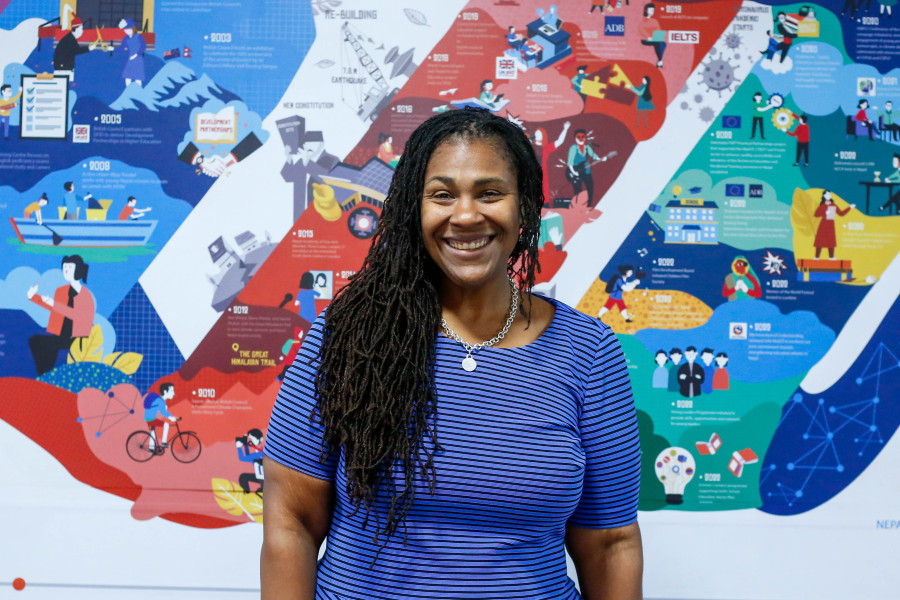
The AI-in-education specialist and the research lead for the British Council’s AI4ED project says Nepal must focus on teacher training and AI sovereignty as the technology enters classrooms.Dipesh Darshandhari/TKP
Artificial intelligence is already finding its way into Nepal’s classrooms, even as the education system is still figuring out how to respond to it.
Teachers and students are already using generative AI tools such as ChatGPT, according to Ronda Zelezny-Green, an international consultant specialising in AI in education and digital skills and the research lead for the British Council Nepal’s AI4ED project.
The question, she says, is no longer whether AI should be used in education. It is how it can be used to improve learning without creating new problems. “The teachers are ready and open to using generative AI,” Zelezny-Green told The Post. “So now it’s about figuring out how to use it to advance education and learning.”
The first phase of AI4ED involved a national mixed-methods study of 800 teachers. The research found that geography had less influence on AI use than expected. Teachers in urban and rural areas were using AI in broadly similar ways.
Age, however, made a significant difference. Among teachers aged 30 or younger, 94 percent were described as fast AI adopters with experience using AI. Among those aged 50 or older, the figure fell to 54 percent.
Perhaps more striking was what teachers themselves identified as the biggest obstacle.
It was not infrastructure.
It was training.
“They don’t know where to get training, and the government isn’t providing it,” Zelezny-Green said. “So they are using AI, but almost blindly.”
The gap could become increasingly important as AI tools become more common in schools. Knowing how to operate an AI chatbot is not the same as knowing how to use it responsibly or effectively.
Zelezny-Green, who has worked on digital skills and education technology across 80 countries, says teachers globally are struggling with the same problem, not just in Nepal. “There simply isn’t enough teacher training,” she said.
For Nepal, that training needs to be designed around the country’s own education system rather than imported wholesale from technology companies. Teachers need to understand not only how to prompt an AI system, but also how to assess its answers, protect sensitive information, and recognise the ethical risks of using such tools.
Data protection is one particular concern. Teachers may not realise that information entered into AI systems can be used for training or other purposes. Responsible AI adoption, therefore, cannot be limited to teachers. Schools, students, and parents all have a role to play. “It needs to be an ecosystem of responsibility shared among everyone who uses AI,” she said.
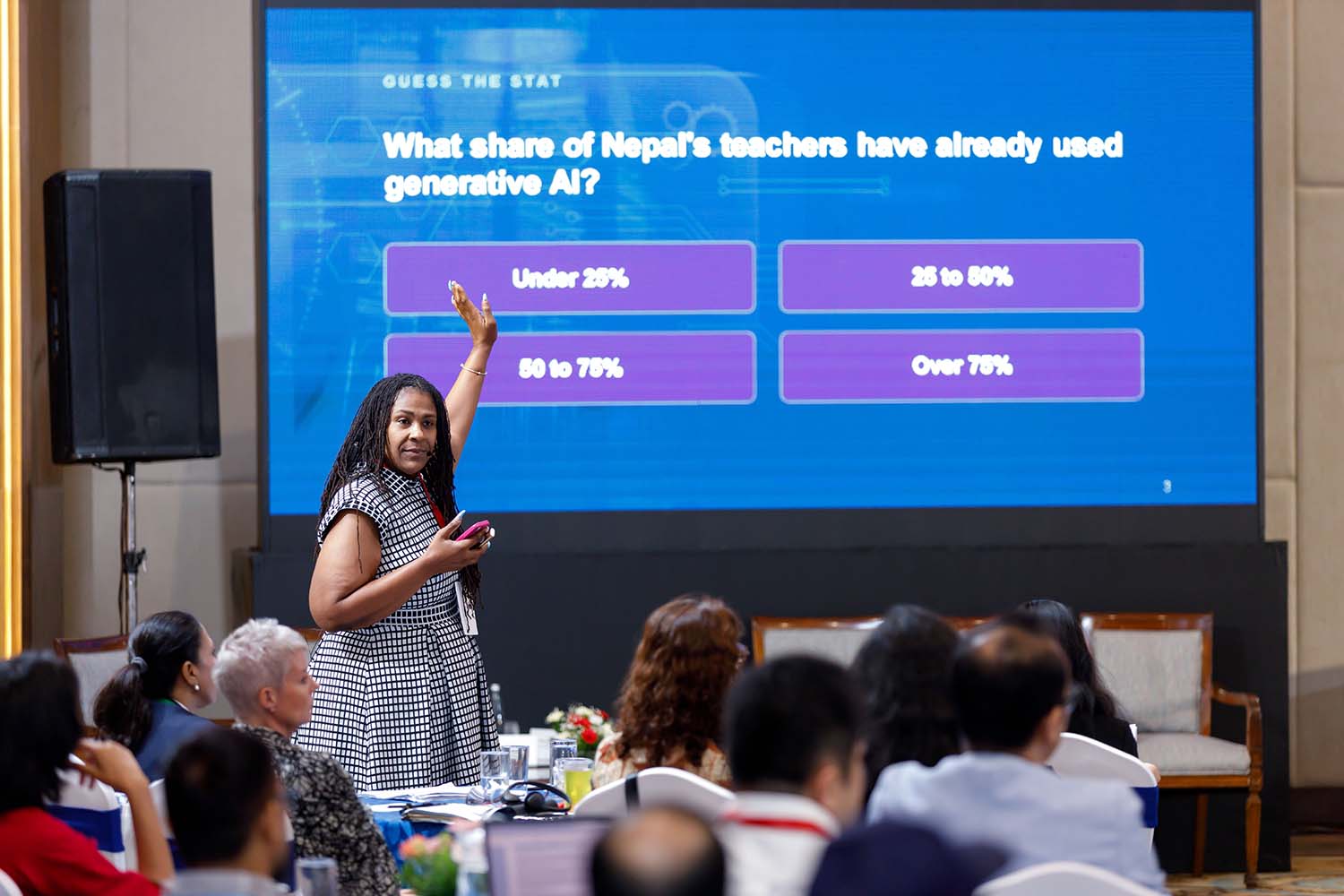
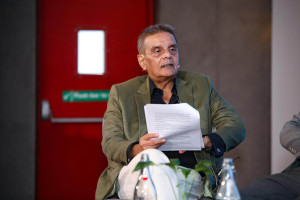
Zelezny-Green speaking at the ‘Teaching and Learning Futures Nepal: AI for Equitable Education’ conference in Kathmandu on August 18. Photo: Courtesy of The British Council Nepal
Nepal also faces another challenge—and an opportunity—in the language gap.
Many of the most widely used AI systems perform far better in English than in Nepali and other local languages. Zelezny-Green says current tools can produce inaccurate translations and culturally unrealistic representations.
But she sees that weakness as an opportunity for Nepal to develop its own solutions.
Smaller language models can be cheaper to develop and maintain than the massive systems behind popular commercial chatbots. Nepal could potentially develop models designed specifically for Nepali and other local languages, using resources already available in the country.
“You have Nepali books here. You have the resources, and the government could support this,” she said. The biggest challenge, she argues, would be access to the computing power needed to train such models—and the political will to make it happen.
That leads to a broader question about who controls the technology, data and infrastructure on which AI depends.
Zelezny-Green argues that Nepal should think seriously about “AI sovereignty”—the idea that countries should not become entirely dependent on foreign companies for AI technologies and infrastructure. “Wholesale reliance on foreign AI technologies, especially expensive American ones, will not be sustainable in the long run,” she said.
But developing local technologies does not solve the question of how AI should be used in classrooms. One of the biggest changes may need to come from the way students are taught and assessed.
For years, education systems have talked about the importance of creativity, collaboration and problem-solving. Generative AI makes those skills even more important because students can now outsource many conventional forms of homework to a chatbot.
Instead of treating this only as a cheating problem, Zelezny-Green argues that schools need to rethink assessment itself. “If a teacher puts in little effort, why should a student work hard when they can simply ask ChatGPT or Claude to do their homework?” she said.
She believes education needs “a new social contract” around AI. That does not mean abandoning foundational skills. In fact, she argues the opposite.
Students first need strong foundations in reading and writing, critical thinking and critical media literacy. They need to be able to recognise misinformation, disinformation and AI-generated content before they can be expected to use AI responsibly.
This is also why she rejects the idea of simply banning AI from schools. “One of my biggest pet peeves is the idea that we should simply ban AI,” she said.
Even students who are not encouraged to use AI will encounter it outside school, she argues. They therefore need to understand what the technology is, what its risks are and how to use it responsibly.
For Nepal, that requires policy to catch up with practice.
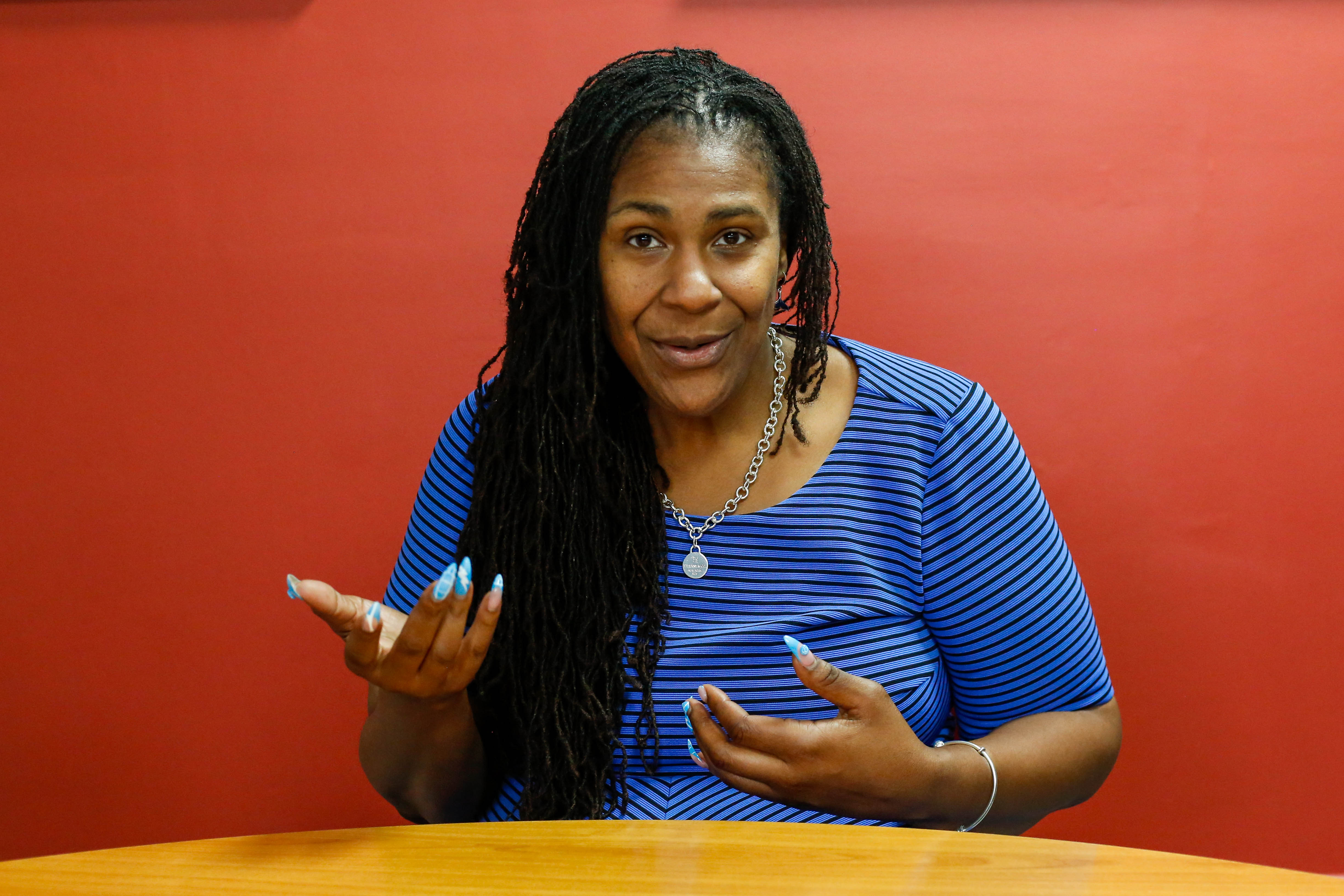
Dipesh Darshandhari/TKP
The country has several policy frameworks dealing with digital development and artificial intelligence. But, according to Zelezny-Green, there is still a gap when it comes specifically to education.
“The biggest gap is training, but there is also a policy gap,” she said. The AI4ED project, she says, could provide evidence for developing such a policy. The challenge is to avoid treating AI as a technological solution to every problem facing Nepal’s education system.
For Zelezny-Green, technology remains secondary to the people using it. “AI in education is a tool, and it will always be a tool,” she said. “It is not a magic wand.”
Technology will continue to change. The more important question, she argues, is whether teachers, students, parents, and policymakers are prepared to lead that change.
Your research found that women’s access to devices and AI does not necessarily close the gender gap. Why is that?
We can’t simply assume that providing devices and internet access will ensure equal participation. One key factor is time poverty. Women and female teachers often have far less time to practice and develop their AI skills because they are also responsible for unpaid care work.
You said AI could help address problems beyond education. What possibilities do you see?
One of the most innovative uses of AI is in addressing climate change, such as predicting floods and other disasters. That is important for education because schools are increasingly affected by climate-related events. AI is also being used to solve long-standing mathematical problems. If it can solve complex maths problems, what about some of these other problems? People need to be more imaginative about what AI can potentially be used for.
You have described AI sovereignty as important for Nepal. What does that mean in practical terms?
Countries do not have to surrender national resources, such as people’s data and data centers, to support AI technologies. Nepal needs to consider what AI sovereignty and independence should look like. Wholesale reliance on foreign AI technologies, especially expensive Western ones, will not be sustainable in the long run.
With all things digital, whether it’s social media or AI, it comes down to how we approach them. So, if you had to roughly weigh the ways people are using AI for harm against the ways they’re using it to improve society, are you more worried or hopeful about where we’re heading?
I’m hopeful because I think there are enough people using AI for good, but there will always be bad actors.
We’re having to think about things we never had to before to stay safe online. One example is voice cloning. For example, having a family passphrase can help verify someone’s identity if their voice has been cloned.
That’s why education has such an important role in the AI era. Almost no one is learning about digital citizenship—what it means to be a responsible citizen in an AI-enabled world. School curricula can help address this, but we’re not really seeing it yet, either globally or in Nepal.




 15.93°C Kathmandu