What to know about the US trial over Mamta Kafle’s disappearance
More than two years after the Nepali nurse vanished in Virginia, her husband is on trial for murder, though her body has never been found. He has pleaded not guilty. Here are 11 key questions about the case and the evidence. Mamata Kafle
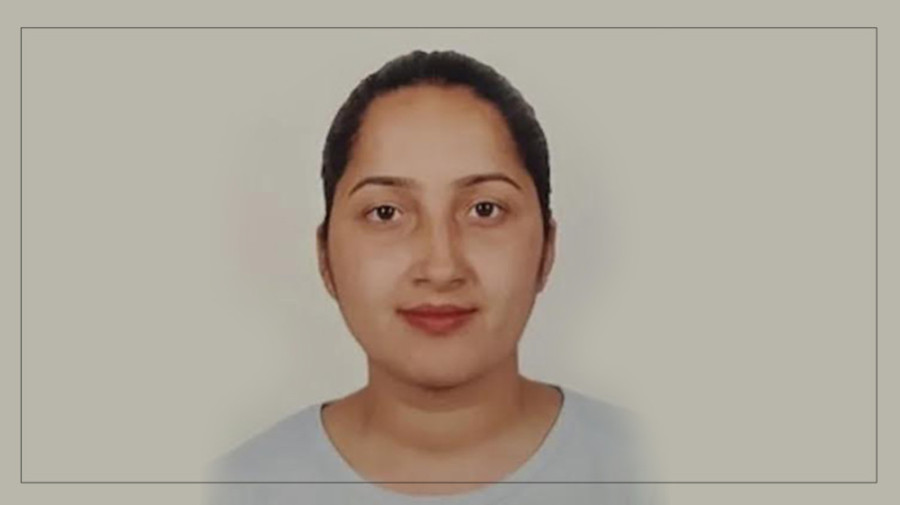
Mamta Kafle Bhatt, a native of Nepal, moved to Northern Virginia, US, in 2021. She was last seen at work on July 27, 2024. Her last known contact was a video call with her mother in Nepal on July 29. Within days, her phone and social media went quiet. Police visited her Manassas Park home on August 2 at her colleagues’ request. Her husband, Naresh Bhatt, said the couple were separating and she might be visiting family in New York or Texas. Police later learned she had no biological family in the United States.
Three weeks later, officers searched the house and arrested Bhatt. Prosecutors say he killed his wife on or about July 30, dismembered her and discarded her remains in trash bags. Her body has never been found.
Bhatt, 39, is on trial in Prince William County Circuit Court on charges of first-degree murder, defiling, and concealing a dead body. A 17-member jury was seated this month in Prince William County, Va. He has pleaded not guilty.
The case tests whether circumstantial and forensic evidence can prove a killing when the victim’s remains are missing. It has also drawn attention in Nepal and among Nepali communities abroad. Here is what we know.
Who was Mamta Kafle Bhatt?
Mamta was born in Nepal. After completing her school education in Nepal, she went to Bangalore, India to study nursing. She moved to the United States a year later after marrying Bhatt and studied for the American nursing licensing exam, and a witness testified she held a green card.
She worked at UVA Health Prince William Medical Center in Manassas. Colleagues described her as cheerful and tireless, and a friend said she hoped to advance her nursing career in the States.
Who is Naresh Bhatt?
Bhatt is an immigrant from Nepal. CNN reports he served as an automated logistics specialist in the US Army Reserve from June 2017 to February 2024, with no deployments. Fairfax County police told Fox 5 that he was hired as a police recruit in 2020 and dismissed after 22 days for failing to meet the requirements. A public defender represents him and the defense told a judge in 2024 that he has no history of violence.
He has been jailed since August 22, 2024. Court proceedings have repeatedly needed interpreters and his arraignment on the indictment was postponed once because none was available, CNN reported.
How did the case begin?
On July 28, 2024, a friend saw two missed calls from Kafle. The next day her phone went silent, and her frequent posts on Facebook and TikTok had stopped. Her mother last spoke with her over a video call on July 29. She missed work without calling on August 1. Her nurse manager, Jessica Harasek, testified that she asked police to check on her after two missed workdays.
According to that timeline in the local newspaper Prince William Times, Kafle’s phone data placed it near a body of water in Loudoun County while Bhatt’s phone was off the network for two hours. He showed police a Loudoun cafe receipt from that day.
After officers visited on August 2, Bhatt told investigators he last saw her on July 31, at the dinner table, CNN reported. He reported her missing on August 5. Police said they first thought he was cooperating, but on August 21, after a search warrant, Manassas Park Police Chief Mario Lugo said he had stopped. Bhatt was arrested the next day.
What do the prosecutors say they have?
At the September 20, 2024 bond hearing, prosecutors laid out much of their case, NBC4 reported. Cadaver dogs signaled in the master bedroom and bathroom, they said, and blood evidence showed a body had been dragged from the bedroom to the bathroom. Forensic tests on August 24 and 25 confirmed the substance was blood. Investigators also seized a handheld power saw, and Chief Lugo has said he believes Kafle was dismembered in the house.
Video, prosecutors said, shows Bhatt putting trash bags into dumpsters around Northern Virginia, including at the apartment complex where he took his daughter to a babysitter and at a Falls Church trash compactor. They said another video shows him buying rubberised gloves, knives, extra-large storage bags and cleaning supplies after his wife disappeared.
They also pointed to his internet searches for a diagram of a brain and for a chicken farm nearby, which InsideNoVA placed at about 4:30 am on July 30. They said packed suitcases and passports suggested he might flee.
The Prince William Times reported that prosecutors reconstructed his movements from video, his Tesla’s GPS data and license plate readers. He sold the car on August 19, before police searched the home. Prosecutors also argue Kafle would not have left voluntarily weeks before her daughter’s first birthday.
What is the DNA evidence?
In October 2024, Virginia’s forensic science department found that blood on the saw matched a DNA profile developed from Kafle’s hairbrush. Court filings put the odds of an unrelated match below one in eight billion, and Bhatt and the couple’s daughter were excluded as contributors. Prosecutors told jurors Bhatt gave the saw to a landscaper, who turned it over to police after her disappearance became public. They argue he was trying to get rid of evidence.
What is new in the forensic evidence?
A forensic report dated April 29, 2026 documented three human hairs and 13 hair fragments recovered from the saw. The fragments were judged for DNA testing. The three may be suitable for nuclear DNA testing and were referred for analysis and no result has been made public.
A forensic scientist at George Mason University told A&E that hairs matching those of Kafle would add support to the prosecution’s theory. She cautioned that finding Bhatt’s DNA on the saw would not by itself prove he used it in a crime.
Have investigators found her remains?
No. In March 2025, attention turned to the Page County landfill in Luray, Virginia, which receives trash from the Manassas and Falls Church dumpsters. The Prince William Times reported that searches were underway there. A local station reported the police chief said his department was not actively searching it, citing a lack of specifics and the difficulty of the site. The two accounts conflict.
Why did the trial take two years?
Because no body had been found, Bhatt was first charged on August 22, 2024 with a single count of concealing a dead body, a class 6 felony, Fox 5 reported. A criminal complaint nonetheless alleged he murdered his wife on or about July 30.
On December 2, a grand jury indicted him on first-degree murder and defiling a dead body. The charges were combined with the concealment count. Bhatt waived his right to speedy trial at a hearing days later.
A judge denied bond on August 26, 2024 and Circuit Judge Kimberly Irving did so again on September 20 after hearing the prosecution’s evidence. A December 2024 trial date was set, with the defense pushing to move fast. But the volume of evidence grew after the indictment, and in July 2025, at the request of both sides, Judge Irving reluctantly postponed the trial to October 2026. This year, the defense asked for another delay and the judge refused, according to WSET.
What has the jury heard?
Jury selection began October 5, the day Bhatt was arraigned and pleaded not guilty to all three counts. After a panel of 12 jurors and five alternates was seated, testimony began October 7.
In opening statements, lead prosecutor Matthew Sweet told jurors that a series of especially violent crimes against Kafle began on July 30, 2024. He alleged Bhatt killed and dismembered her and gave a power saw to a neighborhood landscaper. Tracey Lenox, the chief public defender and Bhatt’s lead lawyer, said prosecutors would fill a gap in the evidence with guesses rather than fact.
Kafle’s mother, Gita Kafle, testified that she video-chatted with her daughter every day and that her daughter would not have left without telling her. Family friend Sarita Neupane said Kafle stayed with her for more than two weeks after a fight, months before the disappearance. She said Kafle told Bhatt hit her and showed her a video of a bruise, which NBC4 reported forced the family to postpone the baby’s rice-feeding ceremony. On cross-examination, Neupane acknowledged she never saw Bhatt hit his wife and that her account came from Kafle.
Body-camera footage showed Bhatt putting a relative on speakerphone, who said Kafle would not leave their 11-month old daughter. Claudia Ventura said she felt something was wrong at their first meeting. She testified she found Lysol and cleaning wipes in the bedroom closet, that he first said his wife was taking abortion pills before showing her birth-control pills, and that she doubted his account of the July 31 citizenship appointment. She said she was told Kafle attended it and was due back for a final interview on August 5. NBC4 reported he also floated a theory involving the MS-13 gang, a transnational criminal gang, which has nothing linked to the case.
Ventura testified that on August 21, the master bedroom and bathroom “lit up blue” under BlueStar, a luminol-based test that flags possible blood but does not identify it. Prosecutors allege Bhatt rearranged furniture to cover a blood-soaked carpet. Andrea Feldman, the lead crime scene investigator in the case, showed jurors photographs of suspected bloodstains, zip ties, knives and cleaning products. On cross-examination she said she did not know whether officers moved a crib in the stairwell before she arrived, or everything they touched, and that she did not step in blood.
Before the trial, the judge limited which of Kafle’s past statements about alleged abuse jurors may hear, allowing two and leaving others open to hearsay objections, Fox 5 reported.
What does the defense say?
Lenox, with co-counsel Laurel Rodewald, argues the circumstantial case falls short. The defense says a language barrier may have shaped how Bhatt and Detective Ventura understood each other, that body-camera footage shows him constantly interacting with his daughter and cooperating, and that the scene may have been disturbed before investigators arrived.
It points to a detective’s corrected statement. He first said a body was dragged out of the home, then clarified it was moved between rooms, and a captain wrote that after more than 30 hours awake he might have used the wrong words, NBC4 reported. The defense also disputes the blood-detection method and who typed searches about remarrying after a spouse’s death.
Prosecutors counter that forensic evidence from the homes, the Google searches and Bhatt’s statements establish his guilt.
Can someone be convicted of murder without a body?
The prosecution must persuade the jury, beyond a reasonable doubt, that Kafle is dead and that Bhatt caused her death, using blood evidence, DNA, his movements, and his statements since investigators have no body. Laura Killinger, a former prosecutor and William & Mary law professor, told the public broadcaster WHRO that without a body there is no coroner’s examination or established method of death. But circumstantial evidence, she said, is usually admissible and often decisive, and advances in DNA, fibre, and hair analysis have changed such cases.
Virginia has done it before. Killinger said the state’s first no-body murder case was the 1980 killing of Radford University student Gina Renee Hall. Stephen Epperly was convicted and sentenced to life without a confession, on testimony, bloodstains in a cabin and fibers in a car trunk. Her remains were not found for about 40 years. In March 2024 in Hampton, a jury convicted Cory Bigsby of second-degree murder and concealing the body of his 4-year-old son, Codi, after a seven-day trial, WHRO reported. Prosecutors there also had jailhouse statements he later recanted.
Tad DiBiase, a former federal prosecutor, found no-body trials end in conviction more often than trials with a body: 87 percent against 70 percent. Neither precedent predicts this verdict, since each case turned on its own evidence.
What has happened to the couple’s daughter?
The couple’s daughter, Neema, was about to turn one when Kafle vanished. The child is now three years old and is being cared for by her relatives, including Kafle’s mother and brother.
What happens next, and what is unknown?
The trial could last seven weeks, with a verdict possible in late November. Prosecutors are expected to call five state forensic witnesses. The defense is expected to call more than a dozen witnesses, including family and it is unclear whether Bhatt will testify.
Why does the case resonate in Nepal and among Nepalis abroad?
Many Nepalis see in it a problem they know from home. Bhatt has pleaded not guilty and is presumed innocent, but the allegations of abuse at trial have struck a chord in a country where violence by partners is widespread. The 2022 National Demographic and Health Survey found that 27 percent of Nepali women had experienced intimate partner violence in their lifetime, and registered domestic violence cases have risen over the years.
For many women, settling abroad is partly an escape from that danger, yet the risk does not always stay behind. Other Nepali women were killed in the United States in 2024, including Muna Pandey, shot in her Houston apartment on August 29, and Chandra May Poudel-Rimal and Tika Dhimal, each killed by her husband in Ohio.
Aarya Chand is a reporter at The Kathmandu Post covering social issues. Before moving to the social beat, Chand was an intern covering culture and lifestyle for the Post.




 22.14°C Kathmandu