Members push to revive SAARC, but India holds firm
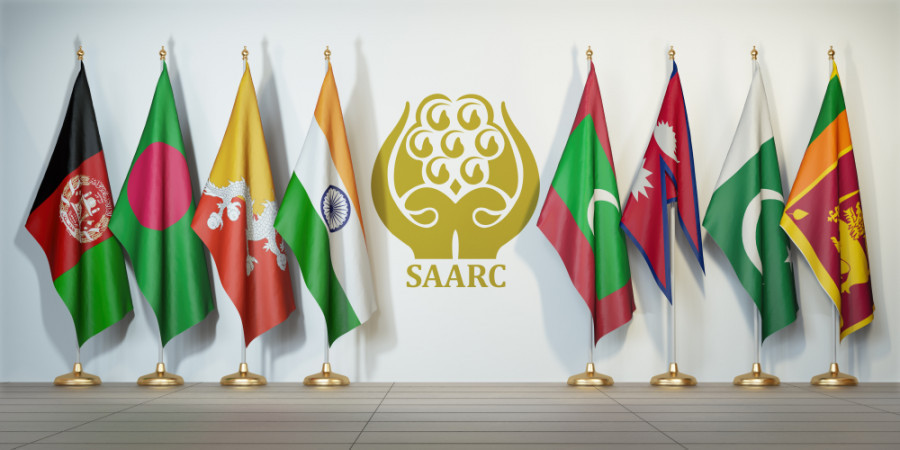
Twelve years since the last summit, the bloc remains paralysed by deep-seated rivalry between India and Pakistan, and the requirement for unanimous consent among its eight members. Shutterstock
Calls to revive the South Asian Association for Regional Cooperation (SAARC) are gaining momentum, with several member states expressing renewed interest in reactivating the regional bloc. But tensions between India and Pakistan remain the main obstacle.
During a visit to Pakistan last week, Maldivian President Mohamed Muizzu called for SAARC to be revived and pledged that his country would play an active role in the process.
Speaking at a joint press conference with Pakistani Prime Minister Shehbaz Sharif in Islamabad on October 21, Muizzu said regional challenges could be addressed through collective efforts. He stressed the need to rebuild trust, promote meaningful dialogue and strengthen mutual understanding among member states.
He also called for the long-stalled SAARC summit to be held as soon as possible, saying the Maldives was ready to work with other members to create the necessary conditions. Muizzu had made a similar appeal in July, saying at an event marking the Maldives' Independence Day that his country was prepared to mediate efforts to reactivate the organisation.
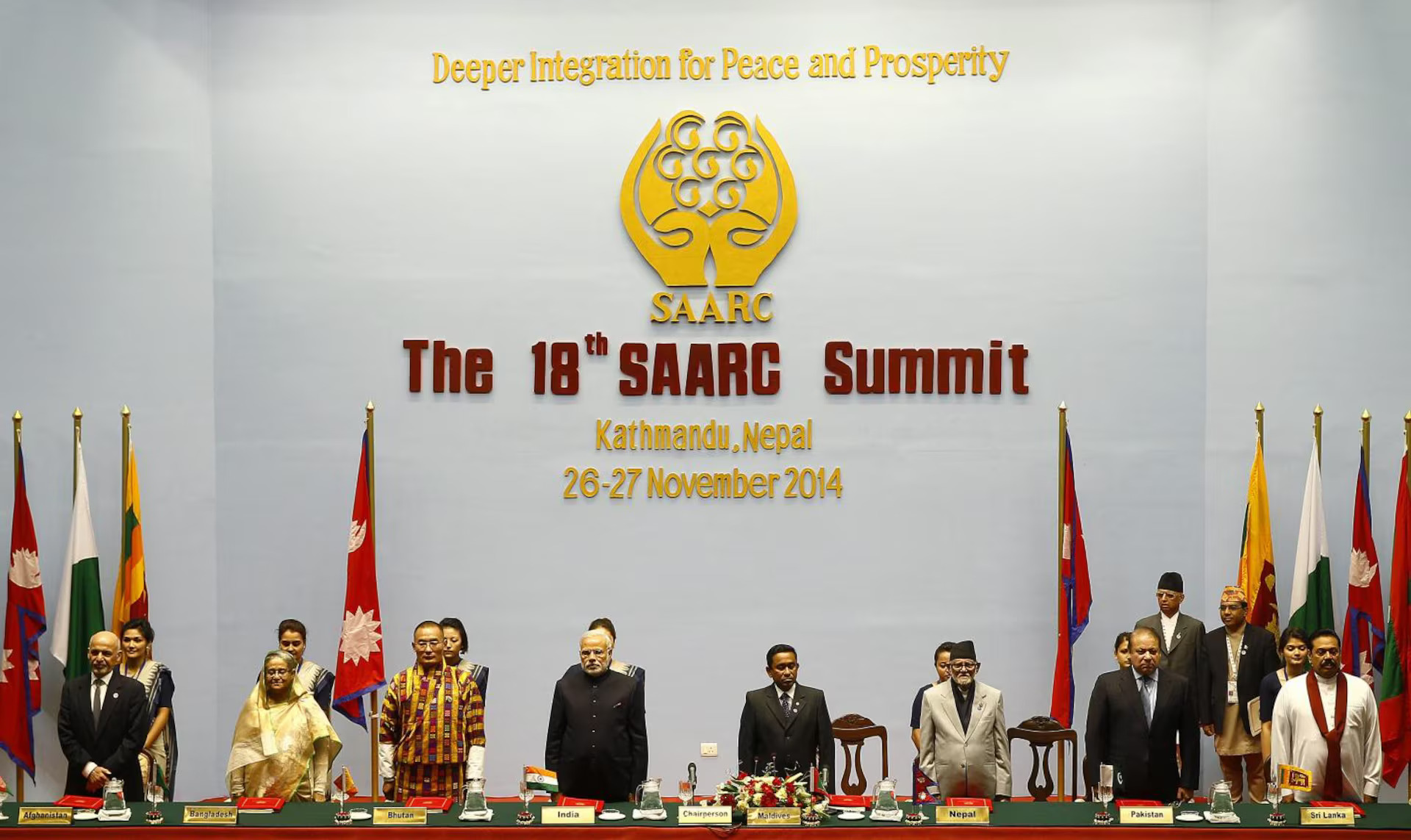
The last SAARC summit was held in Kathmandu on November 26-27, 2014. No subsequent summit has taken place, although six would ordinarily have been held in the intervening 12 years. The bloc comprises Afghanistan, Bangladesh, Bhutan, India, the Maldives, Nepal, Pakistan and Sri Lanka.
Nepal, which has chaired SAARC since the last summit, has made repeated attempts over the past decade to get the organisation moving again, without success. Diplomats and regional affairs experts see the renewed interest among member states as a positive sign, but caution that expressions of support alone are unlikely to revive the bloc.
Diplomat Shambhu Ram Simkhada said there were signs of a modest positive shift in diplomatic attitudes towards SAARC, including among some diplomats in India.
“While it is encouraging that more people are calling for SAARC to be revived, it is unlikely to make an immediate difference,” Simkhada said. “Unless India changes its position, SAARC is unlikely to regain momentum.”
India-Pakistan rivalry the main hurdle
The 18th SAARC summit in Kathmandu decided that the next summit would be held in Islamabad in November 2016. But the plan fell apart after an attack on an Indian Army camp in Uri, in Indian-administered Kashmir, on September 18, 2016, killed 18 Indian soldiers.
India blamed Pakistan for the attack and announced that it would not attend the Islamabad summit, derailing the meeting.
Relations between the two countries have not improved since then. Instead, tensions have periodically escalated, most recently in April and May last year, when the two nuclear-armed neighbours came close to another war.
An attack in Pahalgam, in Indian-administered Kashmir, on April 22, 2025, killed 26 tourists, including one Nepali national. India blamed Pakistan and launched air strikes at locations in Pakistan. Pakistan retaliated with missile and drone attacks on Indian territory. The hostilities ended after the two sides agreed to a ceasefire following US mediation.
While Nepal, the Maldives, Bangladesh, Pakistan, Sri Lanka and Bhutan have expressed support for reviving SAARC through diplomatic initiatives and public statements, India has shown no willingness to proceed with another summit.
Two days after Muizzu's remarks in Islamabad, India's foreign ministry reiterated its position. At a regular press briefing on October 23, spokesperson Randhir Jaiswal said India supported greater connectivity in South Asia but suggested that Pakistan was responsible for SAARC's paralysis.
“India is in favour of greater connectivity in South Asia,” Jaiswal said. “But as far as SAARC is concerned, I don't want to repeat myself on this issue. Everyone knows which country is responsible for the obstacles to SAARC.”
India has consistently argued since 2016 that SAARC cannot function while a member state remains involved in “terrorist activities”. Its foreign ministry has repeatedly said circumstances have not changed enough to allow another summit.
Pakistan, however, accuses India of blocking the organisation. During Muizzu's visit, Pakistani Foreign Ministry spokesperson Sajjad Haider Khan said India had held SAARC hostage since 2016.
(Front L-R) Afghanistan's President Ashraf Ghani, Bangladesh's Prime Minister Sheikh Hasina, Bhutan's Prime Minister Tshering Tobgay, India's Prime Minister Narendra Modi, Maldives' President Abdulla Yameen, Nepal's Prime Minister Sushil Koirala, Pakistan's Prime Minister Nawaz Sharif and Sri Lanka's President Mahinda Rajapaksa attend the opening session of 18th South Asian Association for Regional Cooperation (SAARC) summit in Kathmandu November 26, 2014. Reuters
“The SAARC summit was supposed to be held in Islamabad, but it could not take place,” he said. “All countries in the region want to see SAARC revived. It is India, not any other country in SAARC, that has held it hostage.”
As the country scheduled to host the 19th summit, Pakistan has sought support from other member states. In early 2026, Pakistani federal minister Ahsan Iqbal Chaudhary raised the issue while attending the swearing-in ceremony of Bangladesh’s Prime Minister Tarique Rahman. On February 19, Pakistan’s foreign ministry said it would work with Bangladesh to revive the organisation.
At a press conference, the foreign ministry spokesperson said the formation of a new government in Bangladesh had increased the prospects of reviving SAARC. Blaming India for the bloc’s paralysis, the spokesperson said Pakistan would work with Bangladesh to make it functional again.
Bangladesh, Sri Lanka, and Bhutan join the push
Bangladesh’s government, formed under Tarique Rahman after the February 2026 general election, has also backed efforts to revive SAARC.
Foreign Minister Khalilur Rahman recently told parliament that the government was working to reactivate the organisation. He said he had been conveying Bangladesh’s strong interest in its revival during meetings with ministers and senior representatives of member states.
Founded in 1985, SAARC held its first summit in Dhaka.
Debate on reviving SAARC has also gained momentum in Sri Lanka, which has continued to pursue diplomatic dialogue and regional cooperation efforts on the issue. In June, the Regional Centre for Strategic Studies, a Sri Lankan think tank, organised a seminar in Colombo on reviving the bloc. Addressing the event, SAARC Secretary General Golam Sarwar, Sri Lankan government officials and diplomats stressed the need to revitalise the organisation.
During the same period, Sarwar met Sri Lankan Prime Minister Harini Amarasuriya, who reiterated her country’s longstanding commitment to SAARC.
Bhutan, too, has raised the need to reactivate the bloc in bilateral diplomatic exchanges. During a foreign secretary-level meeting in Bangladesh in August, the two sides emphasised the importance of reviving the bloc. Bhutan has also put forward its claim to nominate the organisation's 16th secretary-general.
The secretariat is based in Kathmandu. Nepal continues to hold the chairmanship because the 2016 summit, which was expected to transfer the chair to Pakistan, never took place.
The current secretary-general, Bangladesh’s Md Golam Sarwar, has completed his three-year term. Bhutan is next in line to nominate a successor and is seeking the agreement of other member states.
Afghanistan, which joined SAARC at the 13th summit in Dhaka in November 2005 following a proposal by India, presents another challenge. At the same summit, China was granted observer status at Nepal’s initiative.
The Taliban's return to power in Afghanistan in August 2021 has further complicated the regional picture. Relations between the Taliban-led government and Pakistan have repeatedly deteriorated, adding to the uncertainty surrounding SAARC’s future.
So far, none of the other Saarc member states appears to have formally recognised the Taliban government. India continues to provide humanitarian assistance to Afghanistan and has expanded diplomatic engagement with the country, but has yet to formally recognise the Taliban administration. The situation in Afghanistan has also clouded SAARC’s future.
The paralysis extends beyond summits. Foreign ministers have also been unable to meet under the SAARC framework. Nepal has repeatedly tried to arrange informal meetings of member states’ foreign ministers on the sidelines of the UN General Assembly in New York, but those efforts have failed.
Although SAARC summits have not been held, the foreign ministers of member states would meet on the sidelines of the UN General Assembly. On September 24, 2020, they took part in a virtual meeting because of the Covid-19 pandemic.
Before that, a meeting of foreign ministers was held in New York in 2018, chaired by Nepal’s then foreign minister Pradeep Gyawali. However, India’s then foreign minister Sushma Swaraj walked out before her Pakistani counterpart, Shah Mahmood Qureshi, could speak. No foreign minister-level meeting among SAARC member states has been held on the sidelines of the UNGA since the virtual meeting in 2020 and the in-person meeting in 2018.
Under the SAARC charter, a summit can be held only with the consent of all member states.
Support alone will not revive the bloc
Sanjay K Bhardwaj, a professor at the Centre for South Asian Studies at Jawaharlal Nehru University in New Delhi, says the Shanghai Cooperation Organisation (SCO) and SAARC serve different purposes. He said India had decided not to participate in the summit proposed to be held in Pakistan, and that its position remained unchanged.
“India’s position on terrorism is clear. That is why it decided not to attend the SAARC summit in Pakistan. That decision has not changed, and I don’t think the conditions are yet conducive to reviving SAARC,” he said. “SAARC is a regional forum, and India has taken a position on it. The SCO is a global multilateral forum. The two are different.”
Chandradev Bhatta, an international affairs analyst, said smaller South Asian countries appeared keen to bring SAARC back to life, but their enthusiasm would not be enough to overcome the impasse.
“SAARC cannot move forward without some form of understanding between India and Pakistan,” Bhatta said. “Both countries appear to support SAARC in principle, but their actions don’t reflect that.”
He said regional cooperation would remain difficult as long as South Asian countries remained preoccupied with bilateral disputes instead of setting them aside to pursue shared regional interests.
Bhatta said the growing calls for SAARC’s revival were encouraging, even if they were unlikely to exert immediate pressure on the countries blocking progress. Over time, however, they could help create the conditions needed to reactivate the organisation.




 15.7°C Kathmandu