“Comedy Darbar” episode at centre of censorship controversy
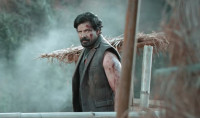
Prime Television says it inserted beep sounds after a verbal caution from the Press Council, while artists accuse state institutions of undermining freedom of expression. Screengrab Via YouTube
Nepal’s comedy show “Comedy Darbar”, broadcast weekly on Prime Television HD, has become embroiled in a censorship controversy after repeated audio bleeps were inserted into a recent episode featuring lawmakers from the ruling Rastriya Swatantra Party (RSP), prompting criticism over restrictions on artistic expression.
The episode, released on Friday through the OSR Reality YouTube channel, featured RSP lawmakers Rajunath Pandey, Jagadish Kharel and Rukesh Ranjit as guests. A debate erupted after viewers noticed that several lines of dialogue had been muted with beep sounds.
At 31 minutes and 22 seconds into the programme, comedians Saroj Bhandari and Sujan Jimba appear on stage portraying the Speaker of the House and a parliamentary marshal, respectively. During their segment, which runs for four minutes and 53 seconds, the programme uses beep sounds 11 times to mask parts of the dialogue.
According to veteran satirist Manoj Gajurel, who serves as a judge on the programme, the muted word was primarily “Speaker”.
“We did not use any offensive, obscene or unlawful language that warranted muting,” Gajurel told Kantipur. “Television content has its own standards of decorum, and we are fully aware of that. But, quite surprisingly, every time the word ‘Speaker’ was used, it was replaced with a beep.”
The programme’s director and host, Bikey Agarwal, said he was disappointed that the creative work had been altered.
“We spend every week developing scripts through extensive writing and the hard work of our performers. It is deeply disheartening when our work is so easily censored,” Agarwal wrote on Facebook. “Perhaps, like films, television programmes in Nepal are expected only to make people cry.”
Som Dhital, chief executive officer of Prime Television, said the Press Council Nepal had verbally cautioned the channel after a complaint was lodged regarding the programme’s trailer, which had been published online.
“After the trailer was released on social media with Prime Television’s logo, the Press Council verbally warned us,” Dhital said. “I was concerned that an official letter or further legal complications might follow, so I contacted directors Bikey Agarwal and Shraddha Prasai. On their advice, we inserted the beep sounds over those words to avoid unnecessary controversy.”
Jhabindra Bhusal, the Press Council’s chief officer, said the council had merely alerted the broadcaster after receiving a complaint from an official at the Federal Parliament Secretariat.
According to Bhusal, because the trailer carried Prime Television’s logo, the council wanted to prevent potential legal complications or allegations of contempt relating to Parliament. Advocate Khagendra Chapagain formally lodged a complaint with the council on Friday, objecting to the language used in the parody and the portrayal of the characters.
Bhusal rejected claims that the council had imposed prior censorship.
“We did not instruct anyone to cut or remove any content. We simply informed the broadcaster that a complaint had been received,” Bhusal told Kantipur. “Any decision to mute parts of the programme or make other changes was taken by the broadcaster or producers themselves to avoid possible complications. The Press Council neither directed nor pressured them to do so.”
Despite the council’s denial, a source at Prime Television claimed that director Agarwal had been summoned to the council’s office for questioning. Bhusal, however, denied that anyone had been called in, insisting that the council’s involvement went no further than issuing a caution to the broadcaster.
The incident has fuelled criticism from artists, rights advocates and viewers, who argue that state institutions are quietly interfering with artistic freedom.
Gajurel said such actions undermine the democratic values Nepal has fought to secure.
“We have come this far through a long struggle for freedom of speech and freedom of expression,” he said. “Attempts to control art and creative expression are not a positive sign.”




 25.95°C Kathmandu