Movie review: In ‘Hope’, a monster emerges, but the mystery fades
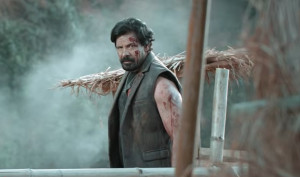
Na Hong-jin’s film begins with an atmospheric feature set in a rural community before its expanding scale dilutes the suspense. Photos: Screengrab Via YouTube
A cow lies mutilated on a regular road, its body marked by deep claw wounds. The police think it's a tiger. The hunters insist the animal wandered down from the North. The villagers cling to explanations they already understand because the alternative is far more chilling. Na Hong-jin has always been fascinated by the moment ordinary logic begins to collapse, and ‘Hope’ spends nearly an hour stretching that moment as far as it can.
For a director whose last feature, ‘The Wailing’ (2016), became one of Korean cinema's defining horror films, ‘Hope’ arrives carrying unusual expectations. It is reportedly the most expensive Korean film ever made, features an international cast that includes Michael Fassbender and Alicia Vikander, and marks Na's return after a decade-long absence. The scale is bigger than anything he has attempted before. Surprisingly, what makes ‘Hope’ compelling has very little to do with its size.
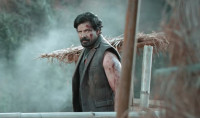
Set in the coastal settlement of Hope Harbor near the Korean Demilitarized Zone, the film follows police chief Bum-seok (Hwang Jung-min), who is called to investigate what appears to be an isolated animal attack. By the time he returns to town, entire streets have been reduced to rubble. Buildings have collapsed. Cars have been hurled across roads. Bodies lie scattered where ordinary life had existed only hours before.
Na refuses to show the cause immediately. Instead, he builds suspense through absence. Every destroyed storefront, every terrified witness and every frantic chase expands the creature in the audience's imagination. The longer the monster remains unseen, the more convincing it becomes. Horror has always relied on this principle, but few contemporary blockbusters trust it for this long.
The decision allows cinematographer Hong Kyung-pyo to turn destruction into something strangely elegant. His camera glides through chaos rather than chasing it. Long tracking shots map the town with remarkable clarity, allowing viewers to understand not only where the action is taking place but also what has been lost. There is no frantic editing attempting to manufacture excitement. The filmmaking trusts movement more than speed.
That patience extends beyond the action.
Hope Harbor never feels like another anonymous disaster zone waiting to be demolished. Before the aliens arrive, Na quietly establishes a community held together by kinship rather than convenience. Everyone knows everyone else. Characters introduce themselves through family relationships before occupations. People argue, tease, gossip and panic like neighbours who have spent decades sharing the same streets. Even Bum-seok's stubborn determination to rescue his cousin feels less like heroic obligation than something instinctive within a community where blood ties continue to define identity.
This attention to locality becomes one of the film's most interesting qualities. The border setting, the faded propaganda signs warning against North Korean infiltrators, the absence of mobile phones and the analogue texture of daily life create a world that feels suspended somewhere between history and memory. Although Na deliberately leaves the time period ambiguous, the film remains deeply rooted in a recognisably Korean rural landscape. That grounding makes the intrusion of the impossible genuinely unsettling.
It also makes the creature reveal unexpectedly disappointing.
The problem isn't simply that the visual effects occasionally look unfinished. It is that the digital creature never belongs within the tactile world Na has spent so much time constructing. The buildings feel real. The roads feel lived in. The dust, debris and blood all possess convincing physical weight. The monster often doesn't. Instead of disrupting reality, it seems detached from it.
The irony is difficult to ignore. Few directors understand the power of suggestion as well as Na Hong-jin, yet ‘Hope’gradually abandons the very restraint that makes its opening act so effective.
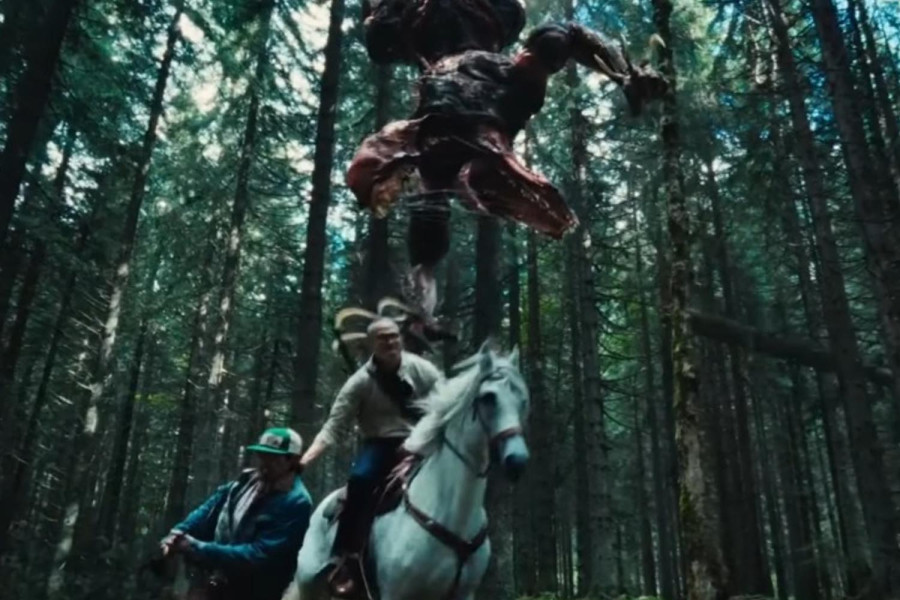
As the story expands, its mythology does too. Additional creatures appear. International stars emerge beneath layers of digital effects. The narrative begins reaching for something closer to large-scale science fiction than contained creature horror. None of these developments are inherently misguided. The problem is that they dilute the tension rather than deepen it.
The film becomes less interested in mystery once it starts answering questions.
At 160 minutes, ‘Hope’ also struggles with rhythm. Na has always allowed his stories room to breathe, but here the breathing occasionally turns into wandering. Several comic detours outstay their welcome, while repeated action sequences begin competing with one another instead of building naturally towards a climax.
Still, dismissing the film on those grounds alone would overlook what Na continues to achieve even during its weaker stretches.
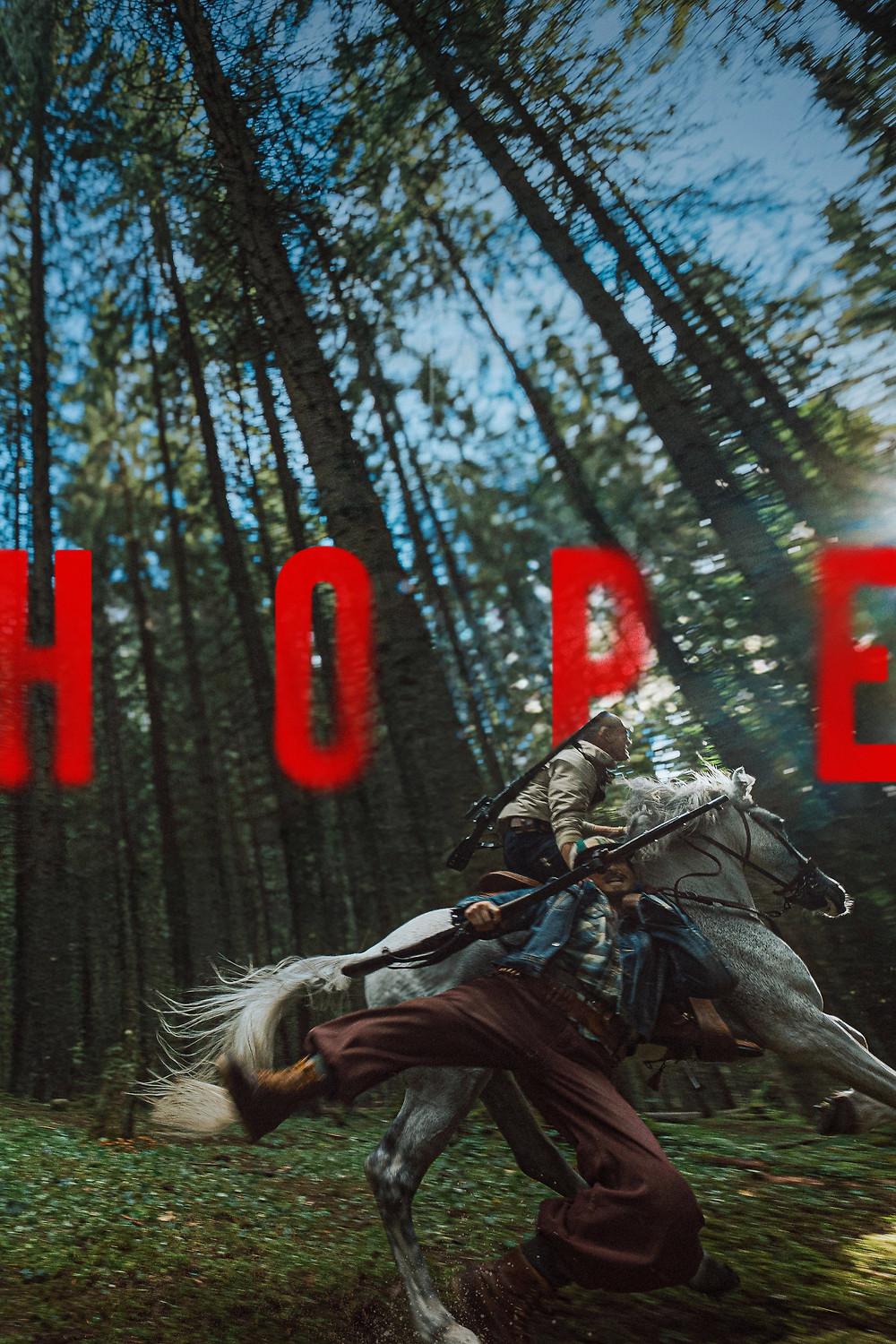
Few contemporary action directors stage movement with this much confidence. A prolonged highway chase near the film's conclusion demonstrates remarkable control over geography and momentum. Vehicles overturn, buildings collapse and bodies are thrown through space with startling precision, yet the action does not become visually incoherent. Even when the computer-generated imagery fails to convince, the choreography remains consistently inventive.
The performances help sustain that energy.
Hwang Jung-min gives Bum-seok an appealing mixture of authority and vulnerability. He is introduced as a police chief eager to maintain control, yet much of the film quietly undermines that image. Bum-seok panics. He hesitates. He makes poor decisions. Hwang never attempts to disguise these flaws, allowing the character's fear to become one of the film's more recognisable human qualities.
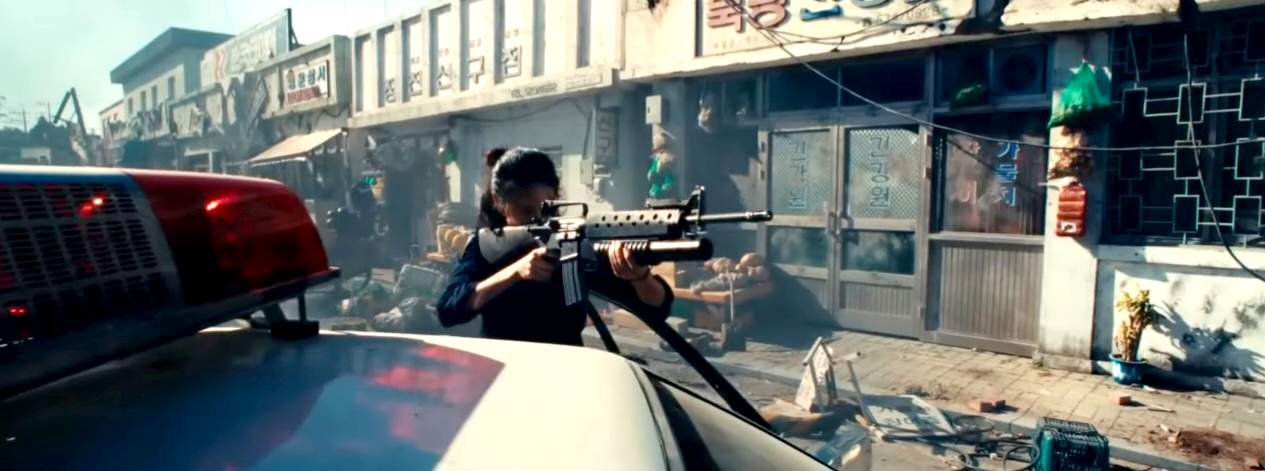
Jung Ho-yeon is equally memorable as officer Sung-ae. Armed with increasingly absurd firepower and an unwavering confidence, she provides much of the film's comic momentum without becoming reduced to comic relief. Her presence prevents ‘Hope’ from sinking beneath the weight of its own seriousness.
More interestingly, Na gradually complicates the familiar humans-versus-monsters narrative. Without revealing too much, the film eventually begins shifting its perspective in ways that unsettle the audience's loyalties. Violence that initially appears justified slowly becomes more ambiguous. Fear begins to resemble prejudice. The creatures themselves acquire an emotional dimension that complicates their role as simple invaders.
It is an intriguing direction, though one the screenplay explores only briefly before returning to spectacle.
Perhaps that is the film's defining contradiction. It repeatedly gestures towards a richer emotional and moral complexity, but it is also determined to remain an unapologetic blockbuster. Sometimes those ambitions coexist. Sometimes they pull against one another.
The film's weaknesses stand out precisely because its strengths are so persuasive. The first hour demonstrates extraordinary confidence in atmosphere, pacing and visual storytelling. It is filmmaking that trusts silence, implication and uncertainty. The later sections rely more heavily on explanation, digital spectacle and scale, becoming progressively less distinctive as they grow larger.
Still, even at its most uneven, ‘Hope’ never feels anonymous.
There is too much personality in the filmmaking for that. Na stages action with an inventiveness rarely seen in contemporary studio spectacles. He understands how to transform ordinary spaces into sites of extraordinary tension. More importantly, he understands that monsters become frightening not because of how they look, but because of what they force people to reveal about themselves.
For much of its running time, ‘Hope’ remembers that. One only wishes it had trusted that instinct until the very end.




 16.62°C Kathmandu