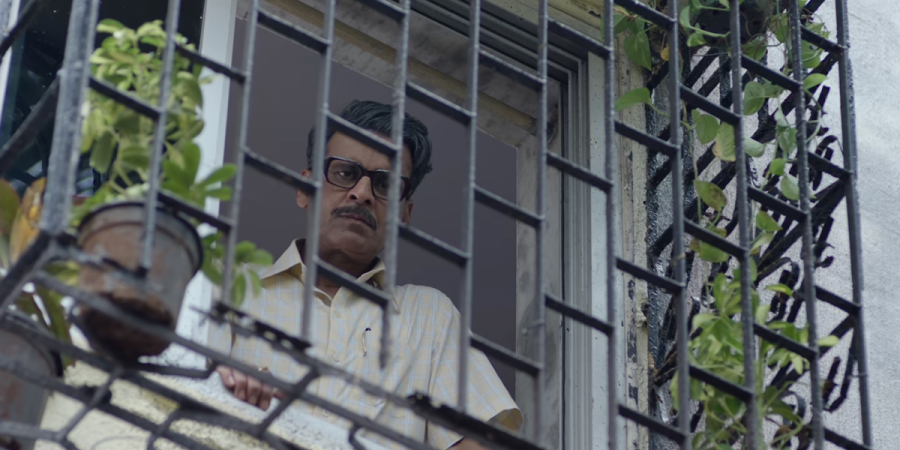
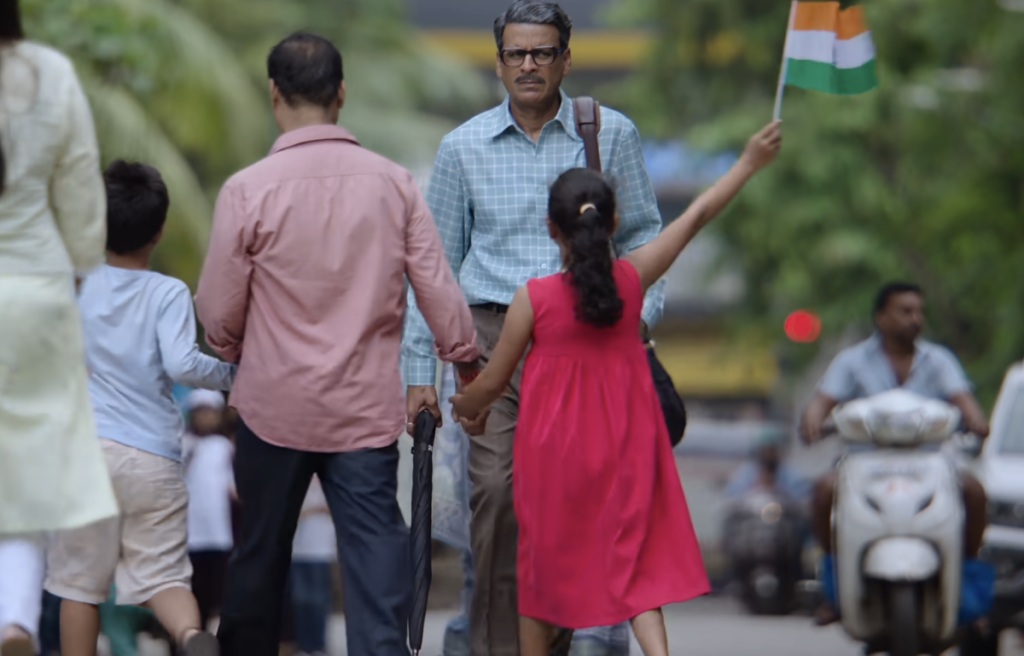
In a hyper-capitalistic city where everything/one is for sale, where desires can be preyed upon as a means to an end, how does one take on a man who wants… nothing? It’s the question at the heart of Aravind Adiga’s Last Man in Tower (2011) – following Yogesh Murthy, a resident of Vishram society, who refuses to cower in front of a gleaming offer by builder Dharmesh Shah.
In director Ben Rekhi’s feature film adaptation, Murthy is changed to Mishra, presumably because of Manoj Bajpayee playing the part. Bajpayee played a similarly stoic, wilting Mumbai resident in Bhonsle (2018). Shah is played by Boman Irani, who was a builder in Khosla Ka Ghosla (2006) too. Irani is great at making his villains palpably human. There’s a wonderful moment where he coughs through his chronic bronchitis—and then takes a deep breath of the noxious fumes at a building site. “It gives me life,” he tells a doctor earlier in the film, after being informed about his deteriorating lung condition because of his very line of work.
It’s an offer most Mumbaikars residing in creaky suburban buildings dream of. The film is set in 2010, and hence the offer for Rs 25000 per square foot (two and a half times the market rate) seems right-ish. When Shah announces his offer, most residents can barely contain their excitement as they calculate their own probable windfall earnings. Distinguishing the two wings of the building as one full of young IT professionals, lawyers (hence pliable), while the other witg some sentimental elderly, feels almost too neat a divide. As if only the elderly are capable of idealism, and the young couples are too busy slobbering at Shah’s offer to even consider the consequences of the proposed redevelopment.
Written for the screen by Bombay veteran, Sooni Taraporevala, the ensemble of actors is an exciting one. It looks promising on paper: Harish Khanna plays the mousy secretary of Vishram Towers, Uday Chandra and Madhuri Bhatia play Mr and Mrs Pinto, Yogesh’s best pals in the building and the only ones standing with him initially. Chandan Roy Sanyal is red-haired realtor Ajwani, who refers to currency as ‘chaak-let’, as if to emphasise his Sindhi roots. Swarupa Ghosh is Audrey Rego, an idealistic social worker who is initially opposed to Shah’s offer, but is lured too easily with the promise of sending her daughter abroad for higher studies. Sukant Goel is Masterji’s (as Mishra is called) distant and pragmatic son, at odds with his father’s way of life. Goel and Bajpayee’s scenes feel like an indie filmmaker’s rehashes of Baghban.
It’s a lovely bunch of actors, but Taraporevala’s screenplay offers little beyond perfunctory characters. Which is surprising because she’s written a sparkling film like Salaam Bombay! (1987), and her own (relatively low-key, but enjoyable) directorial debut, Little Zizou (2008). Divya Dutta’s Mrs Puri, mother to a boy with Down syndrome and a cordial neighbour to Masterji, is the only character afforded an arc.
Rekhi’s film feels too preoccupied with maintaining momentum onwards, forgetting to dwell on moments. The Mumbai in the film, has few distinct qualities – barring the fixed timings for water, and the sporadic monsoon lashing against the crumbling Vishram Towers. I didn’t feel any of Mumbai’s humidity in the film, which might be a telling detail about a film that seems to be missing a homegrown gaze.
Written for the screen by Bombay veteran, Sooni Taraporevala, the ensemble of actors is an exciting one. It looks promising on paper: Harish Khanna plays the mousy secretary of Vishram Towers, Uday Chandra and Madhuri Bhatia play Mr and Mrs Pinto, Yogesh’s best pals in the building and the only ones standing with him initially. Chandan Roy Sanyal is red-haired realtor Ajwani, who refers to currency as ‘chaak-let’, as if to emphasise his Sindhi roots. Swarupa Ghosh is Audrey Rego, an idealistic social worker who is initially opposed to Shah’s offer, but is lured too easily with the promise of sending her daughter abroad for higher studies. Sukant Goel is Masterji’s (as Mishra is called) distant and pragmatic son, at odds with his father’s way of life. Goel and Bajpayee’s scenes feel like an indie filmmaker’s rehashes of Baghban.
It’s a lovely bunch of actors, but Taraporevala’s screenplay offers little beyond perfunctory characters. Which is surprising because she’s written a sparkling film like Salaam Bombay! (1987), and her own (relatively low-key, but enjoyable) directorial debut, Little Zizou (2008). Divya Dutta’s Mrs Puri, mother to a boy with Down syndrome and a cordial neighbour to Masterji, is the only character afforded an arc.
Rekhi’s film feels too preoccupied with maintaining momentum onwards, forgetting to dwell on moments. The Mumbai in the film, has few distinct qualities – barring the fixed timings for water, and the sporadic monsoon lashing against the crumbling Vishram Towers. I didn’t feel any of Mumbai’s humidity in the film, which might be a telling detail about a film that seems to be missing a homegrown gaze.
This article was originally published in The Wire and is republished here with permission, under a special arrangement with The Wire.




 19.95°C Kathmandu