



 24.51°C Kathmandu

Mon, Oct 12, 2026
Culture & Lifestyle
Theatre review: When power dictates the verdict
‘Miss Menuka’ turns a woman’s moral dilemma into a searing examination of political power and communal violence.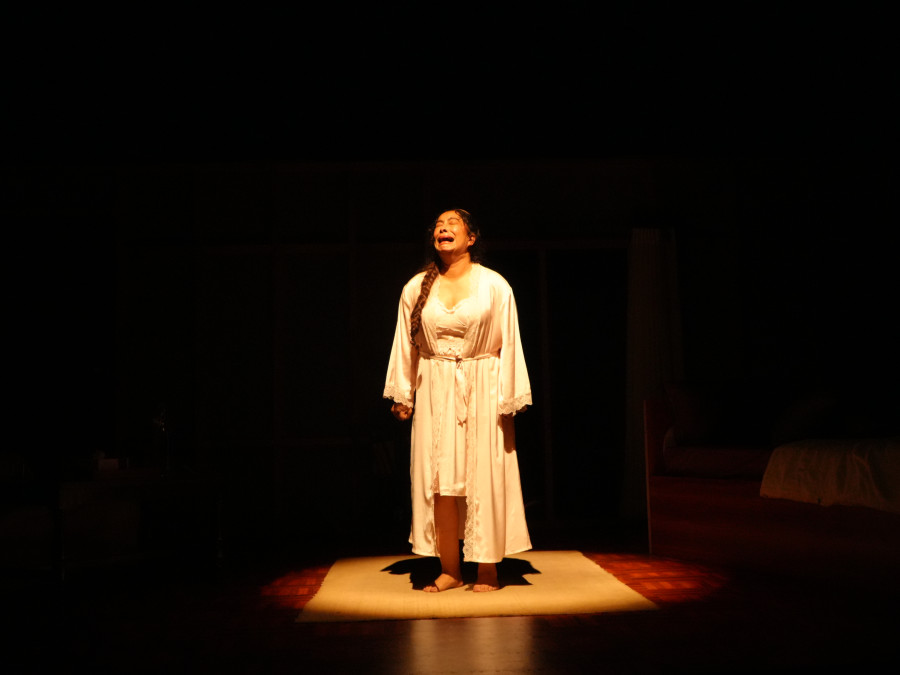
bookmark![]()
Zelezny-Green speaking at the ‘Teaching and Learning Futures Nepal: AI for Equitable Education’ conference in Kathmandu on August 18. Photo: Courtesy of The British Council Nepal ![]()
Rivash Rijal
Published at : August 3, 2026
Updated at : August 3, 2026 10:08
Kathmandu
Last Thursday, July 29, at Shilpee Theatre was the premiere of Pabitra Khadka’s play ‘Miss Menuka: Ek Sambhedanshil Younkarmi’. An adaptation of Jean-Paul Sartre’s La Putain Respectueuse (A respectable woman), the play deals with themes of power, politics, sexuality, society and communal violence, ever relevant for any country and at any time. The last of those, namely communal violence, has unfortunately become all the more important in Nepal in recent days.
Miss Menuka, convincingly played by Sarita Giri, is the prostitute in question, playful, young, full of life and important to the story - rather principled, much more than anyone else in the play. Giri’s character manages to be both serious yet funny at the same time. One moment, she is contemplating how she might do the right thing, and the very next moment, she delivers a zinger that makes the whole room erupt - a commendable performance.
Menuka’s foil is played by Yuvraj Ghimire’s character, Bibek Jung Sharma who manages to be as unlikeable as the role demands of him and the role demands that he be as unlikeable as he can be. Violent, manipulative, drunk on power and prestige, and racist, almost a caricature of the worst guy possible, but believe it not – such people definitely do exist. Ghimire plays his role so well, it's impossible not to hate his character.
.jpg)
The problems arise when she gets caught up in a legal case involving a Dalit Madhesi on one side and the Bahun Pahadi son of a Member of Parliament and landlord on the other hand. On the balance hangs the life of the former of the two involved in the legal case. If Menuka does the right thing, the life of an innocent Paswan man is saved. But, as the play shows viewers, the right thing is hard to do when it hurts those in positions of power.
Arbind Paswan fears the persecution of a Kathmandu lynch mob should he be framed for a crime that he did not commit. And even before the verdict, a mob seems to already be out for him. This speaks nicely to how quickly a small spark can ignite a fire when on a combustible bed of hate.
Arbind is played by Rupesh Mandal, who manages to live up to the role, acting as if his life were really at risk throughout the play. Mandal’s character is downtrodden, naive, fearful and failed by his society and countrymen.
Prabhakar Dev Sharma plays the sophist politician, Jagannath Sharma. At one point he says that truths have levels. “There is your truth, that is undeniable. But then there is the truth that is helpful to the nation. Are those truths the same?”
Dhanraj Sunar and Govinda Oli play their supporting roles well.
The stage setting is well done. Menuka’s bedroom, the only set used for the whole play, is real eye-candy. The use of lighting perfectly captures the mood of the various scenes as they happen, and the music attempts to do a similar thing, although somewhat less well.
The play’s premier was performed amidst the unpredictable and at times heavy monsoon rain hitting the metal sheet roofing of the Shilpee Theatre. The noise, from time to time, made the dialogue difficult to hear. Had it not been for the subtitles being projected into the stage’s backdrop, the rain would have made for worse viewing.
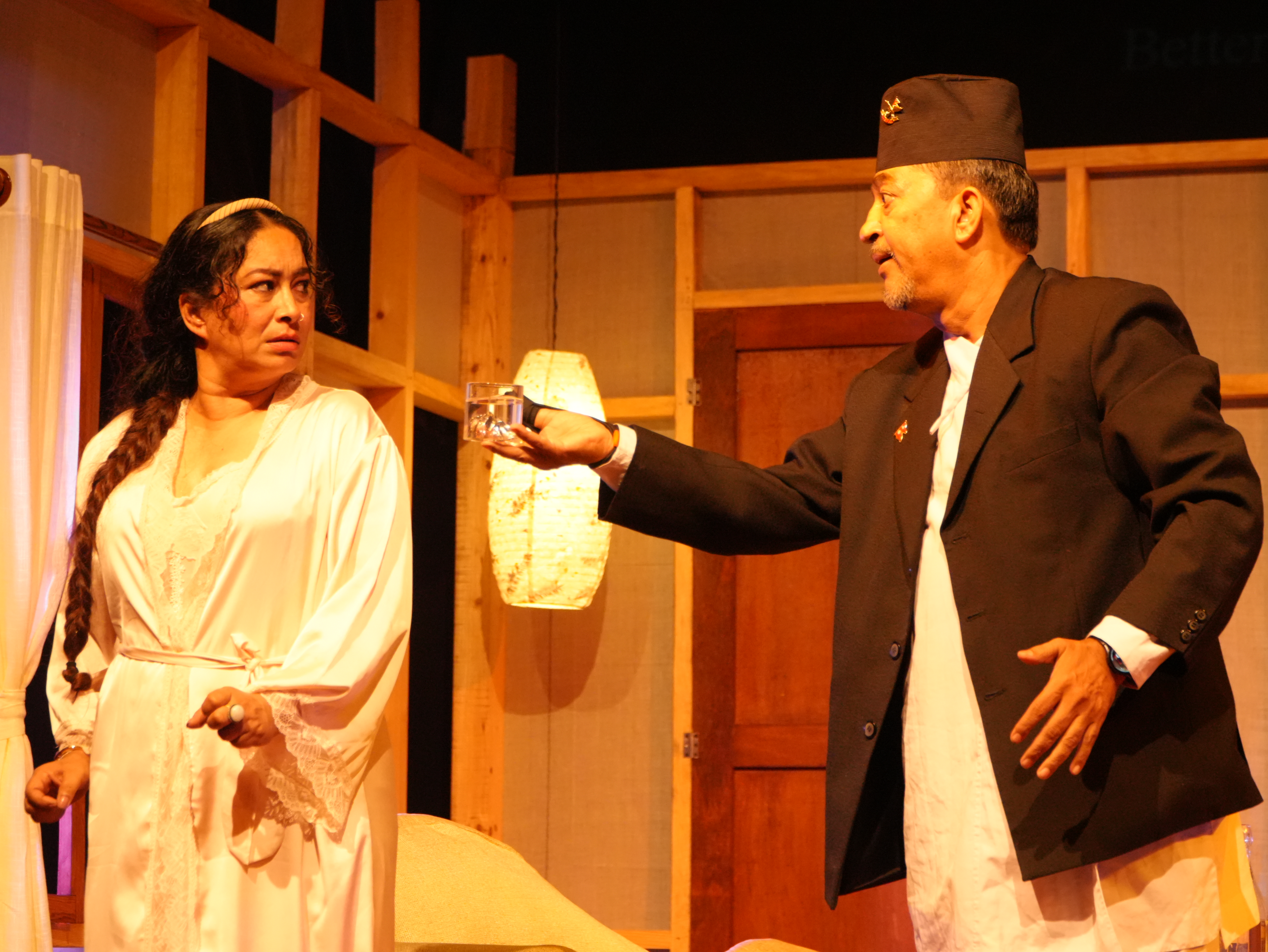
On another night, the quality and timing of the subtitles may have gone unnoticed. But, on premier night they became a prominent part of the play. The rain is likely to be an unwelcome feature in the next three weeks or so of the play’s showing. As such they must be reworked to be accurate to the dialogue and in-sync with the delivery. This will make for a better audience experience, at what is already a good play.
A good work of literature, produced for the stage by a talented team such as this one, is always a good antidote to social ills. Good plays show their characters are real human beings, motivated by relatable problems and situations. They produce empathy in the viewers for other human beings, as different as they might be from the viewers themselves. Miss Menuka manages to do all these things.
When I first watched Miss Menuka I thought the play was an important contribution to social and political discourse, I am sure the team felt the same way in making it. Little did they know, their work would come out on the eve of a shocking and painful wave of communal violence. Madhesh has been gripped and brought to a stand still by death and destruction.
Art and literature, with the effects it produces, moves the needle in the direction of peace and coexistence. Miss Menuka would have done that regardless, but it has come out at a time where that has become the nation’s highest need.
—-
Miss Menuka: Ek Sambhedanshil Younkarmi
When: July 29 to August 22
Where:Shilpee Theatre, Battisputali, Kathmandu,
Time: 4:30 pm onwards
Entry: Rs500 to Rs1,000
Rivash Rijal
Rivash Rijal is a culture and lifestyle intern at the post. He is also a rising senior at St John's College in Santa Fe, NM. He will be graduating from the class of 2027 with a BA in Philosophy, Literature and Natural Sciences.




Most Read from Culture & Lifestyle

It’s a bird … it’s a plane … it’s the Indian ambassador’s farewell tweets

‘Tenzing’ puts the Sherpa at the centre of the Everest story
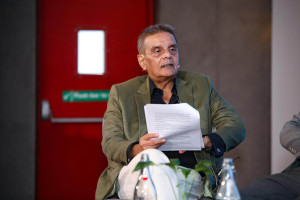
How should Nepal navigate a world in reorder? Rajib Upadhya on geopolitics and foreign policy

How Anup Poudel took Nepali cinema to Cannes
A Nepali photographer rediscovers Calcutta after decades
Editor's Picks

Constitutional Bench caught in seniority, ‘pick and choose’ dispute

A Dom boy’s long road to becoming a doctor

From blankets to handmade dolls, two foreign women bring comfort to flood survivors

News Analysis: When institutional defence exposes institutional fault lines
It’s a bird … it’s a plane … it’s the Indian ambassador’s farewell tweets
E-PAPER | October 12, 2026

×