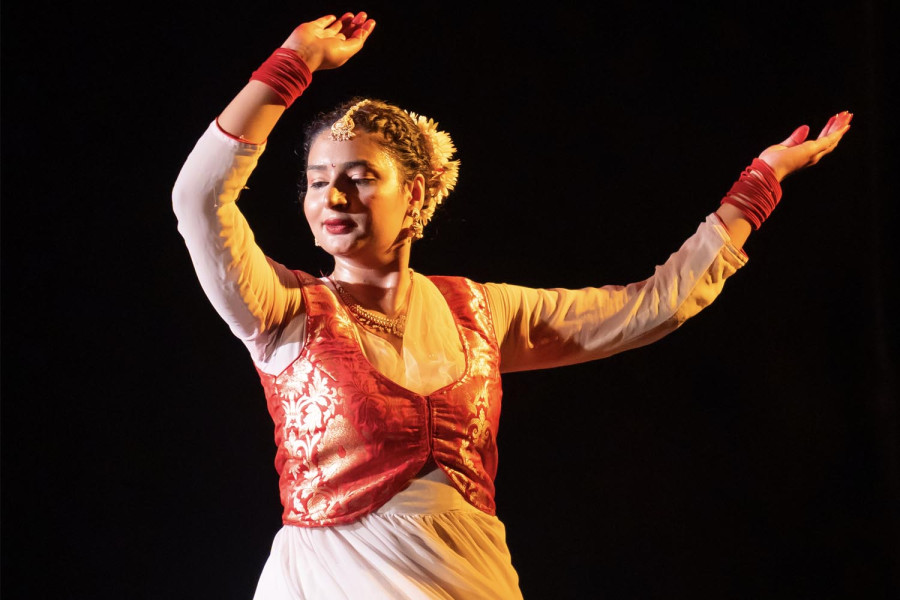
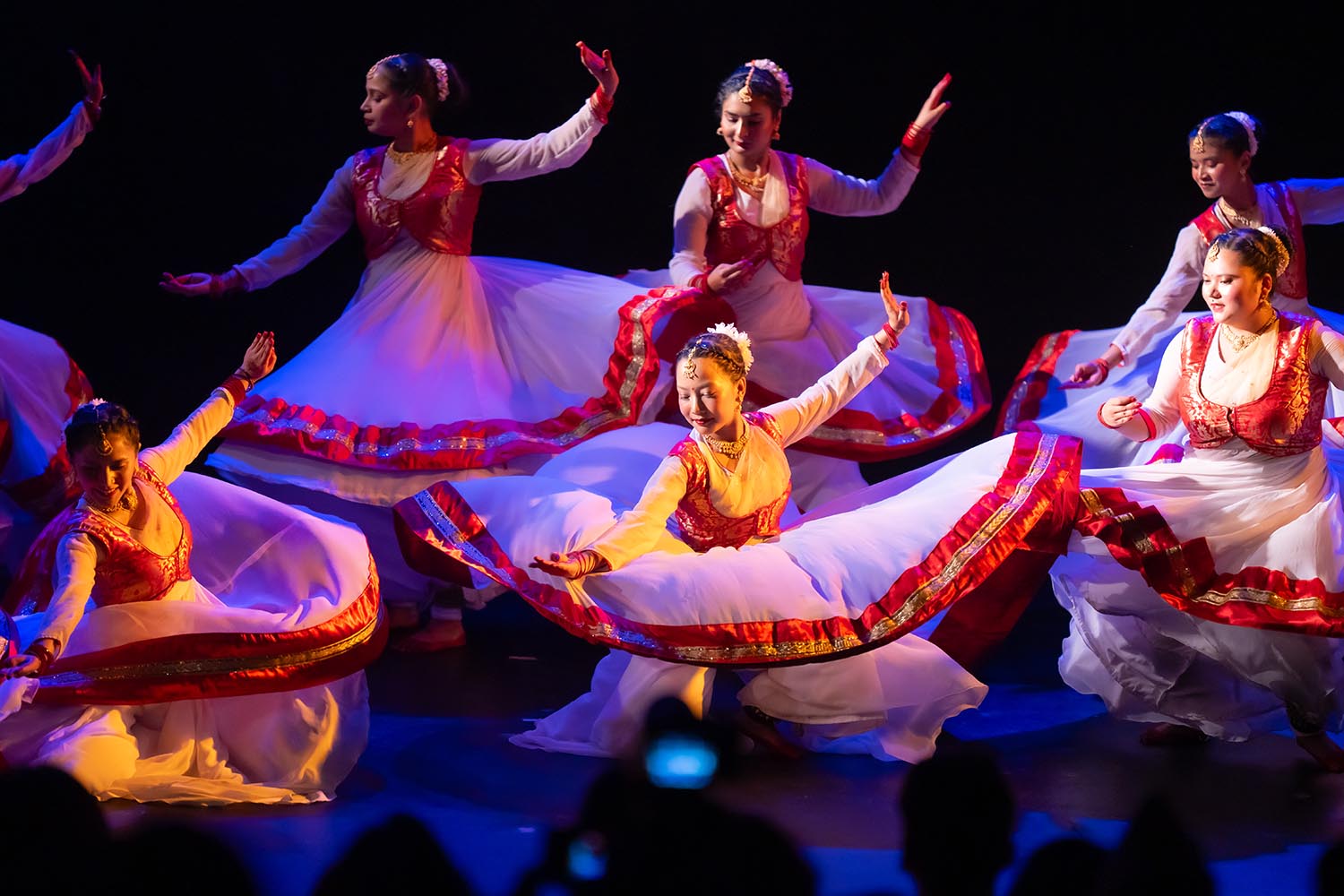
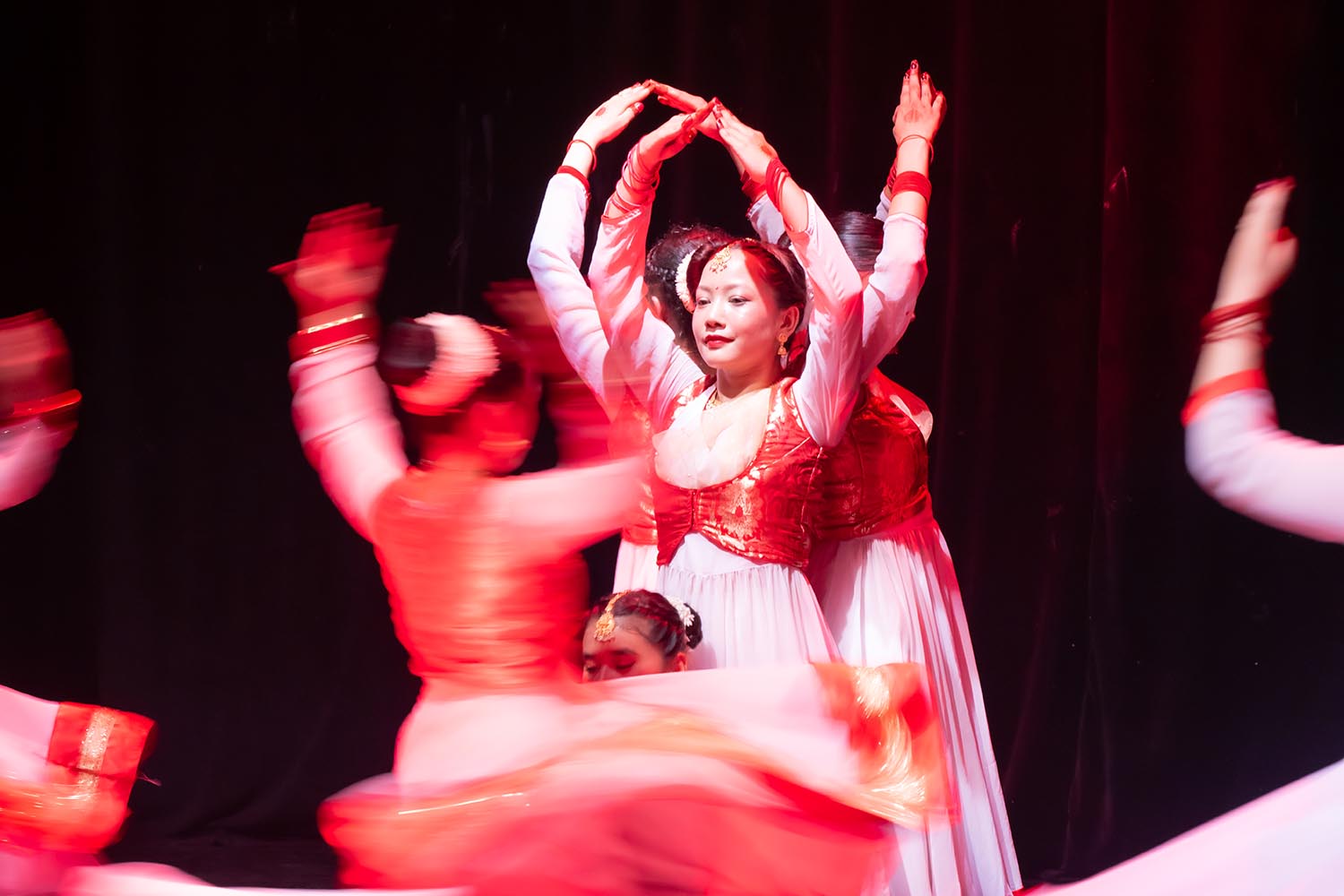
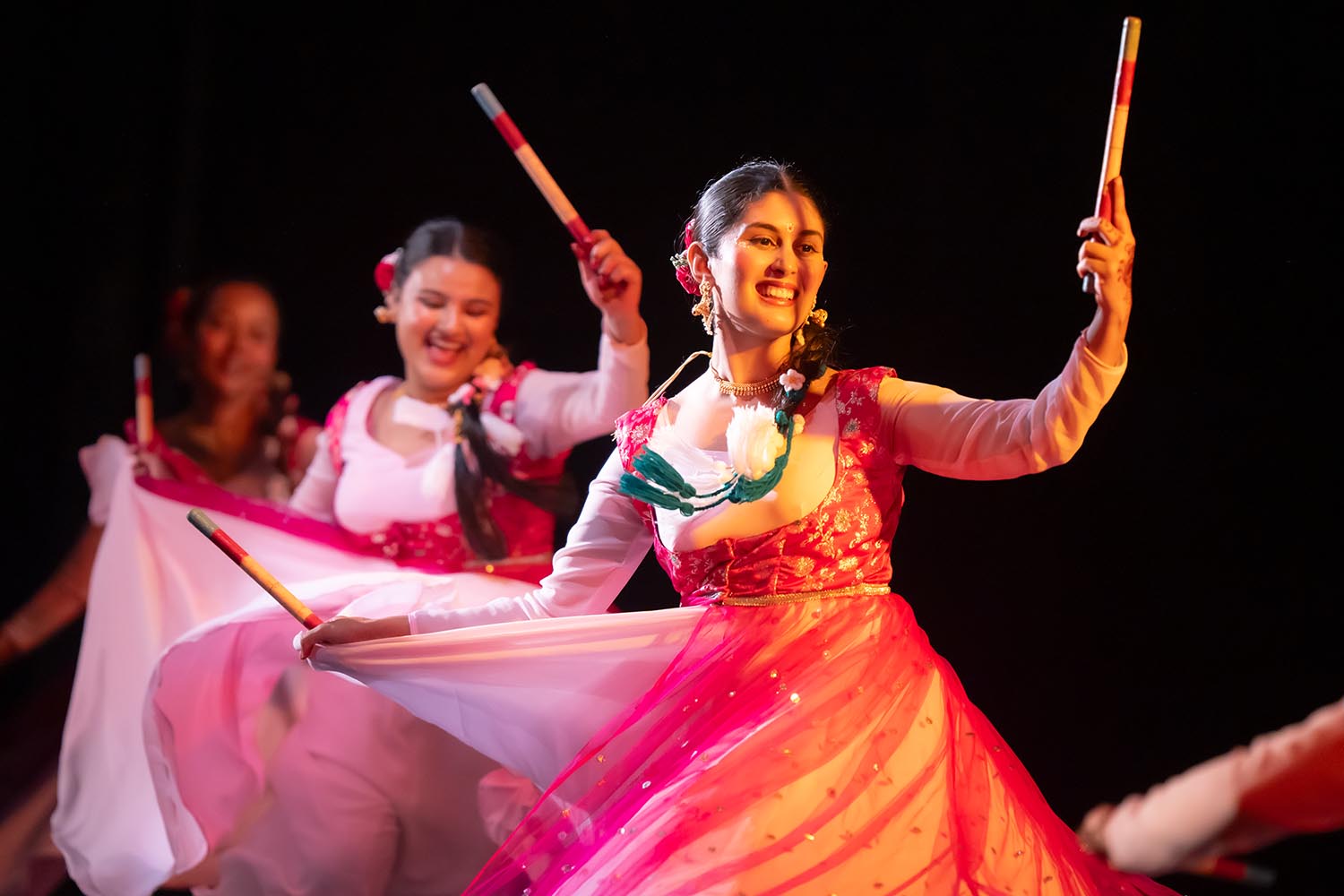
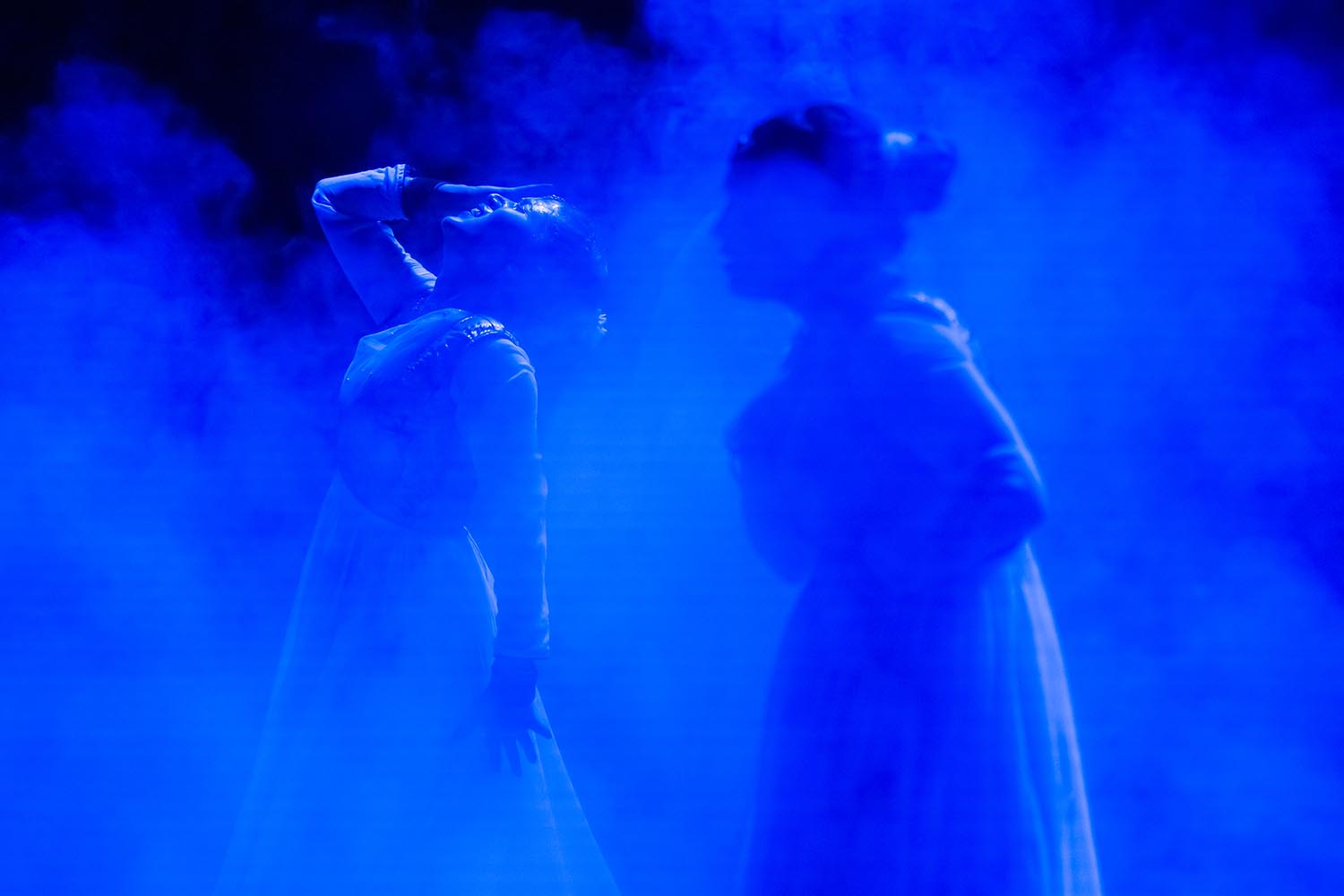
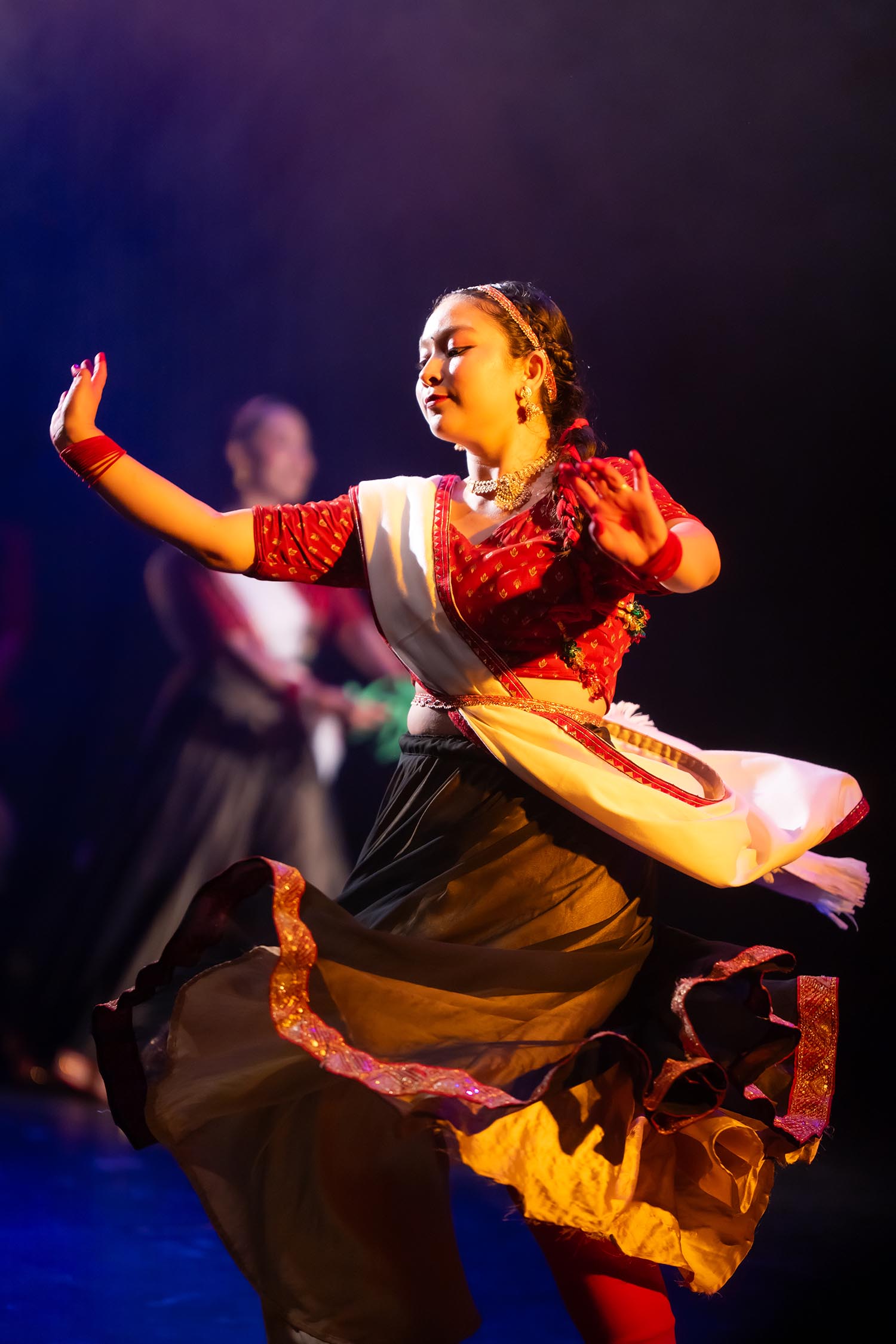
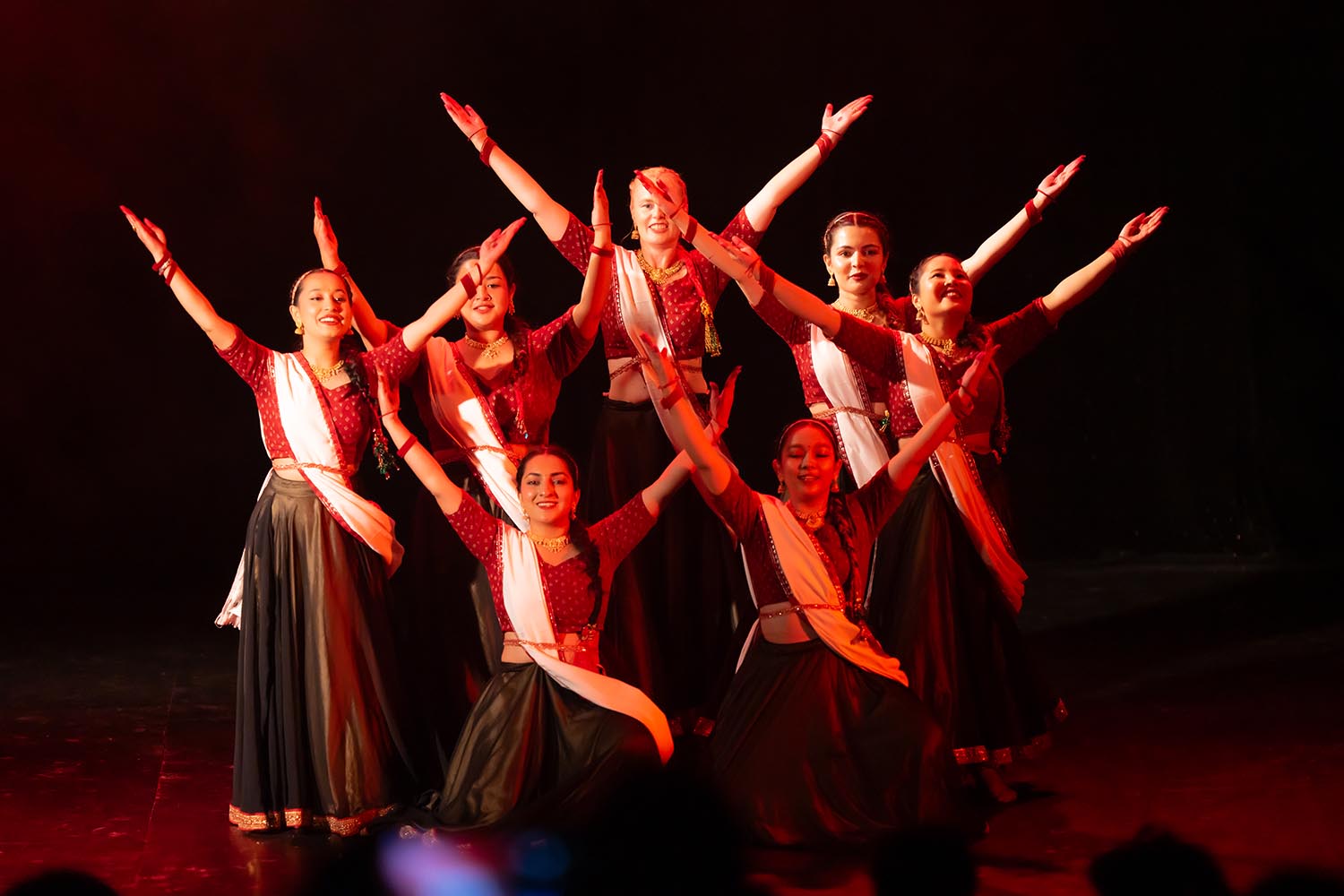
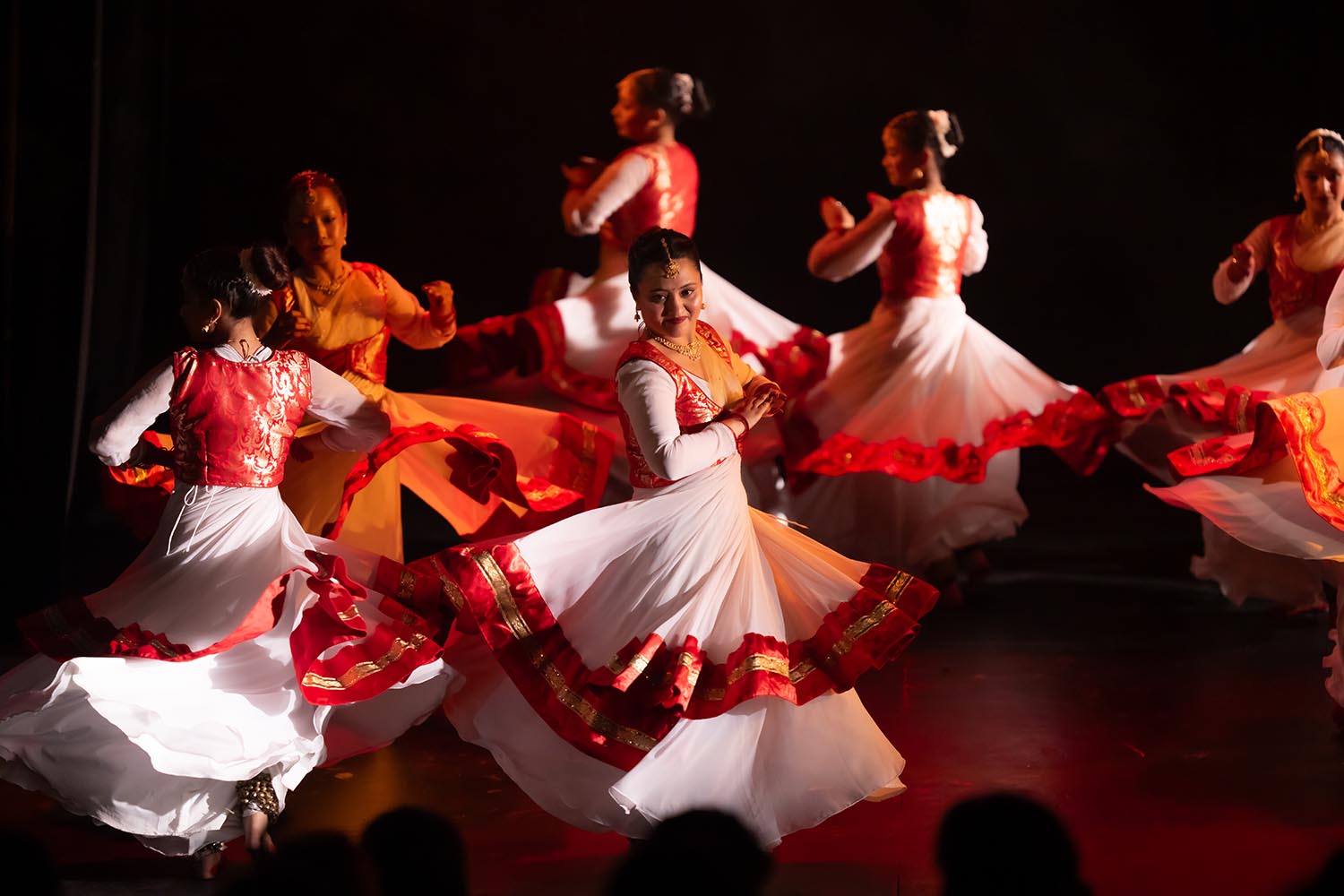
‘Umanga’ presents Kathak as a progression—from invocation and technical nritta to narrative-driven pieces rooted in Hindu mythology and devotional themes. Photos: Courtesy of Photo Pathshala
A Kathak performance does not begin in haste. It asks for stillness.
That is also how ‘Umanga: The Joy Continues’ opened at Mandala Theatre. Before the technical footwork, group formations, and mythological storytelling took over the stage, the performance began with a bandana. For Aesthetic Dance Studio, this opening established the performance tradition’s Hindu roots and sought blessings before the dancers proceeded with the rest of the evening.
The first day of ‘Umanga’ focused mainly on Level Two and Level Three students of Aesthetic Dance Studio. Rather than a single polished production by professional dancers, it placed students at different stages of their training on stage, allowing the audience to witness the demanding process of building Kathak.
The opening performance, ‘Shiva Bandana’, was performed by Level Three students and choreographed by their instructor Manisha Basnet. As an invocation, it carried devotional energy and control, reminding the audience that in classical traditions, performance is often inseparable from prayer and discipline.
This was followed by a technical performance, or ‘Nritta’, by Level Two students, choreographed by Dipika Khatiwada. ‘Nritta’ refers to pure dance in Indian classical traditions, where the focus rests on rhythm, movement, posture and technique rather than dramatic storytelling. For the Level Two students, this performance was especially meaningful because it also marked their graduation.
Their performance had the excitement of students stepping into a more formal stage identity. It was not the most emotionally layered part of the evening, but it did not need to be. Its purpose was to show the foundation of Kathak: rhythm, posture, footwork and control.
The third performance continued the technical focus, this time by Level Three students under the choreography of Manisha Basnet. Compared to the Level Two act, this section showed greater ease and maturity. The dancers appeared more comfortable with the grammar of Kathak, especially in their timing, turns and stage presence.
The lighting was one of the strongest visual elements of the production. Instead of simply illuminating the stage, it created an atmosphere. The warm shifts, focused pools of light and changing moods gave each performance an emotional texture. At several moments, the lighting made the stage feel almost sacred, especially during the devotional and mythological pieces. It gave the dancers space to appear as figures moving through memory, ritual, and story.
The following performances moved into more thematic territory with pieces based on ‘Dhan Ropai’ and ‘Samudra Manthan’, performed by Level Two and Level Three students and choreographed by their respective instructors. These pieces gave the evening variety and cultural weight. While the earlier sections focused more on technique and rhythm, these performances brought in narrative, imagery and collective imagination.
The ‘Dhan Ropai’ performance brought out its connection to everyday Nepali life. By bringing rice planting into a Kathak-based presentation, the piece briefly moved the evening from mythic and classical worlds into something local and familiar.
‘Samudra Manthan’, however, was the more memorable of the two thematic pieces.
The legend itself is built on conflict. In Hindu mythology, the devas and asuras come together to churn the Ocean of Milk in search of ‘amrit’ (the nectar of immortality). Mount Mandara becomes the churning rod, Vasuki the serpent becomes the rope, and the act of churning releases both treasures and danger, including the deadly poison ‘halahala’, which Shiva drinks to protect the universe.
That is what made the performance so impressive. Samudra Manthan is an intense story. It is violent, restless, and full of tension. The dancers had to suggest force without making the movement look messy, and conflict without losing the elegance of Kathak.
Choreography also felt ambitious here. ‘Samudra Manthan’ became one of the evening’s most visually arresting performances. It demanded coordination, expression, and physical control from the students, and they rose to that challenge with surprising confidence.
After these performances, the evening transitioned into a piece dedicated to Radha and Krishna, performed by students of Back To Basics. These are students who have already graduated from Level Three, and their performance was directed by Namrata KC, their instructor and the director of Aesthetic Dance Studio.
This final section carried a noticeable difference in maturity. The dancers were more settled in their bodies and more aware of emotional expression. A Radha-Krishna performance depends on movement and feeling. It requires softness, devotion, longing and playfulness. The Back To Basics students brought a more emotional tone to the stage. The piece felt less like a demonstration and more like a complete performance.
As a student-focused showcase, ‘Umanga’ had its uneven moments. Some transitions between performances could have been tighter, and a few sections felt more like separate acts than parts of one continuous emotional arc. At times, the production seemed to rely on the strength of individual performances rather than a fully unified structure.
The strength of ‘Umanga’ lies in sincerity. There was no attempt to hide the fact that these were students still developing their craft. Instead, the production embraced the process. The concentration, the visible effort, and the occasional hesitation did not take away from the performance. They gave it honesty.
‘Umanga: The Joy Continues’ is about joy as celebration. But it is also about joy as continuation, practice, discipline, and the courage to step onto the stage while still learning. By the end of the evening, the most memorable thing was the sense of progression. From bandana to technical footwork, from student graduation to mythological storytelling, and finally to the emotional world of Radha and Krishna, the show created a journey through training, tradition, and expression.
It may not have been perfect, but it had sincerity and soul. And that mattered more than polish.
________________
Umanga: The Joy Continues
Presented by: Aesthetic Dance Studio
Venue: Mandala Theatre Nepal, Thapagaun, New Baneshwar




 26.19°C Kathmandu