As the vote count of the March 5 House of Representatives elections concludes, Nepal is at what many call a ‘turning point’ in its political history. The Rastriya Swatantra Party (RSP), riding a popular wave, painted Nepal blue by securing nearly two-thirds majority in parliament.
For many Nepalis, this wasn’t just about taking a fairly new party, established in 2022, to victory. This was about letting go of decades of disappointment and disillusionment. The change was due, and the recent political momentum reflects this desire for change.
For many artists and creatives in the country, the prospect of new political leadership brings a mix of hope and caution. After decades of political ‘musical chairs’ finally coming to an end, creative figures, from actors to writers, say they are optimistic about the transition, but remain mindful of past disappointments.
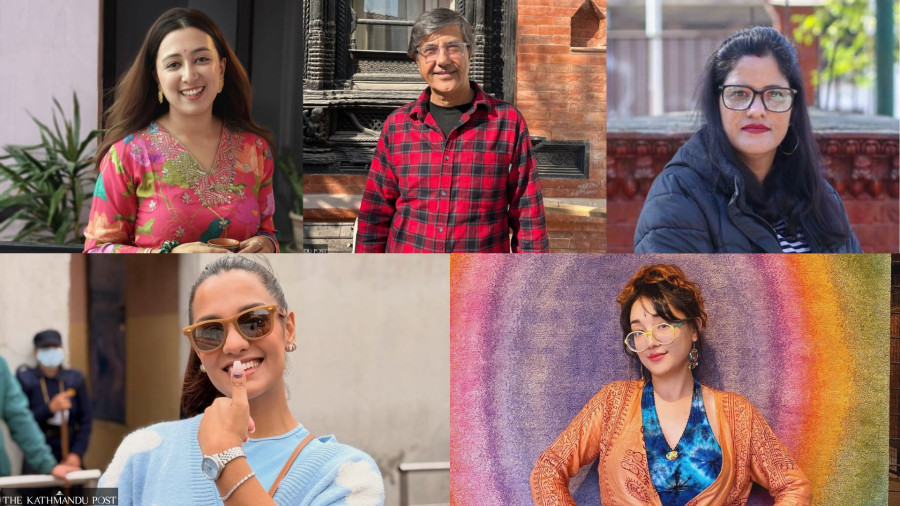
“We did not vote for a party,” says actress Priyanka Karki. “We voted for hope. We voted for the promise of a new Nepal.”
Karki says she hopes the new leadership will work to improve every sector, including the creative industries. “I wouldn’t say expectations just for the film industry,” she says. “The cabinet being formed consists of many highly educated people, so if they study and understand the issues well, we will see changes happen not only in a few sectors, but in the whole country.”
Likewise, singer Dr Trishala Gurung says she feels hopeful, though she is mindful of the past. “Like everyone, I am hopeful, and it is about time we see some changes,” she says. “But only time will tell if the new government delivers its promise.” She is aware of how, in the past, Nepal has seen similar dramatic leadership changes that only led to further disappointment.
However, Gurung says she hopes the new leadership will help create a more professional environment for artists, especially regarding payment. “There is a severe lack of professionalism when it comes to payment in almost every field in Nepal,” she says, adding that clearer systems for royalties and payments could make a big difference for musicians and performers.
Like many, Mithila artist Ranju Yadav is relieved that the long-running ‘musical chair’ between top leaders of the past, who took multiple stints in office, has finally come to an end.
Yadav, who has seventeen years of professional experience, is hopeful that the upcoming government will end corruption and provide necessary services to the people on time. “The change through the ballot has made me hopeful,” she says.
She believes the new government, while addressing the urgent demands of its citizens, has its work cut out in the art and culture sector. She wants Mithila painting classes introduced at the college and university levels. “The government should establish art institutes in all seven provinces to provide training in folk and traditional arts and to promote the trade of indigenous art,” she says.
Since Nepali painters contribute to the development of Nepal’s artistic heritage and help bring it to the global stage, “The government should provide direct and accessible support to help find proper markets for their artworks and promote them internationally,” she says.
Ultimately, Yadav believes that a separate Mithila Art Academy should be established in Janakpur to support the development, expansion, commercialisation, research, and training related to Mithila painting and handicrafts.
While artists hope for stronger government support, the Rastriya Swatantra Party’s manifesto mentions culture and heritage only briefly.
Among the 100 points addressed in the manifesto of RSP, the 50th point (page 26) acknowledges the multi-cultural prosperity of Nepal, aiming to direct the tourist flow towards Pashupati Temple, Lumbini and Janakpur.
Heritage and culture are mentioned only minimally, primarily as a suffix to tourism and other infrastructural development. Subjects of art remain absent.
Recent budgets have also allocated modest sums to culture. This year, the Ministry of Culture, Tourism, and Civil Aviation received Rs13.28 billion, up from Rs11.91 billion last year, accompanied by numerous promises. For many artists, these figures underscore both the potential and challenges ahead, reinforcing why artists remain cautiously optimistic.
Yet this cautious hope is shared beyond Nepal, as Nepalis abroad watch the political shift with interest, inspired by the possibility that the new leadership could finally give culture and creative work the attention they deserve.
Author Samrat Upadhyay, who lives in the US, says he finds the political transition encouraging. “I am excited for Nepal,” he says. “I hope the young leadership will remain united and bring changes that improve the lives of all Nepalis.”
This wave of optimism also comes from his own observation. Many Nepalis who came to the US initially sought to settle there, but now many, especially younger ones, want to return to Nepal and work for the country’s advancement. “It’s inspiring,” says Upadhyay, whose new novel ‘Darkmotherland’ explores themes such as political corruption, authoritarianism and personal ambition.
Likewise, for theatre practitioners, the moment also opens up new possibilities.
Actor and director Akanchha Karki says theatre has rarely been a priority for policymakers, but she hopes that could begin to change. “Since our prospective prime minister also comes from an artistic background, maybe now we can initiate reforms in the art sector, especially in theatre,” she says.
Even though she is hopeful, Karki knows there is ample work to be done in the Nepali theatre landscape. While acknowledging that the government often prioritises areas such as hospitals, roads, and education, she argues that theatre also plays an important role in skill development and education. If the new government recognises this, Karki says, theatre could be introduced at the school level.
She also calls for grant provisions that would allow private theatre groups to apply for funding. Karki adds that although institutions like the Nepal Academy of Music and Drama exist, theatre practitioners have rarely benefited from them. “No one knows what is happening there or where the money goes,” she says.
Karki believes the new government could deliver on its promise and support theatre through grants, national festivals, and improved infrastructure.
Despite differing perspectives and expectations, many artists share a similar belief: that this moment offers an opportunity to rethink how creative work is valued in Nepal. For them, the change in leadership is not just about politics—it is about building a future where art, culture, and creative labour receive the recognition and support they deserve.




 20.12°C Kathmandu