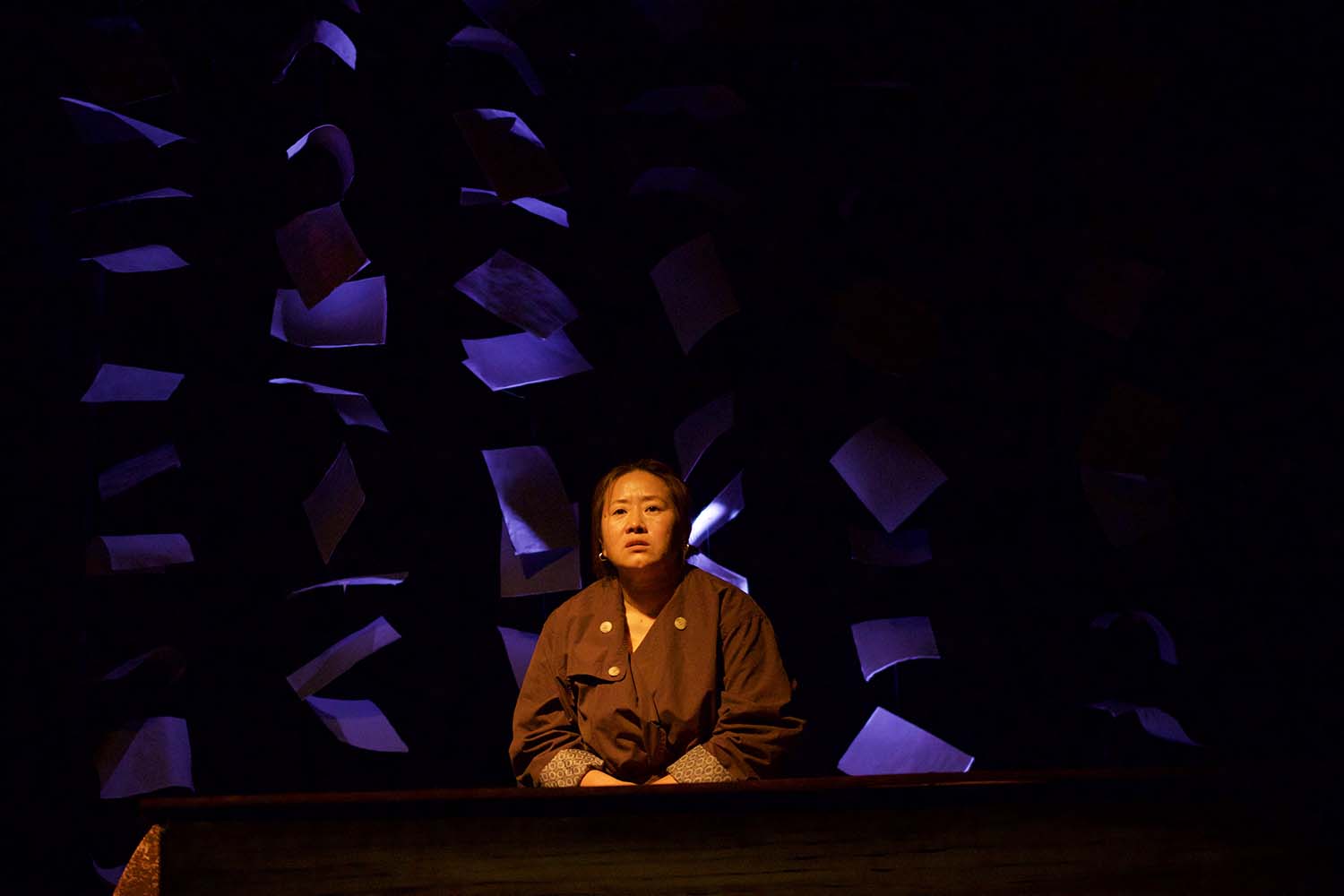
Stacks of case files tower across the stage. Sheets of paper hang midair, suspended as if caught in a sudden gust. They never fall; rather, they remain frozen. In that stillness, time itself feels arrested.
This is the world of ‘Prima Facie’, now staged at Kausi Theatre under the direction of Akanchha Karki. The image is striking and symbolic. The law is documented, archived, and stacked. However, lived experience lingers in the air, unsettled and unresolved.
Written by Suzie Miller and translated into Nepali by Durga Karki, ‘Prima Facie’ follows Prisa, played by Pashupati Rai, a brilliant working-class barrister who has built her career defending men accused of sexual assault. She believes fiercely in the rules of evidence. She believes in facts over feelings. She believes the law is rational and fair. However, when she herself is sexually assaulted by a colleague, the system she trusted begins to fracture before her eyes.
In the original English version of ‘Prima Facie’, the lead character is Tessa. However, Pashupati Rai does not perform the character as a British native. Instead, she embodies Prisa, an immigrant living and working in the United Kingdom. This choice makes the portrayal more believable. Rai’s character aligns more naturally with an immigrant navigating the UK legal system rather than someone born into it.
Importantly, the production does not relocate the narrative to Nepal. It does not attempt to adapt the story to a Nepali courtroom.
Director Karki describes the process as demanding and unexpectedly intense. “It took one and a half months to prepare. It was one of the most challenging directing experiences of my life. I thought a one-act play would be easy. However, the subject matter, its length, its depth, and especially its subtext required far more time than we expected,” she says.
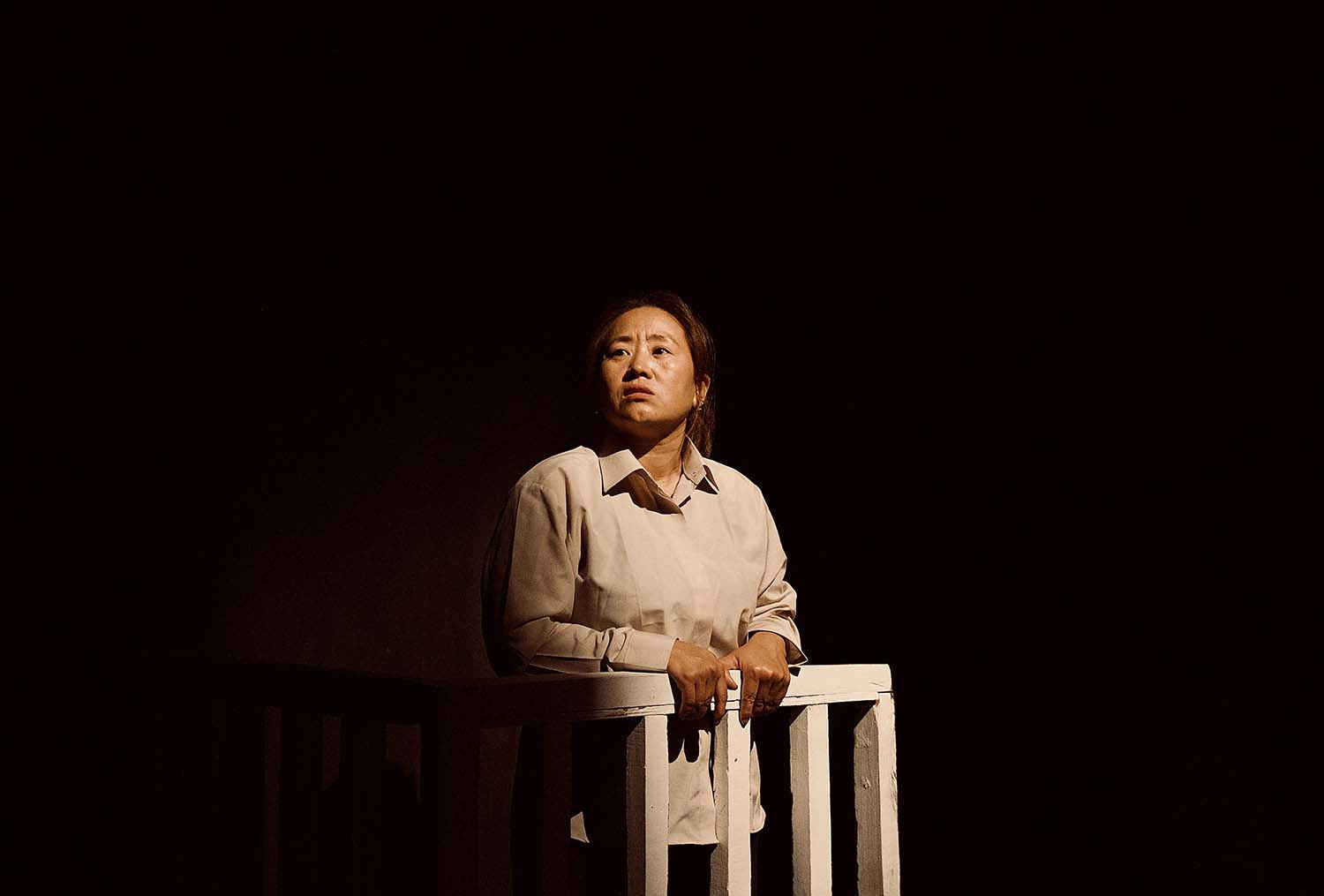
At Kausi Theatre, the play is performed in a demanding two-hour solo performance. Rai commands the stage with startling authority. It is difficult to comprehend the discipline required to memorise and sustain such an extensive script. Yet what astonishes more is not the memory but the transformation she portrays.
Prisa does not merely narrate events but embodies them. When she speaks to her mother, she is not merely narrating a conversation. She becomes the mother. Since this is a one-woman play, every reply from the mother, every interruption, every tone shift is performed by Rai herself. One moment, she stands as Prisa, defensive and impatient. Next, her shoulders soften, her voice lowers, and she responds as the mother. The switch is subtle yet unmistakable.
Rai commands the stage with startling authority. Photos: Courtesy of Prayash Bantawa Rai
Similarly, when she reenacts exchanges with friends, colleagues, or police officers, she shifts rhythm and posture within seconds. There are no costume changes, no physical markers. The transformation happens through voice, breath, and body. Because of this quick switching, we forget that she is alone on stage. It feels like many people are present.
Similarly, during lighter moments such as the university orientation scene or the flirtatious early encounters with Julian, her tone becomes playful. The audience laughs, and the humour lands. Likewise, in romantic recollections, she softens, allowing vulnerability to surface.
However, when the assault occurs, something shifts irreversibly. The confidence drains. The body tightens. The voice trembles. Rai does not dramatise trauma through exaggeration. The breakdown is gradual and therefore devastating. Most importantly, in the courtroom scenes where Prisa must recount the sexual act in cold procedural language, the contrast between her former professional detachment and her present fragility is unbearable.
The production design strengthens this collapse. The set is minimalist. It avoids extravagance. However, it is conceptually rich. The towering files represent institutional weight. They also suggest how cases are reduced to paperwork. On the other hand, the suspended papers evoke a moment frozen in memory. They create a sense that something unfinished hovers in the air. Time has stopped for Prisa, even as the world continues to move.
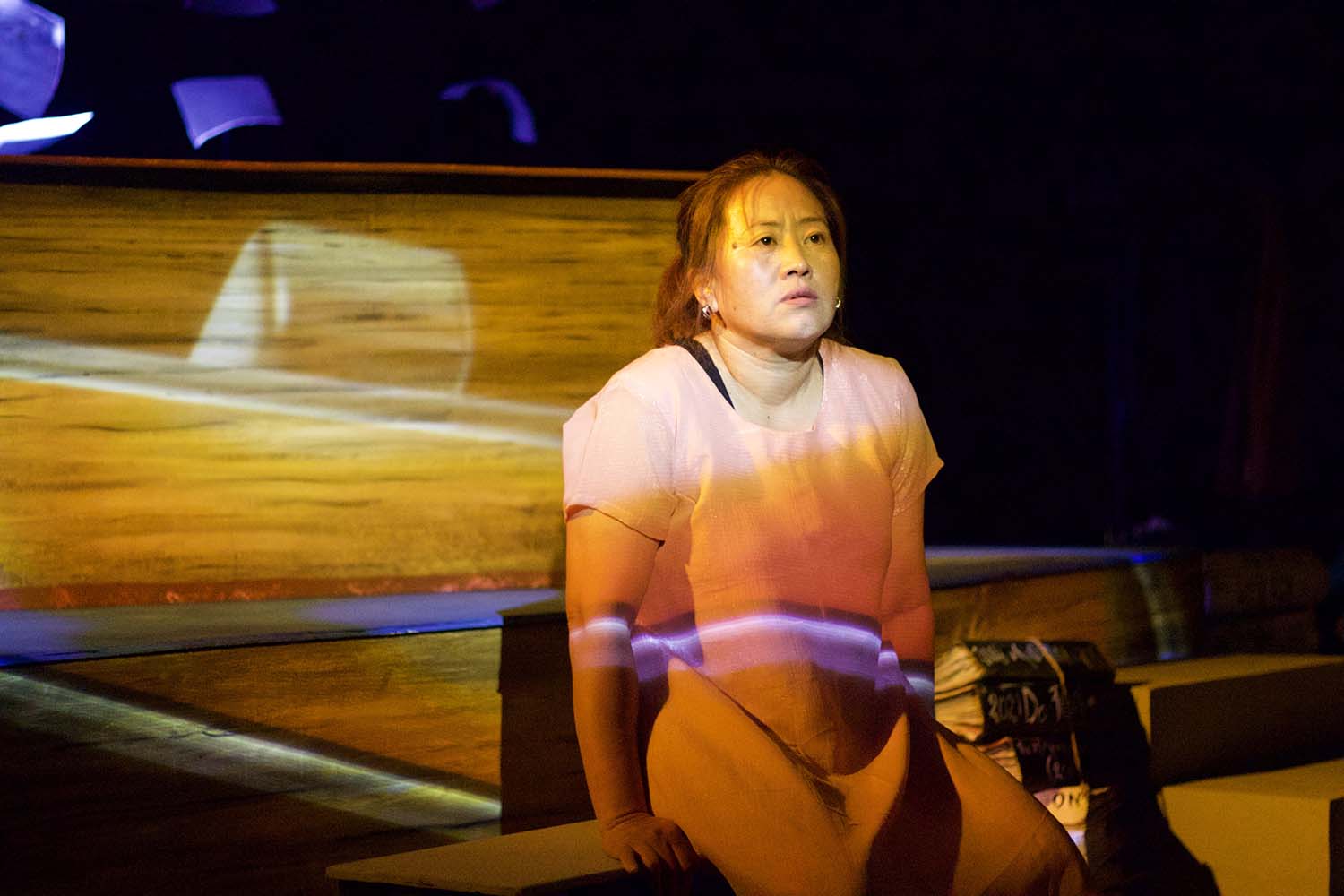
Lighting plays a crucial role. Whenever the setting shifts to a cafe, a taxi, or a train, light projections create believable environments without many physical props. The audience understands instantly where she is.
Moreover, during intense scenes, the background music rises in volume and tension, sending shivers. In calmer moments, the music blends quietly, almost unnoticed, yet always present. It never distracts, but it supports. The technical team demonstrates restraint and precision.
Thematically, ‘Prima Facie’ interrogates the gap between law and justice. Prisa once excelled at dismantling complainants in cross-examination. She knew how to create doubt. She knew how to exploit inconsistencies. However, when she stands in the witness box herself, she confronts the cruelty of those same strategies. The rules she mastered now wound her. Contrary to her earlier faith, she realises the system was never built to centre victims’ experiences.
The portrayal of Julian is particularly disturbing. Even after the assault, he denies wrongdoing. He never apologises. He behaves as though nothing significant occurred. This entitlement is chilling. It reflects a broader social pattern where men assume access to women’s bodies and later retreat behind denial.
The courtroom scenes are the most emotionally exhausting. The case has dragged on for more than two years. Prisa is cross-examined repeatedly. Her credibility is questioned. Her memory is scrutinised. Her behaviour before and after the assault is dissected. The once formidable barrister appears shattered. Rai’s performance in these moments is almost unbearable to watch. Tears form, yet she continues speaking. It feels less like acting and more like survival.
Moreover, the play serves as an educational tool. It articulates clearly that consent is not ambiguous. No means no. Silence is not agreement. Similarly, it demonstrates how trauma affects memory and response. For young audiences especially, these insights are powerful. Kausi Theatre’s decision to include a trigger warning in promotional materials was responsible and thoughtful. The subject matter is heavy. It demands emotional preparation.
Most importantly, ‘Prima Facie’ reminds us that the law is not neutral. It is structured by history, by patriarchy, by power. Likewise, justice is not guaranteed simply because procedures exist. The files on stage may be orderly. However, human experience rarely is.
By the end of the performance, the suspended papers no longer feel decorative. They feel symbolic of countless stories hanging unresolved. Rai stands alone, yet she carries many voices. Her voice projection remains strong until the final line. Even in fragility, there is force.
This production at Kausi Theatre is not comfortable viewing. However, it is a necessary viewing.
Sanskriti Pokharel, a former reporter and sub-editor at the Post, is a final-year student of Journalism, Mass Communication, and English Literature at St. Xavier's College, with experience in media, research, and communication.




 14.72°C Kathmandu