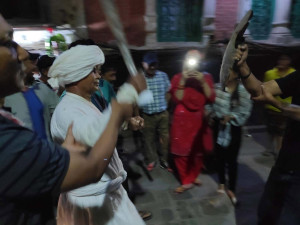
Through events like the annual Ekam Shivaratri, Bhajan Sanjh reflects a new way Kathmandu’s youth are experiencing spirituality. A typical Bhajan Sanjh begins with small breathing exercises. Participants practice simple movements and anulom vilom (a foundational yoga pranayama that involves inhaling and exhaling). Courtesy of Bhajan Sanjh/Facebook
For many young people in Nepal, spirituality is evolving. It is no longer limited to temple visits with family or ritual-heavy ceremonies that they do not fully understand. Instead, it is becoming something they choose for themselves.
What began as a small private gathering of around 40 to 50 people has now grown into a youth-led spiritual platform under the Yagyasala Foundation. Over the past two and a half years, it has evolved into an organised musical and collective experience that blends bhajans, classical music and community participation.
“We have been doing this for quite a while,” says Ravi Pandey, the event lead. “Earlier, it was not public. It was free of registration and intimate. But we realised that if we want to build something bigger and more accessible, we need to structure it properly.”
The foundation’s long-term vision goes beyond music. It aims to reimagine religious tourism around sites such as Pashupatinath, not only as places to visit but also as spaces to feel and engage with.
The Bhajan Sanjh team is clear about its philosophy. It does not preach. It does not push belief. It does not rank faiths. It does not define the Supreme for anyone.
“Spirituality is personal. Truth is experiential,” says one of the organisers. “Peace is something you feel, not something you follow.”
This openness is intentional. Though the name may sound rooted in Hindu tradition, the gathering includes segments such as Nirgun bhajans that focus on formless divinity. The aim is to make the space welcoming for first-timers and believers alike.
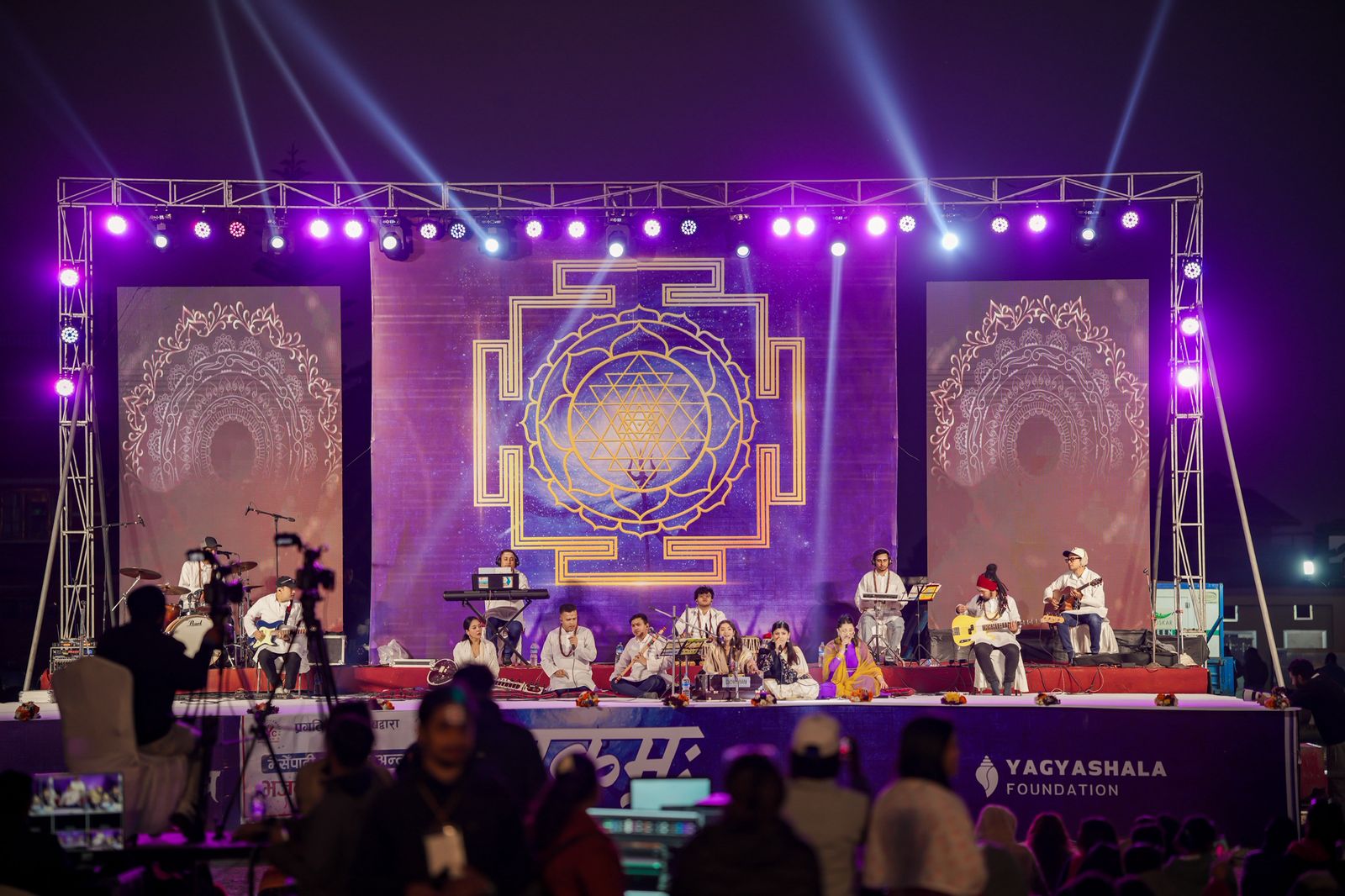
This year’s Ekam Bhajan Sanjh, held on Saturday, featured approximately 20 artists. Courtesy of Ananta Subedi
Unlike many traditional bhajan settings, the music here is rehearsed and curated. The performers prepare like a band would for a concert. There are checklists. There are sound tests. The team discusses which bhajans will work for collective singing and which may feel too rigid or inaccessible.
“There is a difference between musicians and professional musicians,” Pandey explains. “We keep a certain standard because people are contributing their hard-earned money to be part of this experience.”
A typical Bhajan Sanjh begins with small breathing exercises. Participants practice simple movements and anulom vilom (a foundational yoga pranayama that involves inhaling and exhaling). The idea is not to force meditation, but to gently slow the body and mind.
Then comes swasti bachan, a Vedic chanting segment. A group of trained chanters sit together and recite shlokas (sacred, rhythmic Sanskrit verses) in synchronised rhythm, sometimes using subtle hand gestures. The chanting is technical and requires months of practice. The segment usually lasts around 15 minutes and sets a contemplative tone.
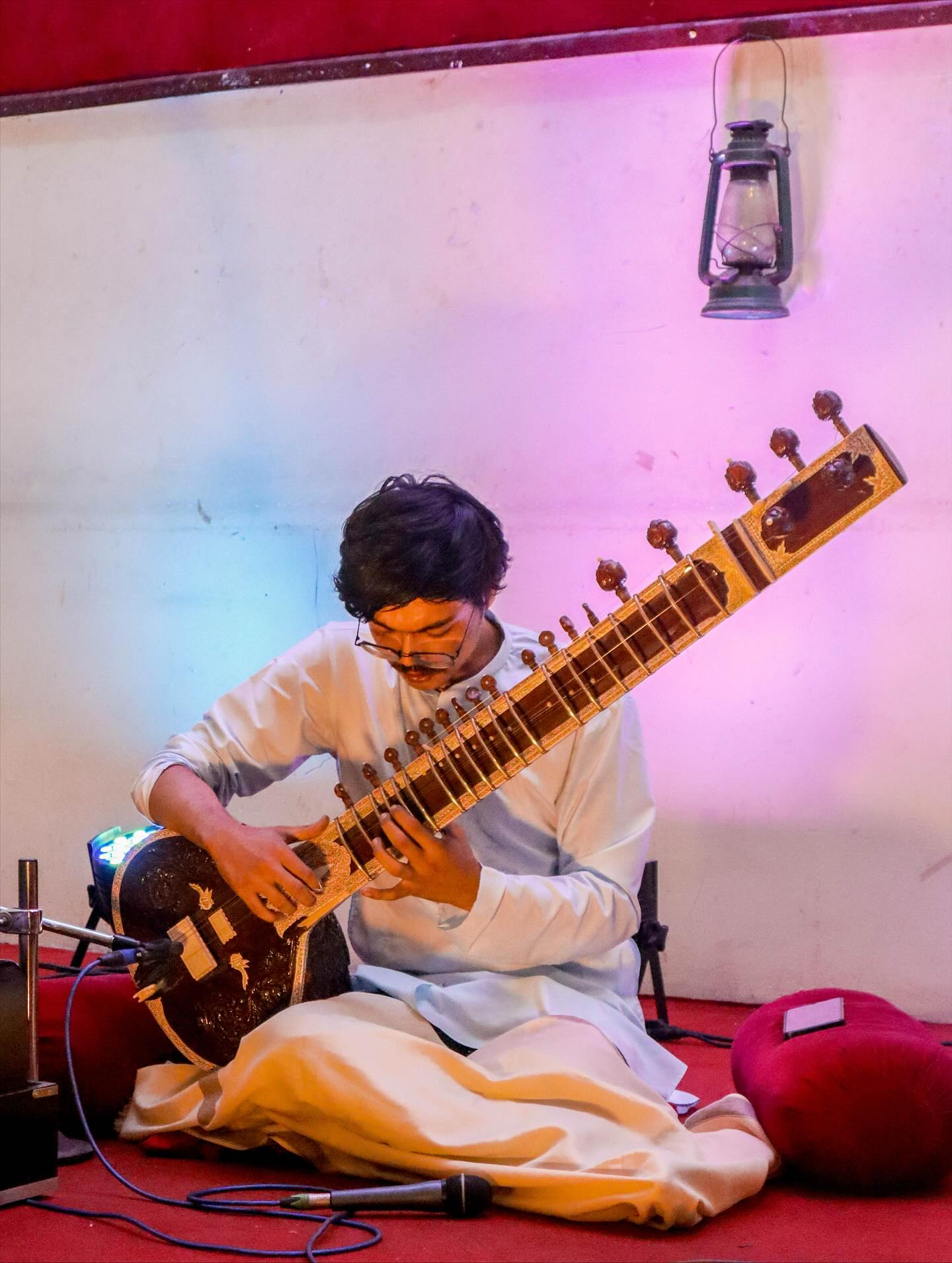
After that, the programme shifts into Raga Sadhana. This is a classical-music meditation segment introduced by the team’s newer members. Sitar, sarod, tabla and other classical instruments create a flow that feels both soothing and immersive.
“There are so many classical musicians in Nepal who do not get space outside academic circles,” says Pandey. “Concerts rarely invite sitar or tabla players. We wanted to create a platform for them.”
The Raga Sadhana segment not only offers a healing musical experience but also showcases seasoned and emerging classical artists. Their performances are documented professionally by the media team. Photos and videos shared online enable musicians to reach wider audiences.
Finally, the main bhajan session begins. Here, the energy shifts.
“We tell our singers that they are here to facilitate,” Pandey says. “They are here to invoke emotion so that people can sing their hearts out.”
The hall transforms into a collective chorus. Lyrics are projected. The lead singers sometimes pause to let the crowd carry the song.
An important thing about Bhajan Sanjh is that there is no VIP culture. Celebrities, if present, sit with everyone else. The emcee does not single them out. In this space, everyone is equal.
The most ambitious expression of Bhajan Sanjh so far has been Ekam, its annual Shivaratri event. ‘Ekam’ is a Sanskrit word meaning one, unity or oneness. The name reflects the union of Shiva and Parvati and the balance of masculine and feminine energy.
“This is not just a festival for us. It is our annual show,” Pandey says.
Courtesy of Bhajan Sanjh/Facebook
This year’s Ekam Bhajan Sanjh, held on Saturday, featured approximately 20 artists on stage. There was a drummer, bass guitarist, keyboardist, sitarist and multiple vocalists, creating a fully orchestrated experience rarely seen in Nepal’s bhajan scene. Alongside music, there were elements such as Shiva Tandav dance with Kathak influences, Maha Aarati and a flower shower called Pushpa Holi instead of fireworks.
Sattvik food stalls were set up. The organisers made a conscious effort to avoid plastic wrappers and promote an environmentally friendly approach.
“I have never seen such a big crowd for a bhajan event in Nepal,” says 24-year-old Aayush Shrestha, who attended Ekam for the first time. “I came because I saw videos on TikTok. When I entered the hall, and everyone was singing together, I got goosebumps. It did not feel like a religious lecture. It felt like a community.”
Twenty-eight-year-old Srijana Karki, who attended with her husband and two-year-old son, describes it as surprisingly comfortable. “I was worried about safety and whether it would be too loud for my child. But the volunteers were very attentive. They gave us water and even prasad. I felt safe. I could sing without being judged.”
A group of college students who came together said they were drawn by curiosity. “We go to clubs and concerts,” says 21-year-old Ritesh. “This was different. It was still energetic, but grounded. I did not feel drained after. I felt calm.”
The audience ranged from children to young people to the elderly.
Social media has played a key role in reaching young audiences. According to the team, 60 to 70 percent of attendees discovered Bhajan Sanjh through TikTok. The foundation invests in proper documentation to convey the atmosphere and set expectations.
Yet the appeal seems to go beyond aesthetics. For many young people, spirituality today is less about rigid ritual and more about personal exploration. Bhajan Sanjh taps into that shift. It blends tradition with professional sound design, classical music with youth energy, discipline with warmth.
There are practical challenges. Financing remains a major hurdle. Unlike commercial concerts, which are often funded by liquor or automobile companies in exchange for visibility, a spiritual gathering does not attract the same sponsors.
Still, the team is determined to expand. They have received invitations from different parts of Nepal and hope to take Bhajan Sanjh beyond Kathmandu.
Sanskriti Pokharel, a former reporter and sub-editor at the Post, is a final-year student of Journalism, Mass Communication, and English Literature at St. Xavier's College, with experience in media, research, and communication.




 15.41°C Kathmandu