RSP majority expected to reduce Nepal’s near-term political risk: Fitch
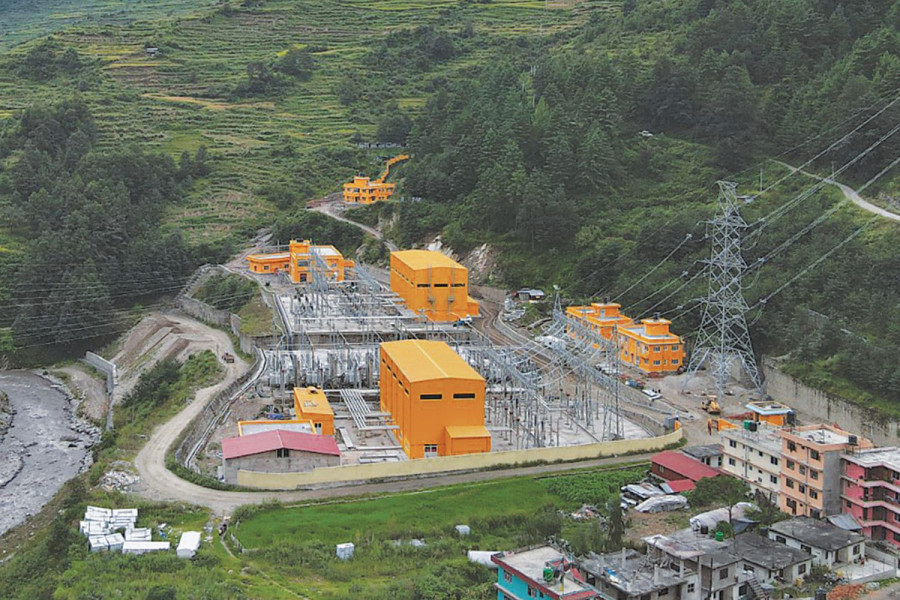
The American-British credit rating agency says strong mandate could improve policy predictability and reform momentum, but warns weak implementation capacity may constrain results. The winning party has proposed leveraging surplus electricity to power server farms, cloud infrastructure and artificial intelligence computing. Photo: Courtesy of NEA
The clear parliamentary majority for Nepal’s Rastriya Swatantra Party (RSP) reduces near-term political uncertainty and provides an opportunity for enhanced policy predictability and implementation of governance and economic reforms, Fitch Ratings said.
The American-British credit rating agency said the election result should lower the risk of prolonged coalition negotiations after severe unrest last year, reduce the likelihood of frequent government changes seen in recent years and potentially boost investor sentiment over time if there are clear signals of improvements in governance and economic reform delivery.
Nepal has faced chronic political instability due to a bloody Maoist insurgency between 1996 and 2006, the royal massacre in 2001, and a difficult transition from monarchy to a federal republic.
The shift in 2008 left a legacy of fragile coalition governments, weak party cohesion and deep-rooted corruption, resulting in frequent leadership changes and public disillusionment.
In the past three decades, Nepal has seen more than three dozen governments take office, with none completing a full five-year term.
Corruption escalated while economic performance deteriorated.
Major scandals such as the Bhutanese refugee scam, the Lalita Niwas land grab, large-scale gold smuggling cases, aircraft purchases for Nepal Airlines, corruption in the construction of international airports in Pokhara and Bhairahawa, the Teramocs procurement scandal, the tax settlement commission controversy, widespread misappropriation of funds in credit cooperatives linked to political figures and visit visa extortion cases, among others, have shaken public confidence in the political establishment.
Nepotism, weak political oversight and the nexus between politicians and business interests continue to drive corruption, particularly in public procurement. Roads and other critical infrastructure projects often take seven to ten years to complete, while government service delivery remains poor.
Economists and businesses have expressed hope that a stable government with a near two-thirds majority could change a system long plagued by corruption, scandals and impunity.
Fitch Ratings said the scale of the RSP’s victory reflects a voter mandate to break with the status quo politics of power sharing, with the Nepali Congress and the Communist Party of Nepal (Unified Marxist-Leninist) losing seats.
A single-party majority, subject to final certification by the Election Commission, should imply a short political transition and could improve Nepal’s ability to sustain reform momentum and translate hydropower-led investment into broader-based economic growth.
“The RSP targets average real GDP growth of about 7 percent over the next five years, raising per capita income above $3,000, which we believe is ambitious. The new government’s policy agenda will be key in determining the extent to which growth can be lifted from our current forecast of 4.5 percent in the fiscal year ending mid-July,” Fitch Ratings said.
“The RSP’s manifesto and announcements indicate it is aiming for policies that would lead to productivity gains, formal job creation to curb emigration and higher private-sector-led investment in infrastructure, agriculture, services, and digital and innovative industries.”
The new party has proposed leveraging surplus electricity to power server farms, cloud infrastructure and artificial intelligence computing. It says Nepal can connect more deeply with the global economy through data centres and digital services supported by abundant energy.
The RSP, backed by former Kathmandu Metropolitan City mayor Balendra Shah, popularly known as Balen, has set one of its most ambitious targets: generating 30,000 megawatts of electricity within 10 years and significantly expanding exports through improved regional diplomacy.
The party has also pledged to complete all national pride projects within two years and raise exports to $30 billion within a decade from the current $1.5 billion, largely through the promotion of the information technology sector. It has promised to investigate the assets of public office holders dating back to the democratic transition of 1990 and to create 500,000 jobs.
“When Fitch affirmed Nepal’s ‘BB-’ rating with a Stable Outlook in November 2025, we stated that strong, sustainable growth enabling substantial increases in GDP per capita—potentially supported by improved governance standards and regulations conducive to private and foreign investment—could improve Nepal’s credit profile,” the agency said.
However, it warned that implementation capacity could pose a significant risk.
“Nepal’s weak government effectiveness and regulatory quality scores compared with its peers could constrain execution, for instance if reform sequencing is unclear or governance outcomes lag behind campaign expectations,” Fitch Ratings said.
The agency added that private investment and foreign participation are likely to depend on measurable improvements in the business environment and accountability frameworks, along with sustained anti-corruption enforcement under the new government.
Nepal’s ‘BB-’ rating is supported by relatively low and highly concessional government and external debt burdens, strong external liquidity and solid medium-term growth prospects anchored by hydropower, with resilience reinforced by successful implementation of an International Monetary Fund programme.
However, constraints remain, including the underdeveloped economy’s exposure to external shocks and natural disasters, as well as weaker structural features—particularly GDP per capita and governance metrics—compared with other countries in the ‘BB’ rating category.




 15.26°C Kathmandu