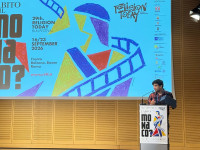
It’s cold, but inside one of South Kolkata’s cafes, almost 30 people are seated at a book event. One of them asks Rani Neutill what her mother would say if she read her memoir. Rani says it was her mother who asked her to write about her in the first place. There are laughs, and some people nod in the acknowledgement that mothers are known to do such things.
Rani Neutill’s mother wasn’t the best of mothers–Rani knows this, her mother knew this, and any reader of her memoir Do You Know How Lucky You Are? knows this in the span of the first few pages. And yet, in the grand tradition of books written by children of their mothers, Rani defends, cajoles on behalf of, diagnoses, contextualises and finds a way to justify the extraordinary injustices underlying her daughterhood.
The result is a book that recounts incalculable trauma but which distinguishes itself in its vulnerability.
The child of a Bengali woman and an American man who was double her age, Rani grew up largely in the US and then for a brief while, in Kolkata. After her father died when she was two years old, Rani was left entirely to the whims of her mother. And what whims they were – the Shukla whom Rani paints in her book was instinctive, beautiful, intelligent, burdened by her own family’s ailments, her circumstance and her own tyrannical mind.
One day Shukla is dragging Rani up a Kodaikanal hill despite the fact that she is clearly very ill just so that she can meet her spiritual guru, Sathya Sai Baba, during a narrow window deemed auspicious by astrology. One day Shukla is sitting at the edge of a bed and muttering about the voices in her head, leaving a small Rani to empathise with a condition she is too young to grasp. On another day, Shukla is depositing Rani to her grandmother’s house in Kolkata, separating her from the life she knew in order to teach her a lesson after a particular bout of truancy in her US school.
The book essays a mother who delivered on her threats; who hit you, who struggled against the bulwark of white America to eke out a life for you, who introduced you to life’s rules, but who followed through when she said that another offence would mean an academic year in a third-world city.
It is not unusual to read of mothers being cruel to their children, but Rani’s relentless attempts to rationalise this cruelty is what makes her treatise unique. ‘Okay, my mother was awful, but here is a nugget on how the British plundered India, on how patriarchal society robbed women of the right to think and how trauma is unprocessed in women. Do you see now that my mother’s actions were the result of historical injustice? Do you, reader, see that she is but a cog in this wheel of multi-generational awfulness?’ Rani’s prose screams.
A daughter in a struggling Kolkata household of eight children, Rani’s mother was forever pushed to use her beauty to ensure a comfortable life for the many who were dependent on her. This imposition led her down wretched paths–across countries and instincts. Rani attempts to understand all of these paths in her memoir. Where sometimes bafflement would be appropriate, Rani uses her book to tell the world and perhaps herself that her mother’s mental illnesses were tethered in a history of oppression, and should therefore be seen through many prisms.
But one of the most remarkable aspects of Rani’s book is in how it differentiates itself from the usual mother-child memoir.
To talk of our mothers is to talk of ourselves. This great common denominator of all human experiences is nonetheless an opportunity for any writer to shine a light on who they are. But Do You Know How Lucky You Are? does not give you an inkling into a Rani beyond her daughterhood. It is as if she chooses to shield all the parts that have grown despite her mother from this, the book of their collective suffering.
In the same city where Rani saw raging fights between her grandmother and mother, where she witnessed brutal family dynamics play out between her seven aunts, and where she was left to learn a lesson in her teenage–in the same city that gave the world her mother–Rani has joke after joke for the audience that had gathered for the release of her book.
A writer of this serious book on trauma, Rani laughs with her readers, rolls her eyes at her mother’s antics and play-mocks a reader for believing that she had not used a pseudonym for her friend. “The book doesn’t show my humour,” she says, later.
But ‘Fun Rani’ isn’t the only thing that was sacrificed at this altar of severity. An academic, Rani has a whole existence as a creative writing and literature teacher (fun fact, she has co-edited a book on the Korean pop band BTS!) that is only touched upon in this book.
She tells me that the memoir was first thousands of pages long, almost like a diary, and then had to be whittled down to 264–“a chunk on a relationship in which I suffered domestic abuse was cut, even though I felt that my life with my mother did have direct a bearing on it.” In the process, the tell-all quality was traded for a sharper, almost-cinematic version. Rani’s descriptions are vivid and often, the most dramatic moments of her life–reunions, fights and opportunities for her mother to showcase harshness–are shown, not told. We read of where each character stood, how tears fell, and what the wall looked like once Rani turned to it after a battle with her mother.
The title of the book is an age-old remonstration used by almost every older Indian relative who has rained mercilessness on younger ones. It is perhaps the only straight acknowledgement from Rani of the savage hand that life dealt her. There is no dearth of honesty from Rani in her book, but there is also no dearth of love. This kindness elevates her memoir and makes its reader a part of it.




 16.79°C Kathmandu