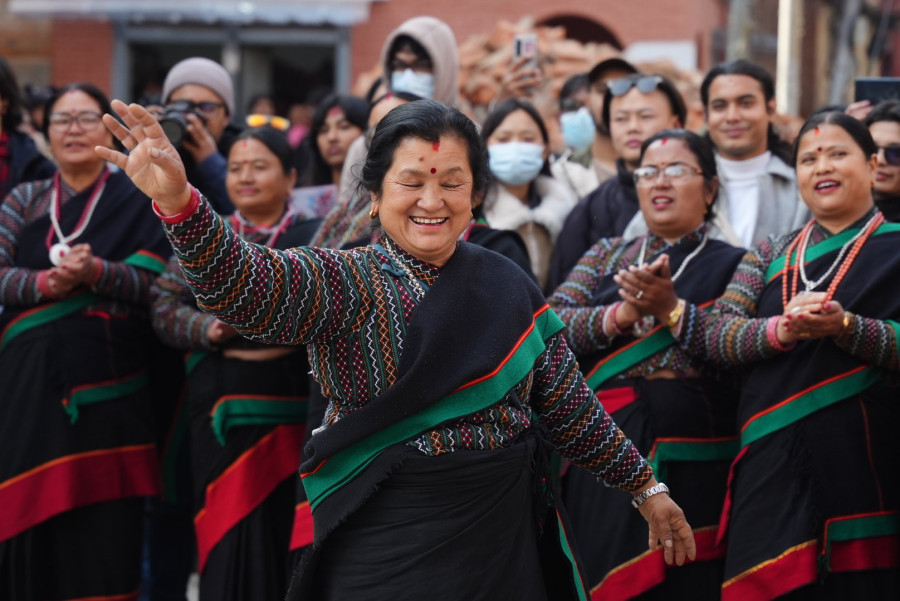
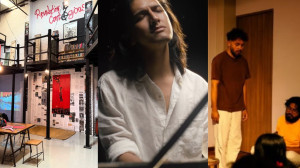
‘EITV 2026’ reimagined Khokana’s heritage spaces as performance venues, bringing artists and audiences together. Residents of Khokana dancing to the festival’s music in traditional attire. Photos: Courtesy of Amit Machamasi
As the deep pulse of Dhime rolled through the lanes of Khokana, the village woke not just to a festival but a gathering of cultures, histories and continents.
The 10th edition of Echoes in the Valley (EITV) was held on January 23 and 24 in Khokana, Lalitpur, transforming cultural and historic Newa settlements into a global platform.
The festival envisioned the streets, falchas, and chautariof Khokana as living stages. Preserving, even amplifying, the cultural values of these places, EITV brought Khokana into the eyes of the modern vanguard. The village, in return, greeted the performers, audience and organisers with an abundance of vibrant hospitality.
The community hosted food stalls in traditional Newa attire, dancing and singing with the crowd, and serving a variety of dishes and drinks. “Coming to Khokana was also about decentralising Kathmandu, and letting the heritage speak for itself,” says Riju Tuladhar, co-founder and director of EITV 2026.
Starting with the opening parade by Traditional Dhimey Khala, the festival set an atmosphere, echoing with traditional and cultural vibrations. Musicians, locals and music lovers from different corners of the world participated as the audience.
By Gaabu Pokhari, ‘Lyahmi Bhajan Khala’—lyahmi, translated as ‘youngsters’ in Newa—blurred generational lines of traditional music. With harmonium, nagara, sankha, taa, and khi, they invited intergenerational energy to frolic on common ground, echoing with bhajans and aarati.
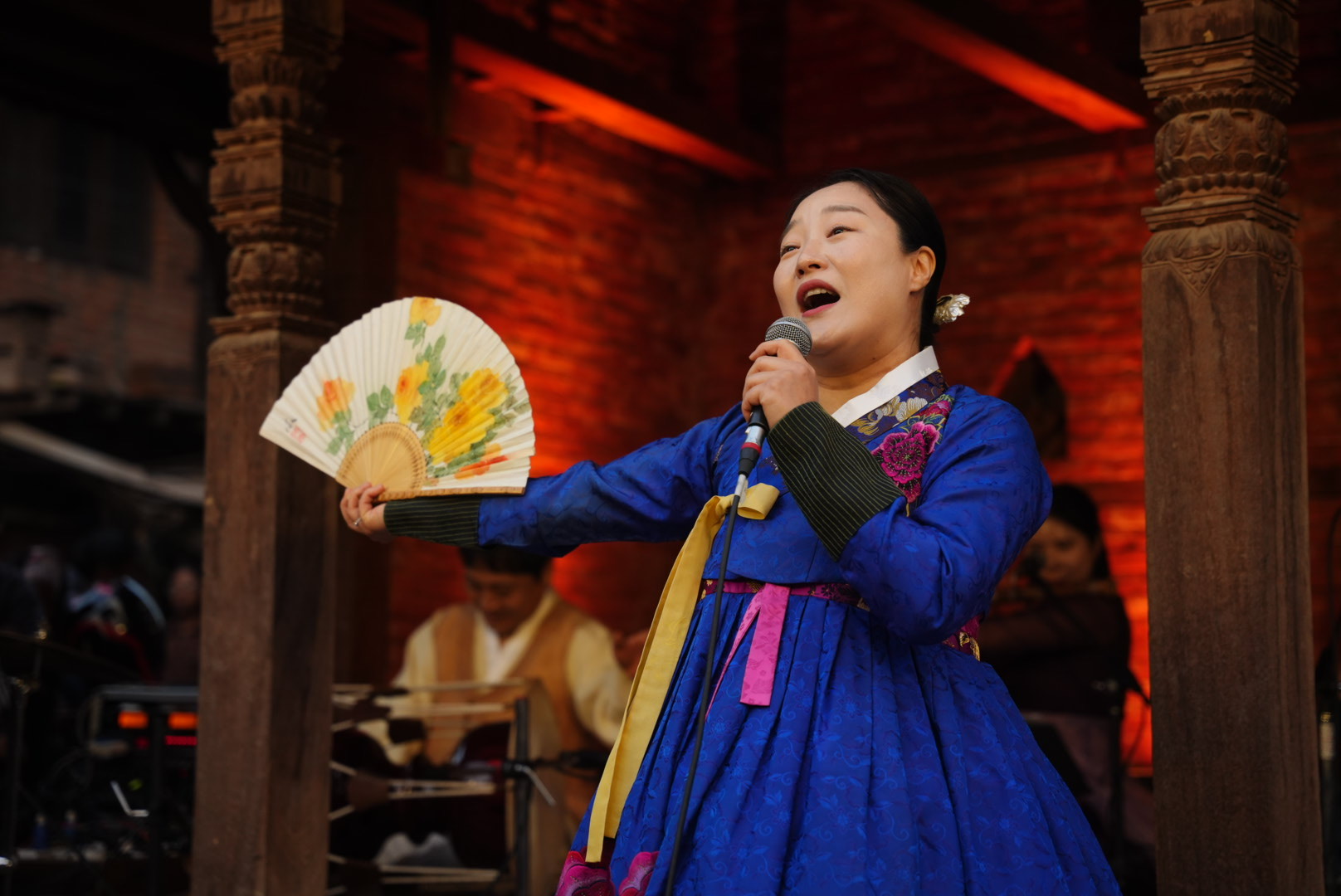
Vocalist of Allta-Neok singing ‘Baetnorae’, a traditional Korean song.
The festival’s brochure, illustrated and designed by Uzan Shakya, helped the audience navigate Khokana’s streets. In a five-minute walk, the audience could reach Gaabu Lachhi from Gancha, the site of the next performance.
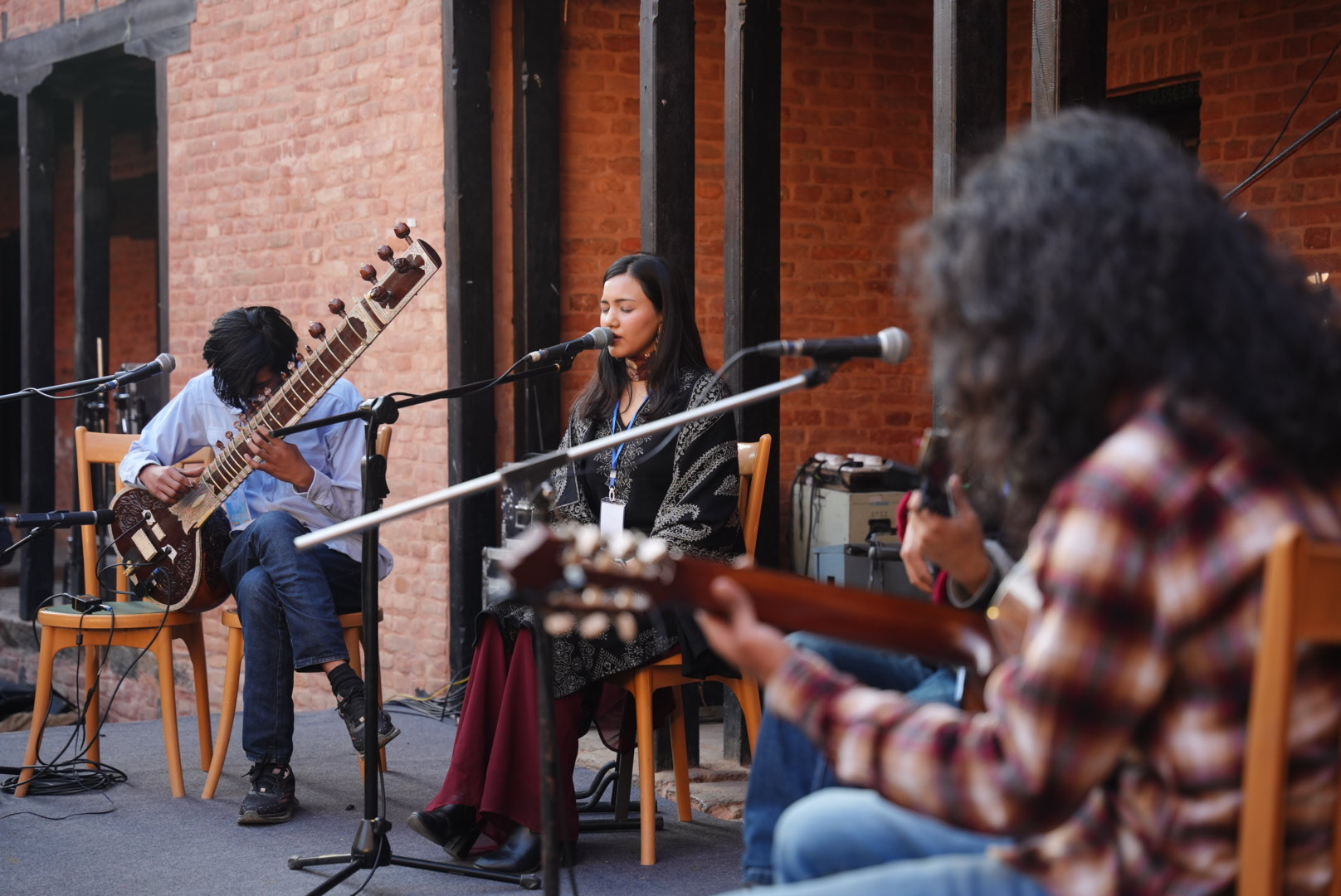
At Gancha, ‘The Arc’—students of Kathmandu University presented their songs, ‘Switch’, ‘Awakening’, ‘JJJ’, blending Newa rhythm with Indian classical music. The composition featured harmonious dynamics of sitar, guitar, bass, drums, and vocals, leaving the audience in awe of the rhythms.
While traditional Nepali music draws the audience back to their roots, EITV introduced global traditional sounds, demonstrating how music can bring people from all over the world together. “We wanted to give a platform to the artists preserving traditional music around the world,” says Tuladhar.
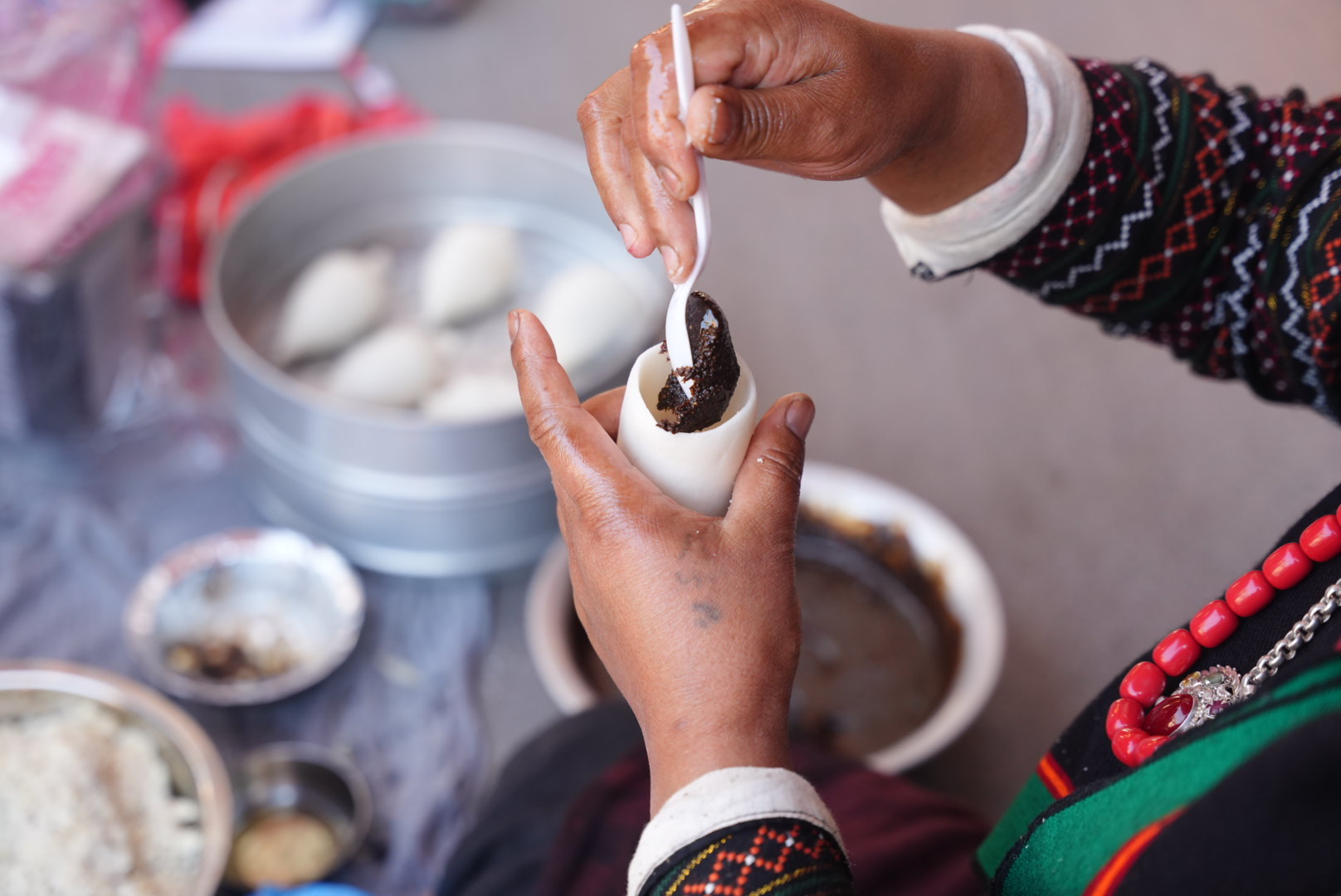
Preparing Yomari at the food stalls.
Korean traditional ensemble Allta-Neok performed Korean music with instruments including daegeum, sogeum, 25-string gayageum, piri, saenghwang (27 pipes, 27 different pitches), taepyeongso, and janggu, along with vocals. Allta-Noek presented contemporary music inspired by the tradition.
Similarly, Carolina Katùn’s music echoed from one mountain to another. Bringing the rhythms of Switzerland with a magical stroke of sarangi, their music shifted from soulful vocals to a dazzling blend of instruments.
Day two
Traditional Dhime Khala yet again set the alluring atmosphere with the opening parade on the second day. Saturday brought the community closer to the falchas.
Hot Club of Patan took the audience on a journey of movements with their funky rhythms in Gaabu Lachhi. Blending jazz with Nepali songs—‘Swargaki Raani’ by Narayan Gopal, ‘Batasaile Udai Lyayo Maya Mero’ by Asha Bhosle and Kumar Kanchha—the band presented the beauty of fusion through their music.
At Gancha, Project Baja Nepal presented Dafa music. Preserving the music from the brink of extinction, the band gathers youngsters into groups, passing on the traditional raag and taal.
“Project Baja Nepal’s performance stood out to me. Having followed Dafa music over the years, it was special to sing it with the group,” said Sukarya Lal Shrestha, a member of the 2023 EITV Documentation team.
At Chwo Falcha, Anugraha invited the audience to experience the serenity of Khokana through the rhythms of madal, sarangi, flute, and vocals. Preserving the art and culture of the Gandarbha community, Anugraha delivered their music with captivating energy.
With a 15-minute interval between performances, the festival allowed the audience to explore the village’s historical significance. “The tangible and intangible heritages of Khokana can be revitalised through activities such as visiting the village, photographing its landmarks and events, and engaging in other cultural activities,” writes Anil Ranjit in the photobook ‘Resistance of Khona [Khokana]’.
Returning to Gaabu Lachhi, Lalit and Friends from Janakpur were all set to amuse the audience with the rhythms of Maithili culture. The fusion of dholak, tabla, harmonium, and vocals created the perfect musical dynamics, reliving the festive atmosphere of Dashain, Tihar, Chhath, and Holi.
Suresh Raj Bajracharya, a professor at Kathmandu University and an Upasangeet Nirdesak at Nepal Pragya Pratisthan, won the hearts with his meditative sarod compositions. He also played Newa dhun, with the audience’s claps providing the rhythm. The tabla, played by Bidur Raj Karnika, and the tanpura, played by Gabriel Barok, perfectly complemented the sarod’s melodies.
At Chwo Falcha, Mallar Mukherjee and Kaushik Verma from Swami Vivekananda Cultural Centre, India, engaged the audience with raag and taal, making everyone a part of the performance. Beneath a beautifully lit tree, Mukherjee and Verma performed Sufi songs, accompanied by tabla and harmonium.
During the final performance, residents, shopkeepers, and passersby gathered at every available vantage point, drawn to the stage. Be it from the edges of their windows or the outermost corner of their shops, every space became a tangible site to turn into an audience.
Bridging continents through songs, Arko Mukherjee, who sings in 20 different languages, presented Nepali music in the tunes fused with international rhythms.
Paying homage to his inspirations, Jhalakman Gandharva and Buddhi Krishna Lamichhane, Mukherjee performed ‘Timro Nai Maya’ and ‘Pidima Basera’, leaving the audience mesmerised.
Simultaneously, a variety of workshops and interactive sessions were held over the two days. Srijanalaya, Lacchi Learning Centre, Callijatra Foundation, Urban Sketchers Kathmandu, Maitri Music Therapy Nepal, Regen Pranali, Shreeti Pradhan, and many other individuals and organisations facilitated activities at various locations across Khokana.




 20.62°C Kathmandu