From Oscar debates and box office hits to viral protest anthems, 2025 was a year where Nepali entertainment mirrored society’s highs, tensions, and creativity.
Picture this: you’re scrolling through Facebook on a winter afternoon, and the screen is flooded with clips from award-contending films, playlists of protest anthems dominate your feed, and memes about youth rebellion and politics keep you tapping. That sums up Nepali pop culture in 2025, a year where entertainment blurred with activism, politics, and social expression.
2025 was a year where Nepali cinema struggled with identity—balancing commercial formulas and cinematic experimentation.
‘Anjila’ was one of the most talked-about films this year. Directed by Milan Chams and based on the life of Anjila Tumbapo Subba, the goalkeeper of Nepal’s national women’s football team, it earned a wide release both in Nepal and worldwide. It was even selected as Nepal’s entry for the Oscars—but that sparked heated debate within the industry. Filmmakers publicly questioned the fairness of the selection process, urging for transparent evaluation and independent supervision of Oscar submissions rather than opaque decisions.
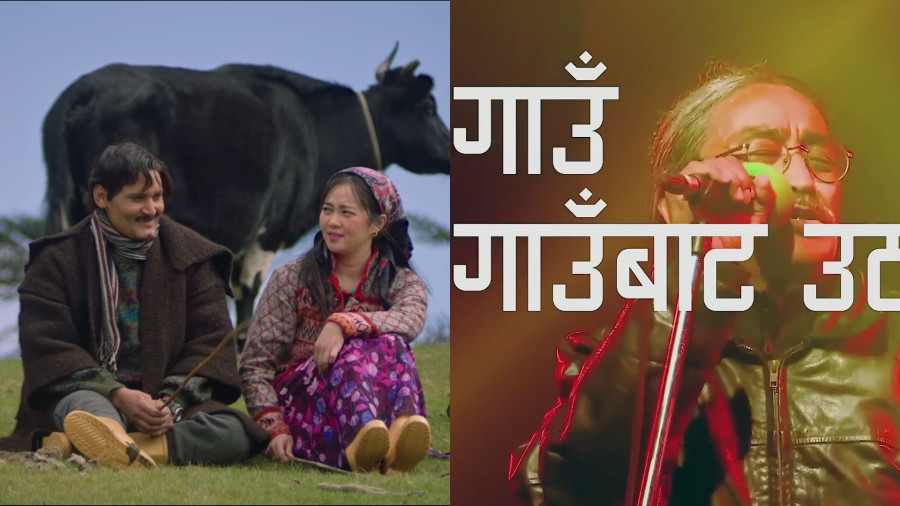
Another film to create a mass buzz was ‘Oonko Sweater’, a social drama set in the eastern hills of Nepal. Directed by Nabin Chauhan and produced by Artmandu Nepal, the film explored human connection across cultural divides. Strong performances by Bipin Karki and Miruna Magar, along with popular tracks like ‘Phool’, helped Oonko Sweater strike a chord with audiences and critics alike. Released on May 9, it went on to gross over Rs100 million, proving that grounded, character-driven stories still hold a place in Nepali cinema.
The Gen Z movement in September disrupted the Nepali film industry, forcing several releases to be postponed and screenings to be halted. ‘Abhimanyu: Chapter 1’, originally set for September 12, was pushed to September 29 and later rescheduled due to unrest and heavy rains.
Similarly, ‘Jaari 2: Song of Chyabrung’—the much‑anticipated sequel to the 2023 hit ‘Jaari’—was set to release on September 19 but was delayed as a direct consequence of the nationwide protests and resumed its run only on November 7, 2025, after conditions stabilised.
Sequels and culturally rooted films continued to perform well. Directed by Upendra Subba, the film earned around Rs61.94 million, with 206,239 tickets sold.
Beyond release dates, films already showing in theatres also felt the impact. Titles such as ‘Koshēdhunga’, ‘Gunyo Cholo’, and ‘Mohar’ saw their runs interrupted or scaled back as cinema halls closed and saw drastically reduced audiences during peak unrest and nighttime curfews.
The comedy‑drama ‘Magne Raja’ (initially scheduled for an August 22 release) ultimately hit screens before the protests, offering audiences a lighter counterpoint to the otherwise tense cultural and political climate.
Dashain releases brought a mix of tones and genres to audiences. Films like ‘Balidan’ attempted patriotic and socially charged narratives, while ‘Maitighar’ offered family drama infused with cultural reflection. ‘Hari Bahadur Ko Jutta’, led by veteran Hari Bansha Acharya, combined humour with subtle critiques of social and class divides.
Action and revenge thrillers also made their mark. ‘Pitambar’, featuring Pradeep Khadka and Saugat Malla, offered a tense revenge narrative that showcased strong performances and ambitious action sequences, drawing attention for its expansion of genre boundaries.
Meanwhile, ‘Paran’, directed by Deepak Acharya ‘Kaku’, quietly became a favourite of the masses for its layered storytelling and emotional resonance. Released on October 31, the film earned over Rs161 million within 30 days, selling 569,754 tickets, and became the highest-grossing Nepali film of 2025, so far. Veteran actor Nir Shah led the cast, with Madan Krishna Shrestha in a supporting role.
Romantic adventure dramas also captured audience interest. ‘Jerry On Top’, directed by Suyog Gurung, collected approximately Rs122.35 million, with 390,904 tickets sold. The film starred Anmol KC, Jasita Gurung, and Aachal Sharma in lead roles, alongside Bhuwan KC and Kedar Ghimire in supporting roles.
Similarly, ‘Man Binako Dhan’, directed and produced by Tanka Budhathoki, grossed roughly Rs 37.49 million, selling 143,000 tickets. Ashok Darji, Tanka Budhathoki, and actors such as Rabindra Jha, Buddhi Tamang, Saroj Khanal, Bhola Sapkota, and Nita Dhungana appeared in key roles.
From rural dramas and action thrillers to satirical comedies, 2025’s Nepali films entertained while sparking conversations, reflecting society, and shaping the evolving cinema landscape.
Nepali music in 2025: Virals, trends, and cultural moments
Nepali music in 2025 was a mix of creativity and cultural engagement, spanning streets, streaming platforms, film soundtracks, and folk-pop. During the Gen Z–led September protests, music became a language of anger, hope, and national reckoning, echoing through protests, social media, and live streams.
At the centre of this soundscape was Nepathya’s version of ‘Gau Gau Bata Utha.’ Though decades old, the song resurfaced as a rallying cry for a new generation, played through loudspeakers at Maitighar Mandala and widely circulated in protest videos. Its chorus, calling people to rise from every village, felt uncannily relevant in 2025, proving that legacy music can regain urgency when history repeats itself.
Alongside it, Balendra Shah’s (Balen) ‘Nepal Haseko’, gained renewed visibility. The song found new meaning during the protests, circulating in reels, march footage, and online compilations. Its political edge made it a digital protest anthem, especially among urban youth familiar with Balen’s dissenting style.
Outside activism, mainstream artists shaped Nepali music in 2025. Durgesh Thapa remained prominent, blending viral hits with folk-pop. His late-2024 release, ‘Dushman Hereko Herai’, maintained its momentum, surpassing 100 million YouTube views and featuring widely in weddings, on buses, on social media, and in memes.
‘Jaane Bhaye Jam Maya’ appeared on YouTube’s trending list, quickly amassing millions of views. Its catchy folk-pop hook spread across rural and urban areas, cementing Durgesh as one of the year’s most talked-about musicians and sparking debates on virality versus artistic merit.
Not every song relied on viral trends to resonate. ‘Ma Ta Dhale Dhale’, a folk-pop track, remained a staple during Teej and festive seasons, carrying over its popularity from late 2024, and continued its momentum during Nepal Premier League Season 2. ‘Jun Na Heri’ also captured attention with its upbeat, playful tone, steadily circulating on reels and short videos, proving that a song does not need chart dominance to influence listening habits.
Among softer and more introspective releases, Swoopna Suman’s ‘Radha’ stood out. Departing slightly from his urban pop style, Radha embraced a folk-inspired sound and rural imagery. The song crossed over a million views on YouTube and gained traction through acoustic covers, personal renditions, and lyrical appreciation rather than fleeting trend-driven virality.
The year also showcased a creative release cycle across genres. ‘Maya Ma’ by Purna Rai and Dajubhaiharu explored mutual effort in relationships through a visually rich historical music video, while Rachana Dahal’s ‘Timi Bhaye’, featuring Dmriti, blended romance with layered instrumentation in her album Janmadaag.
Film tracks like ‘Kafle’ from ‘Oon Ko Sweater’, performed by Jhuma Limbu and Sujan Chapagain, quickly crossed millions of views, demonstrating how storytelling can amplify a song’s reach. High-energy tracks such as ‘Babal’, a rap collaboration by Nawaj Ansari, Sisan Baniya, and OMG Spark, went viral on TikTok and YouTube, reflecting hip-hop’s rising visibility in Nepal.




 15.38°C Kathmandu