Met Office predicts monsoon arrival in Nepal within a few days
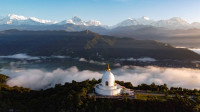
Thousands of people from hundreds of settlements designated as red zones are residing in disaster-prone areas, risking life and property. Ponkar Lake is a moraine-dammed glacial lake in Bimthang Valley in Manang, Nepal. Photo: Courtesy of Sudan Bikash Maharjan/ICIMOD
Among the 235 families in Lidi village in Ward-2 of Jugal Rural Municipality, which was struck by a landslide in August 2020, only 32 have received the third tranche of reconstruction support from the government till date.
At least 39 people had died when a landslide struck the village in Sindhupalchok district. Subsequently, the entire settlement in Ward 2 was designated uninhabitable by expert committees.
“Those receiving a full reconstruction grant have also been residing in the villages designated as Red Zone by multiple expert panels,” said Narayan Parajuli, disaster focal person in Jugal Rural Municipality. “Most families are not getting the final installment of the reconstruction grant, as they are not ready to demolish their old houses in the landslide-prone zones, where they are still residing.”
As in Lidi village, thousands of people from hundreds of settlements across the country have been living in disaster-prone zones that expert teams have deemed uninhabitable.
Concerns are mounting as the monsoon approaches. Despite forecasts of a below-normal monsoon this year, the risks of glacial lake outburst floods, flash floods, landslides in the hills and mountains, and drought in the plains remain significant.
Those living in areas designated as disaster-prone remain at constant risk, with many getting vulnerable to displacement, injury, or even loss of life.
“We are currently studying over 300 villages and settlements, at the request of local governments, which they consider at risk of disasters,” said Prakash Pokhrel, a geologist at the National Disaster Risk Reduction and Management Authority. “Of the over 300 villages, where we have carried out a study, a third of the settlements need to be relocated immediately, as they are at a high risk of landslides.”
Officials say that thousands of people from villages or settlements, either at risk of landslides or already struck by them, are still residing there, risking their lives. They say that the authority has also tasked several non-governmental organisations with studying the risk to scores of villages.
Climate experts have warned that a below-normal monsoon forecast for 2026 doesn't mean that the risk of disasters—landslides, flash floods, glacial lake outbursts, and inundation—will lessen.
A report titled ‘Hindu Kush Himalaya (HKH) Monsoon Outlook 2026’, issued on Thursday by the International Centre for Integrated Mountain Development (ICIMOD), stated that a below-normal monsoon in parts of the Hindu Kush Himalayan (HKH) region is not expected to reduce disaster risks. Scientists have warned that short bursts of intense rainfall, rising temperatures, and growing water stress could make the season increasingly dangerous.
ICIMOD, which works to address climate change and its impacts in the Hindu Kush Himalayan region through research, monitoring of glaciers and water resources, in its report projects lower-than-normal rainfall across several countries in South Asia, including Nepal, alongside above-normal temperatures across much of the region. Experts caution that the risk of flash floods, landslides and other hazards remains high.
“Even in a weaker monsoon, short periods of intense rainfall remain a major concern,” Manish Shrestha, a hydrologist at ICIMOD, is quoted in the report as saying. “Communities and authorities need to closely follow short-term forecasts and advisories."
The combination of erratic rainfall and rising temperatures is expected to heighten both drought and flood risks this monsoon season. Long dry spells, followed by sudden heavy downpours, could trigger flash floods and landslides, particularly in mountainous areas.
“The outlook points to a drier monsoon overall,” said Shrestha, “but intense rainfall events can still cause serious hazards.”
Warmer conditions are also expected to intensify heat stress and reduce water availability. Lower snow persistence at the start of the season could further weaken the region’s natural water buffer, making river systems and groundwater recharge more vulnerable to rainfall variability.
“Lower snow persistence means the region is entering the monsoon with a reduced seasonal water buffer,” ICIMOD quoted Sarthak Shrestha, co-author of the outlook.
Experts say the combined risks are already complicating disaster preparedness and response efforts across South Asia.
“The growing unpredictability of the monsoon is creating coordination challenges,” Neera Shrestha Pradhan, water and disaster risk reduction lead at ICIMOD, is quoted as saying. “Preparedness now requires stronger coordination among governments, technical agencies, and local authorities.”
The outlook warns of increasing pressure on food production, water resources, and energy systems, while heightening vulnerability in both rural and urban areas.
“Erratic rainfall following prolonged dry spells increases the risk of landslides,” another expert Ranit Chatterjee, CEO of Rika India, is quoted as saying. “This can exacerbate socio-economic pressures, including migration, rising food prices, energy stress, and disruptions to tourism.”
Scientists also stressed the need for stronger early warning systems and impact-based forecasting.
“Drought and flood risks can no longer be managed separately,” said Arun Bhakta Shrestha, senior adviser at ICIMOD. “Early warning systems, short-term forecasts, and locally driven preparedness must work together to address increasingly complex hazards.”
With climate variability intensifying, experts warn that preparing for a single type of hazard is no longer sufficient.
“The era of preparing for a single, predictable hazard is over,” said Saswata Sanyal, disaster risk reduction specialist at ICIMOD. “Anticipatory action and early warning must now form the foundation of disaster preparedness.”
The Hindu Kush Himalaya Monsoon Outlook 2026 is based on forecasts from multiple global and regional climate models and is intended to help governments, disaster management agencies, and communities strengthen preparedness ahead of the June–September monsoon season.
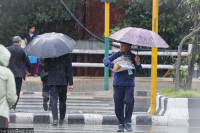
Meanwhile, the Meteorological Forecasting Division under the Department of Hydrology and Meteorology said that the monsoon will enter the country within a few days.
“Monsoon's usual onset date is June 13. We have not yet declared the onset as monsoon clouds are not dominant,” said Bibhuti Pokhrel, a meteorologist at the division. “We are closely monitoring the development and will inform the public accordingly.”
The National Disaster Risk Reduction and Management Authority has anticipated that 226,000 people from 51,000 households will be affected by monsoon-related incidents this year. More people in Lumbini Province will be affected by monsoon-related disasters, followed by Koshi Province and Madhesh Province. Impacts of monsoon-related disasters will be low in Karnali Province, according to the authority.
“Compared to previous years, we are much better prepared for any untoward incidents this time,” said Shanti Mahat, spokesperson for the authority. “Three Nepal Army helicopters have been kept on standby, rescue equipment for large-scale disasters has been procured, and coordination with the three security agencies, provincial governments, and local governments has been strengthened.”
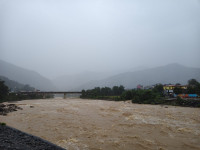
Nepal has been witnessing erratic weather events—heavy rainfall over a short span in some places, lack of rainfall for months, including during mid-monsoon, in other places, continued rainfall for several days, and other unusual weather events in recent years.
Arjun Poudel is a health reporter for The Kathmandu Post. Before joining the Post, he worked for Sagarmatha Television, Naya Patrika, Republica and The Himalayan Times.




 16.74°C Kathmandu