How a Nepali came to be part of the 2026 FIFA World Cup behind the scenes
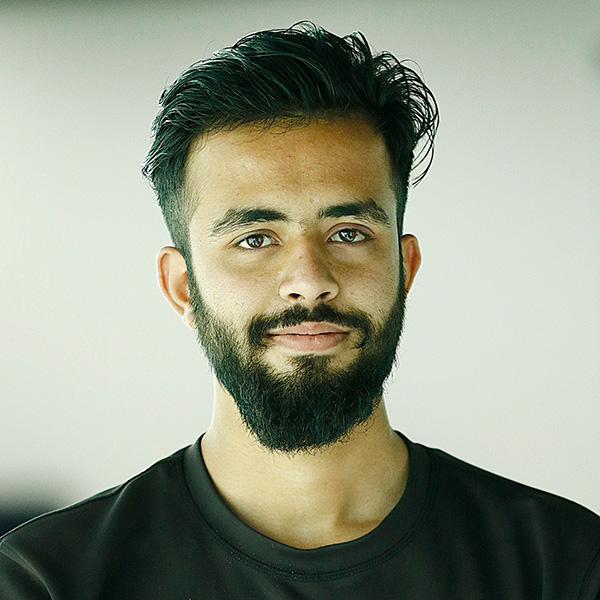
Ashwin Raj Pokharel, a Coca-Cola supervisor at Dallas Stadium, has gone viral among Nepalis as he works behind the scenes of the World Cup build-up in the United States.Ashwin Raj Pokharel is pictured at AT&T Stadium (now Dallas Stadium) in Dallas, Texas, USA. Provided to the Post
A bearded man in a customised red Coca-Cola T-shirt moves through the vast AT&T Stadium, which has been branded as Dallas Stadium for the 2026 FIFA World Cup. His images and videos from inside the venue have been widely shared among Nepali audiences over the past two weeks, turning him into an unexpected point of pride during football’s biggest global build-up.
He is a 29-year-old Ashwin Raj Pokharel. He has been living in the United States since 2018. He is currently working as a lead (supervisor) for Coca-Cola at the stadium, which is set to host the most matches among the 16 venues across the United States, Mexico and Canada during the 2026 World Cup.
The global event is kicking off in Mexico City between the co-host and South Africa at 12:45am Nepali time on Friday.
Pokharel is not the first Nepali to be linked with the making of football’s biggest event. Over the years, Nepalis have been part of World Cup projects in various capacities, most notably in Qatar, where many contributed to infrastructure development for the 2022 tournament—a campaign that also carried stories of sacrifice and loss.
For Pokharel, however, the World Cup is less about symbolism and more about the rhythm of daily work inside one of football’s most high-profile venues. His journey from Kathmandu to the heart of a major venue of the sport’s biggest event has unfolded over years of working in different roles in the two countries.
Pokharel used to upload videos for Highlights Nepal, an entertainment platform, during his school days in 2014-2015, Pokharel recalled in a conversation with the Post recently. “I then helped in importing goods from China as my parents ran a wholesale shop in New Road,” he said.
“I then worked in travel and tours before starting an education consultancy. In 2018, I came to the US. After arriving, I completed my bachelor’s in business management and master’s in business analytics. Among several jobs I tried, I also worked as a supervisor at Amazon.”
For the past year, Pokharel has also been running AshFinances, a platform dedicated to helping the Nepali community with education guidance, utility savings, career support, and everyday information that many people miss when starting life in the USA.
“Nepalis coming to the USA for the first time get cheated in different contexts,” Pokharel said. “I started the platform to guide Nepalis as they start their life in this country.”
He had also worked in event management. “I have worked in functions graced by Bollywood stars Arjun Rampal and Tamannah Bhatia and singer Nitin Mukesh,” Pokharel said.
But the current role of a supervisor at Dallas Stadium for Coca-Cola was something that had never crossed Pokharel’s wildest dreams.
Pokharel had seen an advertisement regarding the role. He applied in February and got past several selection processes and interviews before arriving for his orientation on May 8.
“Ever since the orientation, I have been the happiest,” Pokharel said. “To be part of this big of an event is beyond any expectations.”
Pokharel said that his team will be looking forward to delivering beverages of Coca-Cola within 20 seconds to the respective fans in the stadium, which is home to the world’s most valuable sports team since 2016: Dallas Cowboys.
According to Forbes, Dallas Cowboys, a professional “American football” team, were worth $13 billion by the end of 2025. “The Cowboys…are also the most profitable franchise, racking up an estimated $629 million last season in operating income (earnings before interest, taxes, depreciation and amortisation),” Forbes reported on January 9.
“The stadium is used for American football. It has been transformed into Dallas Stadium for soccer,” Pokharel said. “And since Coca-Cola is taking over the stadium, which has been a partner with Pepsi for years, the work has been hectic.”
Alongside ensuring Coca-Cola has been branded properly, Pokharel has been tasked with collecting feedback through a survey of fans during the matches.
“Currently, I spend around 40-50 hours a week at the stadium,” Pokharel said. “I have to walk 20-25 kilometres a day when I am at the venue.”
He also informed that the USA was getting louder every day for the World Cup.
“There are offers across all the restaurants. People are only talking about the event,” he said. “More and more visiting fans are arriving, and the vibe has been unparalleled. And the way fans are spending thousands of dollars for matches feels unreal.”
At 3:20pm Nepali time on Wednesday, the cheapest ticket price for a match at Dallas Stadium was $900 for the match between the Netherlands and Japan. A ticket for England vs Croatia is starting at $2,300, and that between Argentina and Austria starts at $2,850. The most expensive ticket at Dallas Stadium starts at $7,400 for the semifinal match.
“And to be part of this mega event as someone who will be playing a role in making it a success feels surreal,” Pokharel said.
Nonetheless, Pokharel’s life has not been filled with happiness alone ever since his story started circulating across the Internet.
“A couple of Nepalis who are volunteering at Dallas Stadium have reached out to me,” he said. “There are also some positive comments in my videos and photos. But there is no shortage of negative comments.”
And to make it worse, Pokharel had his Facebook account hacked.
“It was around two weeks ago that my Facebook account got hacked,” Pokharel said. “I was able to get it back only for a moment. I have appealed again, and the issue is currently pending.”
On the other hand, Pokharel says that it hurts to see Nepali football reach a new low. “I often remember Dasharath Stadium when I am working at Dallas Stadium. I used to go to the home of Nepali football to watch matches,” he continued. “Honestly, there can be no comparison between the two stadiums.”
“I am seeing how big an honour it is for the fans to see their countries participate in the World Cup,” Pokharel said. “Nepalis have been dreaming of seeing the country play at the biggest stage, too. But it is not something we can achieve with luck alone. It hurts to see Nepali football keep reaching a new low.”
Yet, Pokharel argues that bad things do happen in life. “But there are good things that matter more,” he adds. “If you do hard work smartly, then you can achieve a lot.”
Pokharel said that his contract with Coca-Cola will end with the conclusion of the semifinal match on July 15. “I will return to Kathmandu after the World Cup and think of what to do next,” he said.
Pokharel’s story is not one of fame or spectacle, but of steady movement across countries, jobs and ambitions. As the World Cup builds toward its global spotlight, his role remains behind the scenes, keeping football’s biggest event running. For him, the stadium is not a dreamland, but a workplace shaped by long years of effort far from Kathmandu.
Nayak Paudel covers sports for The Kathmandu Post. He previously worked at the Post (2018–19) and spent over five years at The Rising Nepal. His reporting spans crime, health, education, and social issues.




 26.08°C Kathmandu