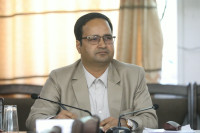
Nepal should move beyond its traditional role as a buffer or bridge between major powers and position itself as a strategic broker through diplomacy, institutional cooperation and regional engagement, Professor Amitabh Mattoo of Jawaharlal Nehru University has said.
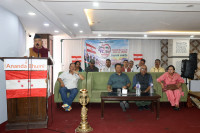
Speaking at a lecture organised by the Asian Institute of Diplomacy and International Affairs (AIDIA), Mattoo examined Asia’s changing power dynamics and the strategic choices shaping the region’s future.
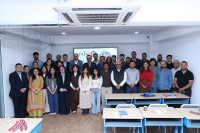
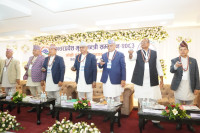
The lecture, titled “Asian Futures: India’s Strategic Vision, China’s Rise and the Future of the Asian Order”, was part of the second series organised by AIDIA’s Centre for Asian Futures. It brought together the inaugural cohort of the Master in International Affairs, Economy and Diplomacy (MIAED), a programme offered in partnership with Kathmandu University.
The discussion covered China’s rise, India’s pursuit of strategic autonomy, evolving India-China relations and the broader roles of regional and global powers in shaping Asia’s emerging order.
Mattoo argued that Asia’s future should be understood in the plural, rather than through the conventional idea of a single “Asian Century”. The region’s trajectory, he said, would be shaped by multiple actors, competing interests and strategic choices, not a predetermined path.
The lecture also highlighted the importance of strategic diversification, strong institutions and the ability of smaller states to exercise meaningful agency amid intensifying competition among major powers.
Welcoming participants and introducing Mattoo, Ambassador Durga Bahadur Subedi, AIDIA’s executive vice-chairman and principal of MIAED, said the choices, ideas and institutions countries brought to the evolving regional order would shape Asia’s future.
“Through the Centre for Asian Futures, AIDIA seeks to nurture the next generation of strategic thinkers who can look beyond immediate geopolitical shifts and help shape the futures of Asia, including Nepal’s role in them,” Subedi said.
The session sought to connect academic perspectives with contemporary international challenges, particularly the implications of changing geopolitical, economic and institutional dynamics for countries such as Nepal.
Its central message was that Asia’s future would depend on the strategic choices made by its countries and institutions.
The Centre for Asian Futures is an AIDIA initiative focused on research, strategic foresight and policy-oriented dialogue on Asia’s changing geopolitical, economic and institutional landscape. It aims to help societies and institutions across the region shape equitable and sustainable futures over a 10-to-50-year horizon.
Anil Giri is a Chief Sub Editor covering diplomacy, international relations and national politics for The Kathmandu Post. Giri has been working as a journalist for more than two decades, contributing to numerous national and international media outlets.




 21.18°C Kathmandu