RSP lawmakers turn critical after Balendra Shah government completes 100 days
Ruling party MPs raise concerns over ministers’ conduct and question whether the government is living up to its promise of good governance. RSP whip Prakash Chandra Pariyar speaks in the House of Representatives on Tuesday. RSS
Rastriya Swatantra Party lawmakers have begun openly criticising the Balendra Shah-led government as it completes its first 100 days in office, raising questions over ministerial conduct, policy decisions and the administration’s commitment to good governance.
During a recent House of Representatives meeting, RSP lawmaker Jagadish Kharel warned that the government could not rely solely on the prime minister’s popularity and that the dignity and role of lawmakers also needed to be respected.
“Is our role as MPs limited to sitting here and thumping desks? We will not be satisfied with that, and neither will the people,” Kharel said in Parliament.
Through parliamentary debates, social media posts and committee discussions, party members have raised concerns over government decisions, singled out ministers and accused some of failing to uphold the principles of accountability and good governance.
RSP lawmaker Karishma Kathariya demanded that the government apologise to farmers for failing to ensure timely supplies.
“Why does the government’s heart not ache when it hears farmers saying they need fertilisers even before paracetamol when they are suffering from a high fever?” Kathariya questioned. She accused the government of misleading the public by claiming that sufficient stocks were available.
“The government says warehouses are full, but farmers ask why [chemical] fertiliser has not reached their fields. Is the government trading on the tears of farmers?” she said. “The government must immediately apologise to those who feed the country, make the facts public, and announce alternatives and relief measures.”
RSP lawmakers also directly criticised Agriculture Minister Gita Chaudhary in Parliament, accusing her ministry of failing to address farmers’ concerns.
“Paddy cultivation is at its peak in Kapilvastu. Farmers in a district with the country’s largest agricultural area—84,000 hectares—are once again struggling because of shortages of fertiliser and seeds,” said RSP lawmaker Mohan Lal Acharya. “The agriculture minister was informed about the problem at the very start, but there has been no visible improvement.”
Acharya said officials at the federal, provincial and local levels were blaming one another over fertiliser quota allocations, while lawmaker Buddhi Narayan Shrestha said the federal government had failed to ensure timely supply.
RSP lawmakers have also raised concerns over what they described as unlawful activities allegedly carried out with the backing of state agencies.
On Monday, vehicles were deliberately parked to obstruct the entrances of the Kantipur Media Group, Onlinekhabar and Himalayan Television offices in Kathmandu. Raising the issue in Tuesday’s House of Representatives meeting, RSP whip Prakash Chandra Pariyar questioned the government over the incident.
He said the Nepali press, which continued to function even when King Gyanendra Shah imposed direct rule and deployed armed soldiers inside newsrooms, would not be intimidated by vehicles being parked outside media houses.
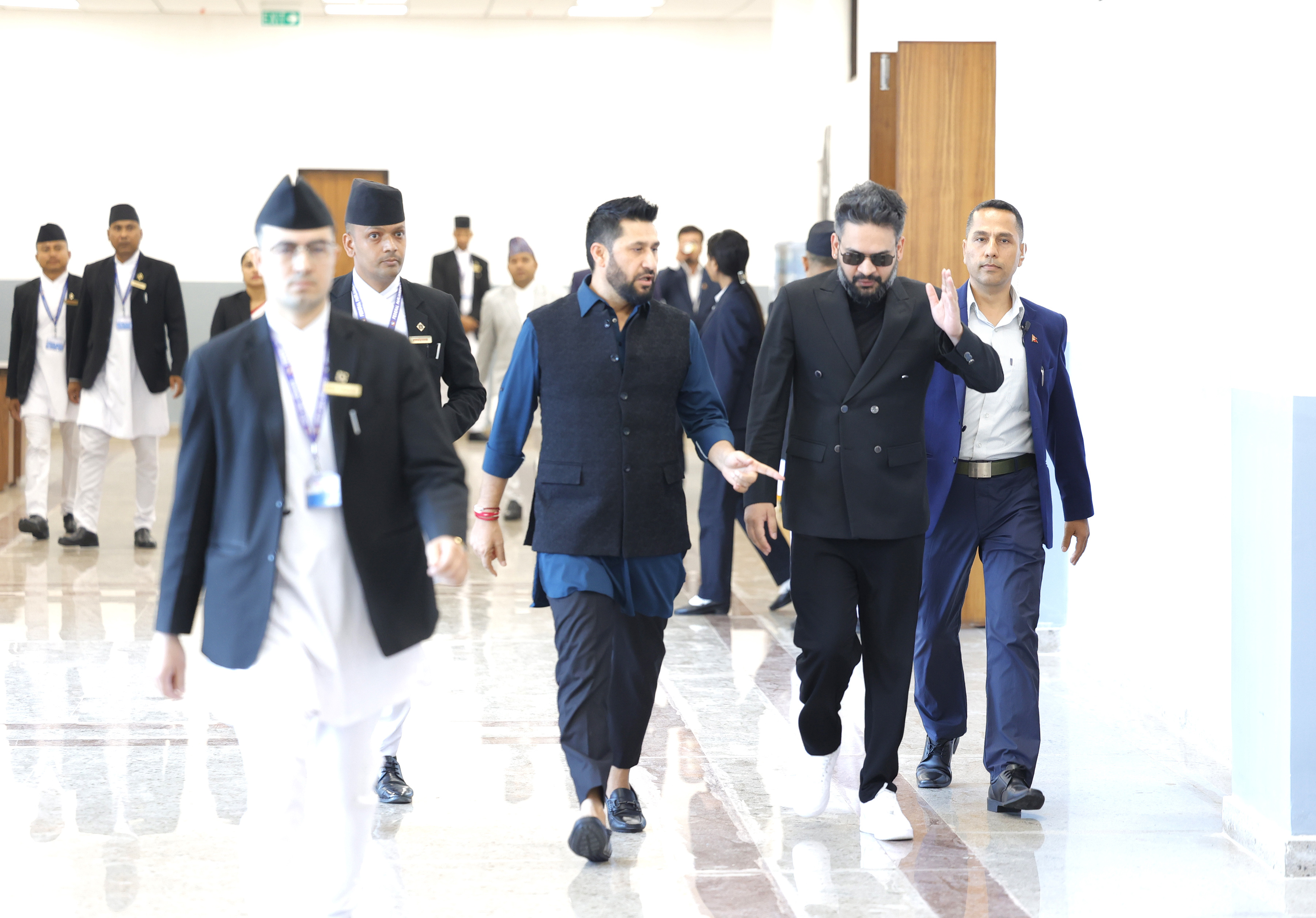
Prime Minister Balendra Shah and RSP chair Rabi Lamichhane walk into Parliament, Tuesday. RSS
“Just because we are in power does not mean we should allow any form of intimidation or anarchy against the press because someone’s personal interests have been affected,” Pariyar said, urging fellow lawmakers to speak out. While other RSP members remained silent on the issue, the whip chose to confront it publicly.
While many RSP lawmakers have frequently criticised previous governments, arguing that 35 years of misgovernance cannot be reversed by a government that has been in office for only 100 days, Sushant Vaidik argued that the current administration cannot avoid accountability by pointing to past failures.
The lawmaker also challenged the tendency among some RSP leaders to describe incidents such as the self-immolations of individuals like Ganesh Nepali as merely “mental health issues”, arguing that such tragedies require deeper examination by the state.
“We cannot dismiss these incidents as personal failures, nor can we reach the truth by simply blaming government offices or bureaucratic decisions. The state is not an inanimate structure; it is a living entity,” Vaidik said.
“When citizens approach the state and feel ignored, when they face humiliation instead of respect while seeking public services, and when they see opportunities slipping away, it is not just an individual’s suffering—it reflects deeper structural problems within the nation.”
Vaidik said politics could not continue by repeatedly blaming the past.
“The future cannot be secured by blaming history. We have all failed in this. The state has failed. Past shortcomings cannot become an excuse for our government. Today’s responsibility belongs to today,” he said. “A healthy nation does not hide its wounds; it identifies them, treats them and emerges stronger.”
Home Minister Sudan Gurung also came under sharp criticism from RSP lawmakers over the state of border security, with MPs alleging that ordinary citizens face harassment and heavy taxation for carrying small quantities of personal goods while large-scale smugglers operate freely.
Lawmakers also accused the minister’s private secretariat of becoming inaccessible to the public.
“When citizens try to contact the Ministry of Home Affairs—which is responsible for public security—to register their grievances, the home minister’s personal secretary often does not respond nor answer calls. We have been receiving repeated complaints about this,” RSP lawmaker Afsana Banu said. She accused the minister’s private secretariat of showing “gross irresponsibility” in addressing citizens’ concerns.
Speaking about the home ministry’s responsibilities, RSP lawmaker Ramesh Prasai demanded that the Speaker direct Minister Gurung to appear before Parliament and respond to questions over the government’s alleged failure to improve road safety following a series of fatal accidents.
“A tragic accident recently took place on the Karnali Highway. Did the government mobilise all available resources for rescue operations? Is it true, as the opposition has claimed, that people were left stranded on cliffs crying for help and that rescue efforts were delayed due to negligence?” Prasai asked.
He also demanded the government’s long-term plans to prevent similar disasters on the Karnali Highway. “The home minister must come to this rostrum and answer these questions,” Prasai said.
RSP lawmaker Buddhi Prasad Panta expressed frustration that concerns raised by lawmakers in Parliament were not reaching the government.
“As representatives of the people, we do not feel that the issues we raise in this chamber are moving beyond these four walls to reach the government’s ears,” Panta said.
He also criticised what he described as unequal enforcement at border points, where authorities allegedly ignore major smugglers while penalising ordinary citizens carrying small quantities of goods.
“Recently, a video went viral on social media showing locals confronting the home minister, saying that the police administration was ignoring large-scale smuggling of goods and narcotics through major checkpoints while confiscating small quantities of goods worth one or two thousand rupees from ordinary people,” Panta said. “The silence of the home minister and the ministry on this issue is being closely watched by the public.”
RSP lawmaker Kharel used special time in the House on July 6 to raise allegations of corruption at the Ministry of Physical Infrastructure, led by Sunil Lamsal.
“A young woman from Dolakha told me she lost her job simply because she did not have personal connections at the Ministry of Physical Infrastructure. I investigated the matter and met the secretary. The response a public representative receives from the secretary is: ‘Go to the Commission for Investigation of Abuse of Authority, go to court.’ A secretary does not need to teach me how to approach the CIAA or the courts,” Kharel said.
“If the wife of a joint secretary gets a job because of nepotism while another citizen loses an opportunity because she lacks connections, where is good governance? When will we actually establish good governance?” he questioned.
RSP lawmaker Kamal Subedi urged the government to address widespread fraud faced by Nepali migrant workers in recruitment fees, wages and insurance-related matters.
“To resolve problems related to foreign employment, the Ministry of Labour must establish a special task force so that we do not have to continue raising these basic issues in Parliament,” Subedi said.
Meanwhile, RSP lawmaker Som Sharma criticised the government’s proposal to increase traffic fines, saying the move failed to consider the country’s economic realities.
“We strongly support traffic discipline and road safety, but considering the current economic situation and the income levels of ordinary citizens, the proposed fines are highly impractical,” Sharma said on July 8.
“Penalties should be a tool for reform, not a financial burden. Increasing fines without considering ground realities will only hurt people’s livelihoods. I hope the government will seriously reconsider the proposal by taking into account citizens’ capacity and practical circumstances before implementing it.”
RSP lawmaker Smriti Senchuri urged the government to address the ongoing protests at Maitighar, where members of the Dalit community have been demanding an end to housing discrimination in Kathmandu.
“For 81 days, banners asking ‘Government, is there a room available for Dalits?’ at Maitighar Mandala have been mocking this state and society. If an educated Dalit person struggles to find a room in a city that calls itself civilised, when will they be accepted as equal human beings?” she asked.
Senchuri said the home minister’s visit to Maitighar had only showcased the government’s presence and argued that ending caste discrimination required opening the doors of both Singha Durbar and the Nepali society’s mindset.
Expressing dissatisfaction that the local projects he recommended were excluded from the new fiscal year’s budget, RSP lawmaker Yagyamani Neupane said the government had ignored the needs of rural communities.
“The water flow from Lawakhola has stopped, leaving people in Miklajung without drinking water. I had recommended this project, but it was not included in the budget. While electricity and drinking water from rural areas are being diverted to cities, the Ministry of Water Supply is absent from the ground. Our voices were simply not heard,” he said.
RSP lawmaker Sristi Bhattarai also raised concerns over illegal collections on highways in the name of parking fees. She accused the authorities of failing to stop unauthorised toll points that allegedly extort money from truck drivers.
She said laws were being drafted comfortably inside the offices in Kathmandu and Biratnagar without paying sufficient attention to their implementation on the ground.
RSP lawmakers have not limited their criticism to House sessions. They have also raised concerns in parliamentary committees and through social media platforms.
At a meeting of the Law, Justice and Human Rights Committee on Monday, RSP lawmaker Sulabh Kharel criticised the police response against Gen Z activist Majid Ansari, who had visited Kirtipur to assess the situation of landless squatters.
Invoking the names of the home minister and prime minister, Kharel said using force and arresting people for questioning the government was unacceptable.
“Some time ago, a police officer asked my party president, ‘What is your last wish?’ I didn't just see that as the words of an officer; I saw the face of the then ruling administration, the then prime minister and the then home minister in that statement,” Kharel said.
“If people begin seeing the faces of the current prime minister and home minister in police actions when protesters, opposition leaders or ordinary citizens are told to ‘stop doing politics’, what difference will there be? That is exactly how I viewed such actions in the past,” he said, warning the government not to lose its direction.
At the same committee meeting, RSP lawmaker Madhu Chaulagain questioned why food supplies to landless squatters kept at a holding centre had been stopped since July 6.
Demanding that the minister appear before the committee to explain the government’s management of squatters, Chaulagain accused authorities of violating their human rights.
“A serious human rights violation is taking place where these squatters are being kept. They have not received food since July 6. I have video evidence showing crying children and elderly people at the Banepa holding centre. The government has no right to treat citizens this way,” she said.
Lawmaker Krantishikha Dhital also criticised the government’s handling of landless squatters in a social media post.
“The tears of landless squatters flowing on the streets today should disturb all of us. Managing the squatter population was necessary. But was this done according to our election manifesto?” she wrote earlier.
Dhital said the operation lacked sensitivity, planning and responsibility, adding that it had ultimately exposed the state’s weakness and incompetence.




 15.26°C Kathmandu