Congress, UML and other forces scramble to rebuild organisations, review leadership and prepare for local and provincial polls as new political order takes shape. Post Illustration
Nepal’s political landscape is undergoing a sharp reset after the rise of the Rastriya Swatantra Party (RSP), a relatively new force that has disrupted the dominance of traditional parties and forced them into introspection, restructuring and internal contestation.
Formed only about four years ago, the RSP secured a sweeping mandate in the 2026 parliamentary elections. The Nepali Congress, which emerged as the largest party in the House of Representatives in the 2022 polls, has been reduced to a weakened main opposition with just 38 seats. The CPN-UML and the Nepali Communist Party fared even worse, shrinking to 25 and 17 seats respectively.
The electoral outcome has triggered not just a struggle for relevance among these parties but also intensified debates over organisational reform and generational leadership change. All major parties have now shifted focus to local and provincial elections.
Political analysts argue that in a multiparty system, both big and fringe parties retain relevance despite electoral shocks. “Electoral waves are not permanent,” said Lok Raj Baral, a political science professor. “The Congress will remain the RSP’s main rival, and other left forces will continue to have a presence.” He added that parties will need to reform their policies, organisation and working style to stay competitive.
Baral noted signs of change within the Congress. “Under Gagan Thapa’s leadership, the Congress appears to be on a path of transformation,” he said. “Left parties, too, cannot avoid reforming their organisation, leadership and policies. Without that, their very existence could be at risk.”
Congress turns to organisational overhaul
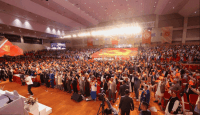
Until last week, the Nepali Congress itself was embroiled in a legal dispute over its internal structure. On Friday, the Supreme Court recognised the faction supporting a special general convention as the legitimate authority, clearing the way for organisational rebuilding.
The party has now decided to focus on strengthening its base. It has launched review meetings across all seven provinces alongside a “party awakening campaign”. A provincial-level review for Bagmati province was held in Hetauda on Monday.
“We are conducting election reviews across all provinces and moving forward with a campaign to revitalise the party,” a leader said. “Taking the election results into account, we are working to make the organisation more active.”
Membership expansion has been placed at the centre of the first phase of reform. The party has also begun preparations for its 15th general convention, scheduled for the last week of October. A nationwide campaign to update active membership began last Tuesday.
The Congress launched the campaign in an effort to strengthen the party from the grassroots. Previously, the party had around 900,000 members. However, after receiving fewer votes than its number of active members in more than 16 constituencies in the March 5 election, the Congress has prioritised membership renewal and expansion.
Party president Thapa said the name “root campaign” reflects the election symbol of the tree, whose roots must reach deep into the ground. The party has also decided to adopt a “primary election” system for candidate selection in future polls, similar to the RSP model. To facilitate this, it is introducing a digital Congress ID system, requiring members to complete biometric registration at the ward level.
Representatives have already been deployed across 165 constituencies in all 77 districts to oversee membership renewal. Following the campaign, the party has outlined a detailed convention schedule with the general convention planned for October 2-5.
UML faces internal dissent after electoral setback
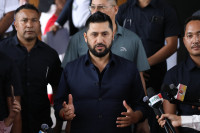
The CPN-UML is also grappling with internal challenges following its poor electoral performance. The party was briefly thrown into uncertainty after Chair KP Sharma Oli was briefly arrested.
During Oli’s detention, the UML appointed vice-chair Ram Bahadur Thapa as parliamentary party leader. However, tensions have surfaced over accountability for the electoral defeat. Senior leaders, including vice-chair Bishnu Paudel and deputy general secretary Yogesh Bhattarai, have called for leadership restructuring, holding Oli responsible for the loss.
The UML has begun internal discussions on its future strategy. It plans to raise issues such as inflation control in Parliament, advocate for the rights of squatters, launch public awareness campaigns and revitalise party structures.
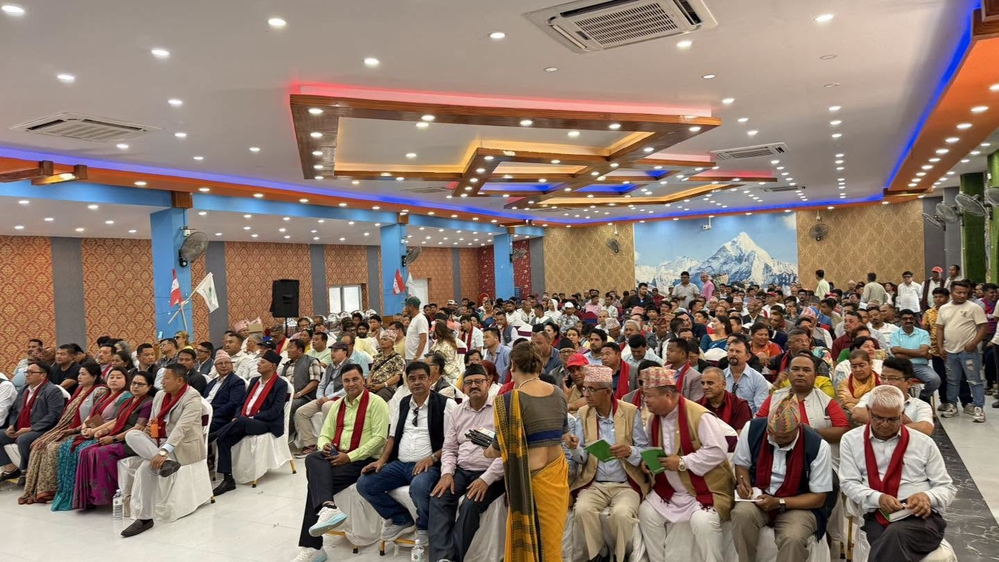
Post photo
General Secretary Shankar Pokharel said the party is currently in a review phase. “After the defeat in the general election, the UML has entered a period of evaluation,” he said. “Reviews are being conducted at ward, municipal and district levels. Once provincial reports are received, a central report will be prepared.”
The party is also collecting individual feedback from grassroots leaders. Based on the findings, Pokharel said, the UML will undertake a systematic process of revitalisation and restructuring.
Secretary Rajan Bhattarai said the internal debate over the election results is ongoing. “There is discussion within the party, and reviews are underway,” he said. “The focus should not be on blaming each other but on identifying areas for improvement.”
The party has also directed lower committees to renew memberships and recruit new members. It claims to have around 672,000 organised members.
Nepali Communist Party eyes leadership reset through convention
The Nepali Communist Party, led by Pushpa Kamal Dahal, is preparing for a general convention in October aimed at electing new leadership. Although the party was formed through the merger of several left factions, its sister organisations remain largely unintegrated.
The party has said it will proceed to the convention only after completing organisational integration. Despite a merger between then Maoist Centre and then CPN (Unified Socialist) in November last year, their affiliated organisations have yet to be consolidated. The central committee currently has around 2,500 members, while a 45-member central coordination committee is handling key decisions.
Calls for leadership restructuring are also growing within the party. Senior leader Barshaman Pun said the primary goal is to overhaul both policy and leadership through the convention.
“Our main focus is to restructure party policy and leadership through the general convention,” he said. “We will move towards the convention after completing organisational integration from the centre to the local level.”
The party plans to challenge the government’s actions in Parliament while simultaneously launching public mobilisation campaigns.
Dahal has presented a written political dossier to the central coordination committee outlining plans. “We need to move forward with a concrete organisational blueprint and action plan,” the proposal states. “The party must undergo organisational transformation and operate in a transformed manner.”
He has proposed completing organisational integration within a month and expanding party structures to all wards within three months. Membership renewal is expected to be completed within three months, while expansion to municipal, district and provincial levels is planned within five months. The party aims to hold a unification general convention within six months.
Dahal emphasised the need for leadership transformation alongside organisational restructuring. The party also plans to develop training curricula for ideological and theoretical education, focusing on issues affecting lower-income groups in line with its socialist orientation.
Leaders have also acknowledged the need to improve the working style, lifestyle and conduct of party members. “A comprehensive programme is needed to reform the organisation,” said leader Prakash Jwala. “We must develop concrete plans on policy, leadership and working style.”
Madhesh-based parties seek relevance
Parties centred in the Madhesh region, which failed to secure any seats in the House of Representatives, are struggling to regain their footing. Much of their focus remains on internal review and restructuring.
Before the elections, the Janata Samajbadi Party Nepal (JSP-Nepal) and the Loktantrik Samajbadi Party had merged. JSP-Nepal is now working to consolidate that unity.
“We will unify all committees of both parties and hold a convention to change leadership,” said leader Manish Suman. “We have begun restructuring from lower committees.”
He also said discussions are underway to form a broader alliance of Madhesh-based parties. “There is a proposal for identity-based forces to come under one umbrella,” he said. In the Madhesh Provincial Assembly, JSP-Nepal holds 29 of 101 seats.
Suman attributed the electoral loss partly to the influence of Balendra Shah, whose popularity, he said, created a ripple effect. “We believe identity-based politics will be reassessed,” he added.
Janamat Party chair CK Raut, who had earlier indicated stepping back from an executive role, has resumed active involvement. General Secretary Chandan Singh said the party is preparing campaigns focused on agriculture and discrimination issues in Madhesh.
“Under Raut’s leadership, we are preparing to return to the people with Madhesh-centric issues,” Singh said.
RPP faces internal pressure for general convention
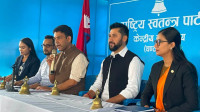
The Rastriya Prajatantra Party (RPP) is also facing internal pressure to hold a general convention. A gathering led by General Secretary Dhawal Shamsher Rana in Kathmandu on Sunday demanded that the party convene the convention within a week.
Party chair Rajendra Lingden has called a central working committee meeting for April 29 to discuss the issue. Rana has accused the leadership of delaying the convention.
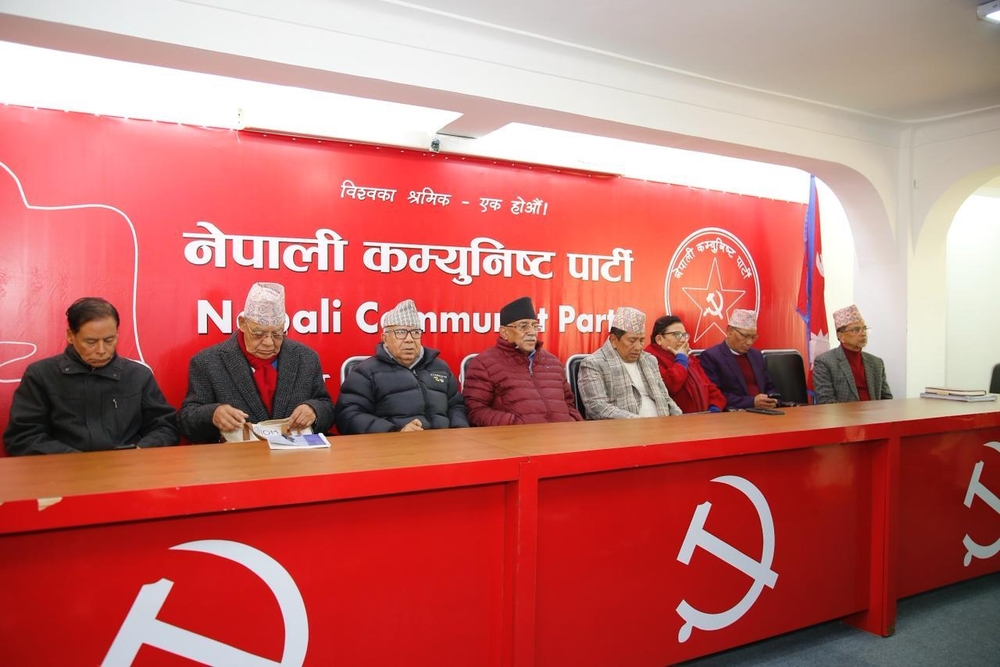
Post file photo
Earlier, the RPP had already postponed its general convention by six months. A memorandum submitted by the Rana faction calls for forming an organising committee under a neutral coordinator to ensure a fair and credible convention.
Party spokesperson Mohan Shrestha said future programmes will be determined by the central committee meeting. The party is also divided over whether to advocate for a constitutional monarchy or an active monarchy, a key point of contention between Lingden and Rana.
Janamorcha plans street protests on nationalism agenda
The Rastriya Janamorcha, which failed to win any seats in Parliament, has said it will raise issues of nationalism through street protests.
Leader Manoj Bhatta said the party will hold a central committee meeting in Butwal next week to discuss organisational strengthening and protest agendas. “Even though we are not in Parliament, we are preparing to raise nationalist issues from the streets,” he said.
The party has long opposed federalism, including during the constitution-making process.




 20.12°C Kathmandu