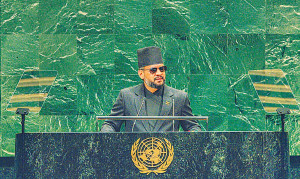
CPN-UML chair KP Sharma Oli, who has been elected for the federal parliament from Jhapa six times, used to treat his constituency as secure political turf. The former prime minister rarely needed to spend extended periods there during elections. A rally or two would suffice before he toured the country to campaign for fellow candidates of the party.
During the 2022 general elections, Oli famously addressed a gathering at Surunga in ward 3 of Kankai Municipality, stating that there were “no problems” in his constituency and that he was free to travel nationwide to secure victory for other UML candidates. Few doubted his political dominance in his home district of Jhapa.
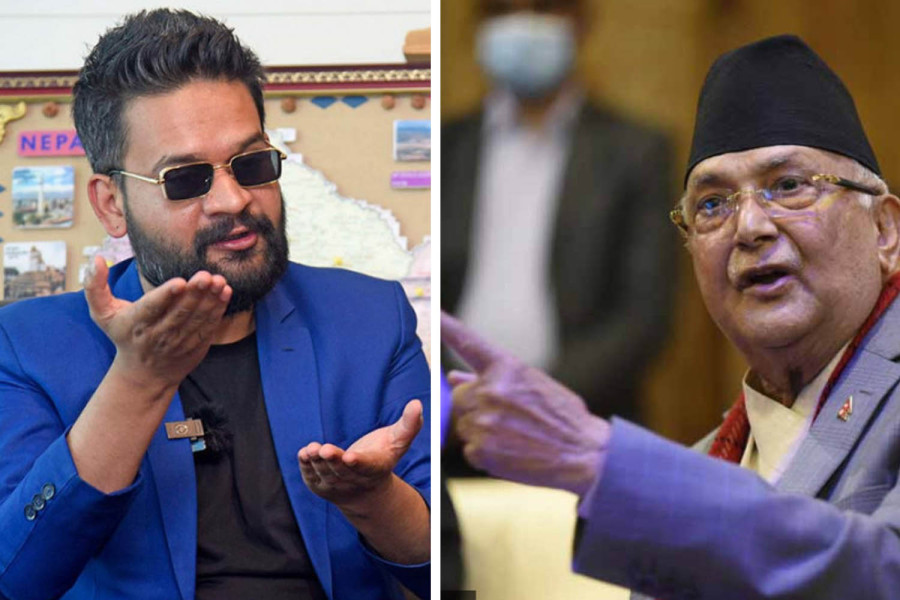
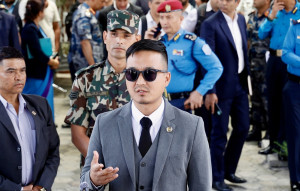
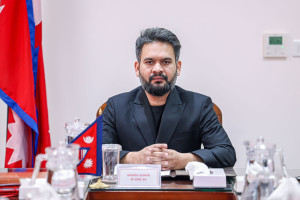
This time, however, he faces a formidable challenge from Balendra (Balen) Shah, the immediate past mayor of Kathmandu Metropolitan City and a senior leader of the Rastriya Swatantra Party (RSP), who is challenging Oli in Jhapa-5 in the March 5 parliamentary elections. Balen’s candidacy has changed the electoral calculus and forced both camps to recalibrate their election strategies.
According to Oli’s close aides, after a commission led by Gauri Bahadur Karki cleared travel restrictions on the former prime minister on January 18, he has spent 16 days in a month in Jhapa. Oli, the immediate past prime minister, is being investigated for his role in the brutal suppression of the anti-corruption Gen Z movement last September, in which 77 people died in clashes and related incidents. The elections are being held under a civilian government after Oli was ousted by the movement.
After registering his candidacy, Oli initially stayed at Kamaksha Hotel in Damak, meeting local leaders and supporters. Recently, however, he has rented accommodation in the constituency and has been holding continuous interactions with disgruntled party workers and voters.
On Tuesday, he was at the home of local UML activist Gunraj Thapa, meeting more than 50 cadres and voters. In the evening, he attended a religious gathering involving Srimad Bhagavat recital and mingled quietly with residents.
“There was no formal event on Tuesday. He met party workers, voters, and representatives of sister organisations at the place he was staying,” said Dipendra Dahal, a member of Oli’s secretariat.
Unlike during previous elections, when he preferred large mass gatherings and speeches, Oli is now focussing on direct interaction with voters. Close aides have advised him to speak less in public and concentrate on one-on-one interactions.
“Some UML leaders and cadres say that if he speaks extensively outside Jhapa-5, it could even have a negative impact on other UML candidates. So by concentrating here, it has actually benefited the party,” said political analyst Sagar Shivakoti, who is also associated with Readers Jhapa, a local literary group. “But the way he has focussed on Jhapa this time shows how seriously he has taken the risk.”
Shah, too, has shifted his strategies. Initially criticised for limited interaction and relying on motorcade appearances, he now holds frequent dialogues with voters. Asked recently why he chose Jhapa-5, Shah said he wished to work for the Gen Z generation and introduce a new political culture.
Oli’s camp initially assumed Shah would not challenge Oli in Jhapa-5, believing the UML’s organisational strength would deter him. In an earlier interview with Kantipur, Oli even suggested that RSP Chairman Rabi Lamichhane had strategically dispatched Shah here to prevent his victory. Yet the enthusiasm at Shah’s nomination filing and the crowds that gathered in urban pockets of Damak suggest genuine momentum.
In Damak, many voters openly say they intend to vote for the RSP’s ‘bell’ symbol. “We have seen ‘Ba’ (Oli) many times, and we also saw his role in the recent Gen Z movement. This time we will vote for Balen,” said Ronish Adhikari, 36, an automobile entrepreneur. Many people like him have decided to change their votes this time.
In the 2022 elections, Oli secured 52,319 votes while his nearest rival from the Nepali Congress, Khagendra Adhikari, got 23,743. The RSP candidate at the time garnered 11,748 votes. The UML also received 35,872 proportional votes in the constituency.
In the 2022 general election, the UML benefited from support from the Rastriya Prajatantra Party (RPP), which in return received UML backing in Jhapa-3 for RPP Chairman Rajendra Lingden.
In the 2017 general election, Oli contested under the electoral alliance of UML and then CPN (Maoist Centre), consolidating left votes. Now the field is more fragmented. A newly formed Nepali Communist Party, an amalgam of several leftist groups and parties including the then CPN (Maoist Centre), has nominated youth leader Ranjit Tamang.
“For the first time in 12 years, our cadres can vote for their own candidate,” said Kul Bahadur Basnet, a former Maoist municipal chair. Tamang’s slogan—“Vote for Bhoogol [geography in Nepali] not Google”—seeks to contrast local roots with perceived outsider status.
The RPP has fielded marble trader Laxmi Sangraula as its candidate in the constituency. In this context, Oli faces the challenge of safeguarding the UML’s organisational vote base. Perhaps recognising that risk, he has chosen to concentrate on Jhapa, prioritising meetings and direct interactions with voters and party cadres.
According to local observers, Shah initially appeared to be dominating the contest in Jhapa-5. More recently, however, Oli has also been working to win over dissatisfied party workers. Even so, UML cadres admit that Oli still needs to intensify his efforts to emerge victorious.
Sukamaya Lawati, a 41-year-old woman from ward 7 of Kamal Rural Municipality, expressed continued loyalty to the UML. “Development has come through the party,” she said while tending her maize crop. Yet she admitted her children favoured the RSP’s bell symbol. “They will vote one way; we, another.”
Buddhamaya Kerung Limbu, aged 47, declared support for the Shram Sanskriti Party led by Harka Sampang, signalling the appeal of alternative forces among Janajati voters. Jhapa-5 has a 44 percent non-Brahmin/Chhetri population, including roughly 26 percent Janajati.
Jhapa constituency 5 includes Damak Municipality, Kamal Rural Municipality and some wards of Gauradaha Municipality and Gauriganj Rural Municipality.
Kamal Rural Municipality has 40,786 registered voters; eight wards of Gauradaha Municipality add 41,475; four wards of Gaurigunj Rural Municipality account for 15,119; and Damak Municipality alone has 65,997 voters. Electoral outcomes hinge particularly on Damak’s urban wards, where RSP’s appeal appears strongest.
In ward 5 of Gauradaha, Khadga Bahadur Baraili said he had long backed the UML but was considering changing his votes now while Saraswati Pariyar, a tailor in Gaurigunj, sensed a “wave” for the ‘bel’l but remained undecided.
Meanwhile, 82-year-old former police officer Chandra Prasad Rajbanshi announced he would vote RSP for the sake of the younger generation. “Even if the government says the bell must not ring, it already rings in our hearts,” he said.
Questions have also emerged over Shah’s omission of the proposed Damak Industrial Park—planned with Chinese cooperation—from his election commitment paper. UML leaders, including park chairman Govinda Thapa, accuse Balen of harbouring anti-Chinese investment sentiments. UML campaigners argue that many pledges in his commitment paper replicate initiatives launched during Oli’s premiership.
Yet local journalist Atmaram Rajbanshi believes novelty carries weight. “Earlier, people voted for Oli as a prime ministerial candidate. Now the RSP has fielded someone of comparable stature. The atmosphere is different,” he said.
Oli has represented Jhapa in the federal parliament in 1991, 1994, 1999, 2013, 2017 and 2022, losing only in 2008 to Maoist candidate Bishwadeep Lingden by roughly 1,200 votes.
Following Oli’s increasing engagement in Jhapa, Shah has also intensified his presence, and increased outreach to voters. In Jhapa-5, members of his secretariat, along with his wife Sabina Kafle, have also been actively involved in the campaign.
Surendra Bajagain, an aide working from Balen’s Jhapa secretariat, was bullish. “We will win by 60,000 votes,” he said.




 13.8°C Kathmandu