Naya Shakti, Pragatisheel Rastriya Abhiyan and Santosh Pariyar forge unity
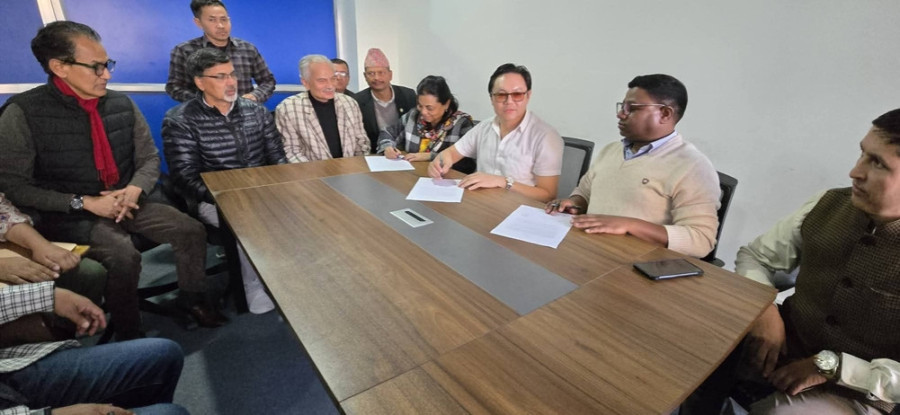
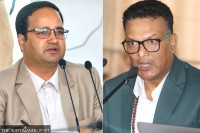
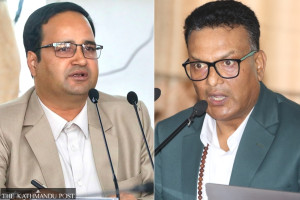
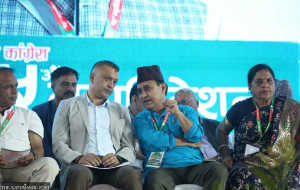
They agree to form a unified party with a common election symbol. Leaders from Naya Shakti, Pragatisheel Rastriya Abhiyan and Santosh Pariyar sign an agreement to form a unified party, on Friday. Handout photo
Nepal Samajwadi Party (Naya Shakti), the Pragatisheel Rastriya Abhiyan and former House of Representatives member Santosh Pariyar have signed an agreement for creating a unified force amid what they describe as a deep economic and political crisis.
Naya Shakti was founded by former prime minister Baburam Bhattarai, and Pragatisheel Rastriya Abhiyan is led by Janardan Sharma, who recently left the CPN (Maoist Centre). Pariyar was the Rastriya Swatantra Party leader.
The agreement was reached on Friday, with a resolve to fight corruption, unemployment and nepotism and to address widespread disenchantment with traditional parties. The parties said the recent Gen Z uprising had underscored the need for broader political restructuring.
They decided to organise an event on November 23 to formally announce the unification.
The signatories have called on progressive, democratic, left-leaning and nationalist groups at home and abroad, particularly younger citizens, to join what they describe as a campaign for political restructuring. They urged ‘new and alternative’ forces to join hands in defeating ‘corrupt and unethical tendencies’ through elections.
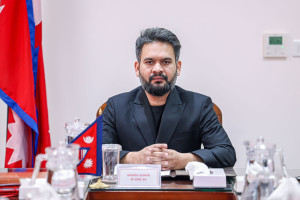
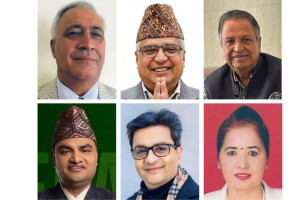
The agreement was signed by Durga Sob, coordinator of the Nepal Samajwadi Party (Naya Shakti); Sudan Kirati, coordinator of Pragatisheel Rastriya Abhiyan, and Santosh Pariyar, former chief whip of the RSP.
Pariyar says he failed to develop a thought in the RSP to reflect Nepali society
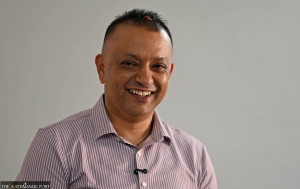
Santosh Pariyar, who served as a secretariat member of the Rastriya Swatantra Party, member of parliament and chief whip of the party in the dissolved House of Representatives, quit the RSP earlier on Friday.
He submitted his resignation to the party’s acting president DP Aryal and General Secretary Kabindra Burlakoti.
In his letter addressed to Burlakoti, Pariyar expressed his satisfaction at being able to make a contribution to transforming Nepali society through alternative politics.
He, however, expressed his sadness over the failure to develop a thought in the RSP to reflect the unique composition and character of Nepali society.
In the letter, he mentioned that he decided to resign as he felt the need to actively engage in a different kind of political campaign and cited the need to embrace the changing political situation and connect with the post-Gen Z movement.
“The historical responsibility of restructuring Nepali political movements, redefining concepts, and reorganising [political] organisations now falls on our generation,” he explains in his resignation letter.
“Therefore, embracing the changing circumstances, in this historic moment, I feel the need to actively engage in a different political campaign to truly connect Nepali political movements with the national interest and the people's lives. Hence, from today, I respectfully submit my resignation from any responsibility within the Rastriya Swatantra Party and seek to stop being a general member of the party.”
He described the recent revolt of the younger generation [Gen Z] on September 8 and 9 as an important event in Nepal’s political history, one that upended traditional Nepali politics.
Pariyar concluded that the youth uprising proved that Nepali politics cannot continue in status quo, nor lead the people into a new era without changes.
Stating that the Gen Z uprising has played a significant role in shaping the consciousness of contemporary Nepali society, he urged political parties and individuals to think more broadly about their future.




 21.76°C Kathmandu