When the CPN (Maoist) ended its decade-long insurgency in 2006, identity politics was a buzzword, which later dominated the Nepali political discourse during the constitution-making process.
The Tarai/Madhesh was at the centre of identity politics, as it gave birth to several prominent political parties and leaders in the plains.
That also resulted in Dr Ram Baran Yadav, a seasoned politician from the Nepali Congress, becoming the first President of the Republic of Nepal. Paramananda Jha, a retired judge, became the first elected vice president. The incumbent Vice President, Ramsahay Prasad Yadav, is also from Madhesh Province.
But not a single party with regionalism and identity politics at its core could do well in the March 5 election.
The fourth largest party in the first Constituent Assembly election in 2008, the Madheshi Janadhikar Forum, which is now renamed Janata Samajbadi Party after several rounds of splits and mergers, has failed to secure a single seat in the March 5 election.
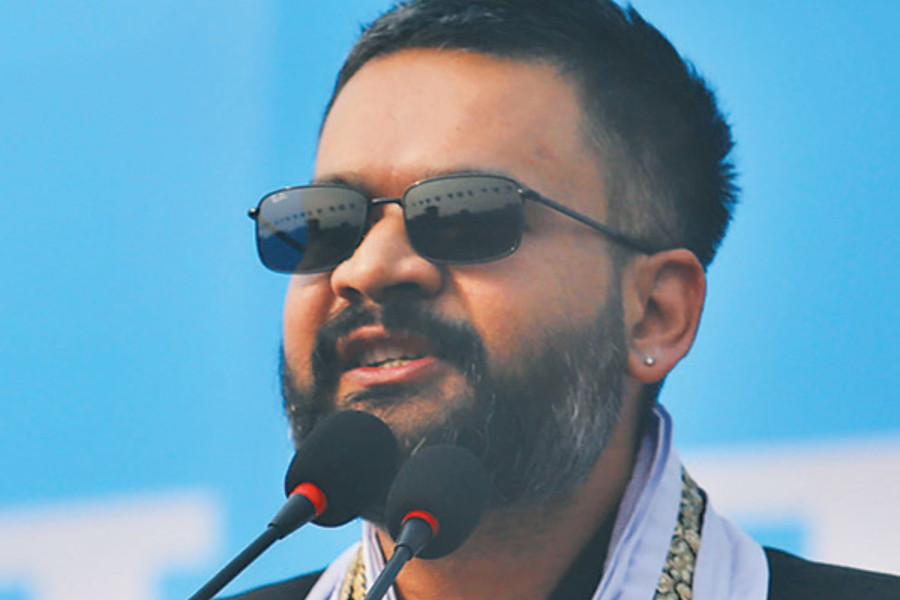
The projection of Balendra Shah as the first Madheshi prime minister seems to have totally changed the political landscape of Madhesh.
Out of the 32 seats under the first-past-the-post seats in the province, Shah’s Rastriya Swatantra Party (RSP) has won 30. The Nepali Congress bagged only one seat.
In the 2022 election, the party had bagged only around 75,000 votes and won no seats in the province. But in under four years, the RSP has won 95 percent seats under the FPTP and left the Congress and others far behind in the proportional representation vote count.
The Madhesh-based parties are the biggest losers. Since 1991, these parties had never been in such a weak position. Even before the 2007 Madhesh movement, the Nepal Sadbhawana Party was a well-established force.
This time, the president of Janata Samajbadi Party Nepal (JSPN), Upendra Yadav, lost in Saptari-3, and the president of Janamat Party, CK Raut, lost in Saptari-2. In Rautahat-3, the Aam Janata Party candidate, Prabhu Sah, was defeated. Most candidates from Madhesh-based parties lost their security deposits of Rs10,000 each.
Rajendra Mahato, who formed the National Mukti Party under his leadership and contested in Sarlahi-2, ended up in third place. He couldn’t even recover the security deposit. (Candidates unable to secure a minimum of 10 percent of the total vote cast in a constituency don’t get their deposits back.)
It was the Balen factor that galvanised the massive public support, but whether this current wave will last depends on if the new RSP government can deliver, said political observer Vijay Kant Karna.
The RSP had held its first election rally in Janakpur, the heart of Madhesh Province, and announced Balen as the party’s prime ministerial candidate. Balen also spoke of himself as the ‘son of Madhesh’. That seems to have tugged at the heartstrings of many Madheshis.
“The election results also demolished the organisational base and structures of the Madhesh-based parties in one go. They will now try to reorganise after this humiliating defeat,” said Karna.
In the view of another political analyst Manchala Jha, “several political parties emerged from Madhesh but not one was able to unite the Tarai, hilly and mountain regions.”
Seeing Balen do well as Kathmandu’s mayor, the people in Madhesh “saw in him an ideal candidate to be the first native prime minister from Madhesh,” said Jha.
During his first campaign speech in Janakpur, Balen assured the Madheshi people of his commitment to the present constitution and federalism, to the great relief of locals. There is strong support for federalism in Tarai-Madhesh in order to ensure greater representation of marginalised communities in state affairs.
Jha says the poor performance of the Madheshi parties, however, doesn’t take away their contribution.
“It was the same Madheshi parties who created the wave in favour of federalism and inclusion in Nepal. It was their contribution that the first President and his deputy were from Madhesh,” said Jha. She believes frequent splits and the promotion of nepotism and favouritism contributed to their downfall.
Balen seems to have understood the Madheshi people’s contribution to federalism. Before the election, he also bestowed a flower wreath on the statue of martyr Ramesh Mahato in Lahan, Siraha, the first martyr of the Madhesh movement.
Speaking in Maithili, he assured the people of Madhesh that the provinces should be strengthened. The address, according to Dipendra Jha, an advocate and former chief attorney of Madhesh Province, helped project him as a supporter of the federal setup.
“After the RSP announced him as the prime minister candidate, people in Madhesh were elated. Second, he told the people of Madhesh that they should visit Kathmandu only to see Pashupatinath and Swayambhu, not to demand rights. All kinds of rights and facilities will be provided at their doorsteps,” said Jha.
Jha added that accommodative politics has overshadowed identity politics now. This is largely due to Balen’s high acceptance in both the Tarai and the hills.
The clout of other regional parties in eastern and western parts of Nepal also seems to be fading.
In the eastern hills, Harka Sampang, who recently won the election from Sunsari (Dharan), was expected to draw votes of the indigenous hill communities for his Shram Sanskriti Party. Yet that was not the case. Likewise, Ujayalo Nepal Party chair Kulman Ghising also chose to largely bottle the agenda of identity politics.
Nepali politics has entered the post-identity politics phase, said Tula Narayan Shah, an astute observer of Madhesh and the federal setup. This time, the election was fought on the agendas of service delivery, economic development, economic growth and jobs creation.
“Identity politics was at its height around 2006-07 but now the situation, demands and people’s agendas have changed. As we are heading towards post-identity politics, other issues and agendas have taken the central stage,” said Shah. “The RSP declared Balen as a prime ministerial candidate because of his Madheshi identity. The RSP communicated to the Madheshi people that they are ready to own identity politics more than others, which has become acceptable.”
The agenda of the marginalised community has once again become the agenda of mainstream and people of Madhesh see in Balen someone who can fulfil their aspirations, said Shah.
Anil Giri is a Chief Sub Editor covering diplomacy, international relations and national politics for The Kathmandu Post. Giri has been working as a journalist for more than two decades, contributing to numerous national and international media outlets.




 23.32°C Kathmandu