Reporter’s Diary: I went back to Rasuwa. The river had changed everything
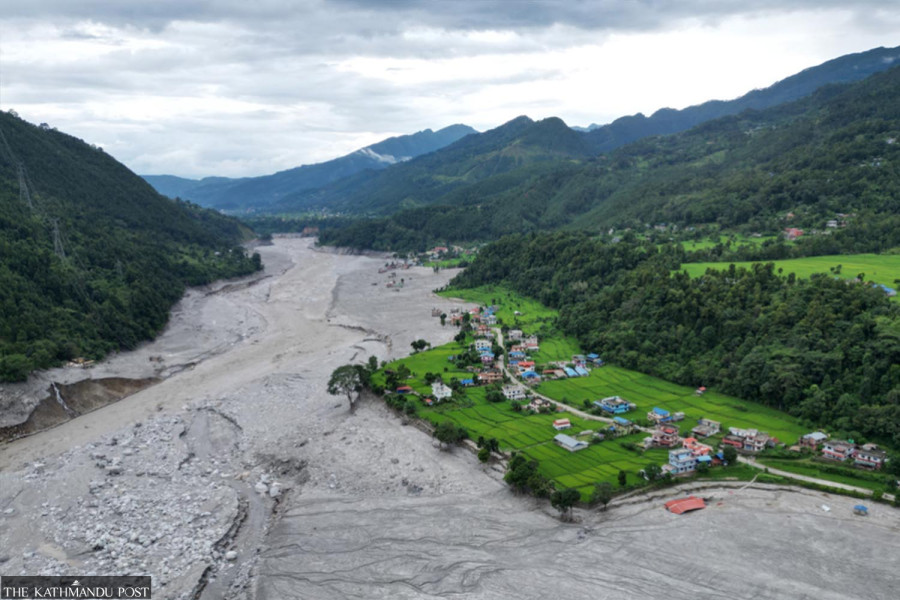
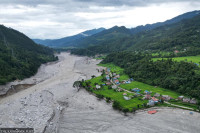
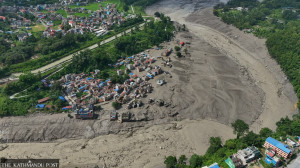
Fourteen months after covering the first Lhende Khola flood, I returned to the same disaster zone. This time, roads and homes were gone, families were searching for their loved ones, and the places I remembered were barely recognisable. Flood debris covers Betrawati Bazar after the August 26 disaster. Hemanta Shrestha/TKP
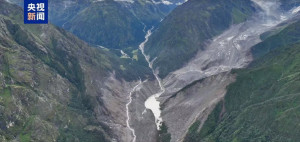
When news came on July 8, 2025, that a flood had swept down the Lhende Khola above the Rasuwagadhi border crossing, 11 people had been killed, and 19 were missing. The Syafrubesi-Timure road had been cut off and communications with the area had been disrupted, leaving the full extent of the damage unclear.
At Kantipur’s newsroom, a discussion began about sending a reporter to assess the situation first-hand. I was at Singha Durbar working on another story when Swarup Acharya, then chief of the district bureau, called and asked me to come to the office immediately. A few minutes later, then editor-in-chief Umesh Chauhan told me I had to go to Rasuwa. I had not left home that morning prepared for a long reporting trip.
I wore leather shoes and ordinary clothes, though my usual bag had the essentials, including a toothbrush and phone charger. By around 4pm, I was on the road with photographer Angad Dhakal, Kantipur Television cameraman Suraj Khadka and Dhading-based reporter Poshnath Adhikari.
We spent the night in Bidur and the following day walked 15.5 kilometres from Syafrubesi towards Timure. The road was covered in mud, so I left my leather shoes behind and bought another pair before continuing. Near Timure, we had to cross the landslide at Lingling Cliff with the help of the Nepali Army, Armed Police Force and Nepal Police.
Suspended from ropes, we made our way across the unstable slope. Timure, built on a small rise, escaped the worst of the flood, but the Miteri Bridge, customs yard, roads, and some hydropower projects were damaged. The assignment was physically demanding and there was always the fear of another surge of water, but we completed our reporting and returned safely to Kathmandu.
I did not know then that I would return to the same disaster zone 14 months later, to find a landscape transformed by a much more destructive flood.
On August 26, 2026, another flood came down the same Lhende Khola. This time, the destruction was catastrophic. I heard about the disaster at home and immediately began preparing to return to the field. I packed an extra set of clothes and went to the office, where, as expected, I was assigned to the story. The pair of shoes I had bought near Syafrubesi during the previous flood had survived, and I was wearing the same pair this time. Angad was again there with his camera. Arjun Paudel of The Kathmandu Post joined us, along with Bikash Acharya and Hem Prasai from Kantipur Television.
We left Kathmandu at around 4pm and were held up for about an hour by floodwaters in a local stream before finally reaching Bidur at around 8pm. By then, settlements along the Trishuli River had been swept away. Even hotels and settlements on slightly higher ground that had escaped the flood looked unsafe, while hotels in places considered relatively secure were completely booked.
We needed somewhere safe from which we could continue working. Power had gone out across Nuwakot; mobile networks were appearing only intermittently and making even a phone call was difficult. After searching for a hotel with a generator, we eventually found the Harathi Crown Hotel in Gangate. There was only one room available, so all five of us had to squeeze in, although fortunately it had five beds. Bikash negotiated with the hotel management and secured the room.
By the time we arrived, it was already late, and there was little we could do that night. We sent the vehicle back towards Kathmandu and set out on foot the following morning, heading for the Nepali Army training centre at Maithali.
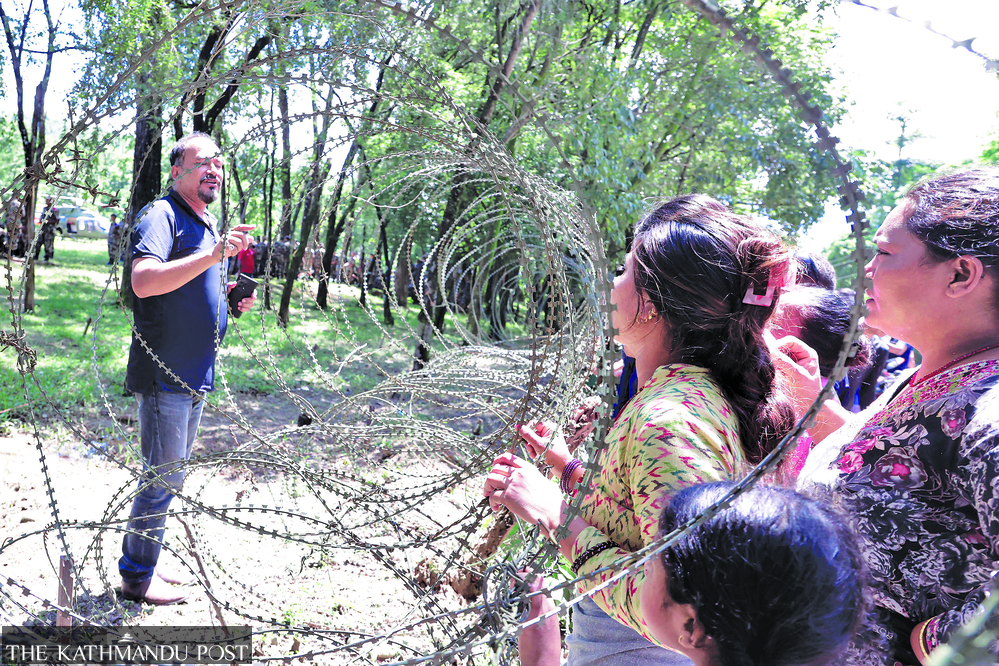
Relatives of people who had gone missing in the flood had gathered there, registering names with the army and pleading for help to find their loved ones. Some were crying as they waited. We spent about two hours moving through the crowd and speaking to families before travelling to Dhunge Bazar on the Trishuli, where the settlement had been swept away. The bridge was gone, cutting communication between the two sides of the river.
We returned to the hotel to write, but another problem was waiting for us. There was no electricity, and even the hotel generator had been switched off. The heat inside the room was unbearable. The hotel owner understood our predicament and agreed to run the generator for an hour so that we could charge our laptops, phones and power banks. We used that brief window to write the story and prepare a video, then asked him to run the generator for another half-hour. That was enough to finish the report and send it to the newsroom.
The next day, we planned another attempt to reach Rasuwa. That evening, we met Ramesh Kumar, a journalist with Himal Khabar whose permanent home is in Kalika Rural Municipality, along with journalist Arun Karki. We asked them about the roads into Rasuwa and the condition of the routes ahead. The vehicle sent from Kathmandu arrived the following morning, but we had travelled only a short distance past the office of Suryagadhi Rural Municipality when a landslide blocked the road completely. There was no way through, so we began looking for an alternative route towards Betrawati.
By the time we reached Bitalab in Bidur, preparations were underway for symbolic funeral rites using sacred kusha grass for people whose remains had not been recovered. There was grief everywhere. A man who had lost family members in the flood offered us food, saying, “You must be hungry. We can give you a meal. Please eat before you go.” We declined because we were not hungry, but his offer stayed with me. His family had lost its home and was staying with relatives, like many of the survivors who had little more than the clothes they were wearing.
As the funeral rites were taking place, several young men offered to walk with us towards Betrawati. One of them was Pramod Rijal. Before we left, he showed us a video on his mobile phone. “Look at my daughter. See how happily she is playing with her grandparents,” he said. The video showed his seven-year-old daughter, Pragya Shree, laughing and playing with her 72-year-old grandfather, Shiva Prasad, and 69-year-old grandmother, Bhakti Kumari. As Pramod watched the video, his eyes filled with tears. Ours did too, and for a moment none of us could speak.
Pramod’s daughter and his parents had been at their home in Angitar, Betrawati, when the flood struck. We parked the vehicle on a hillside below Gerku and continued on foot because there was no road ahead. We pushed through thick vegetation, climbed and descended steep slopes and picked our way across landslides.
By the time we reached Dabile, the water we had been carrying was gone. Under the blazing sun in the middle of the forest, I began to worry that someone might collapse from exhaustion. At the same time, relatives were calling the young men travelling with us, warning that another, even larger flood was coming. Alerts were appearing on our own phones, while our families were calling to tell us to be careful. “They say another flood is coming. Please be careful. Stay away from the river,” they told us.
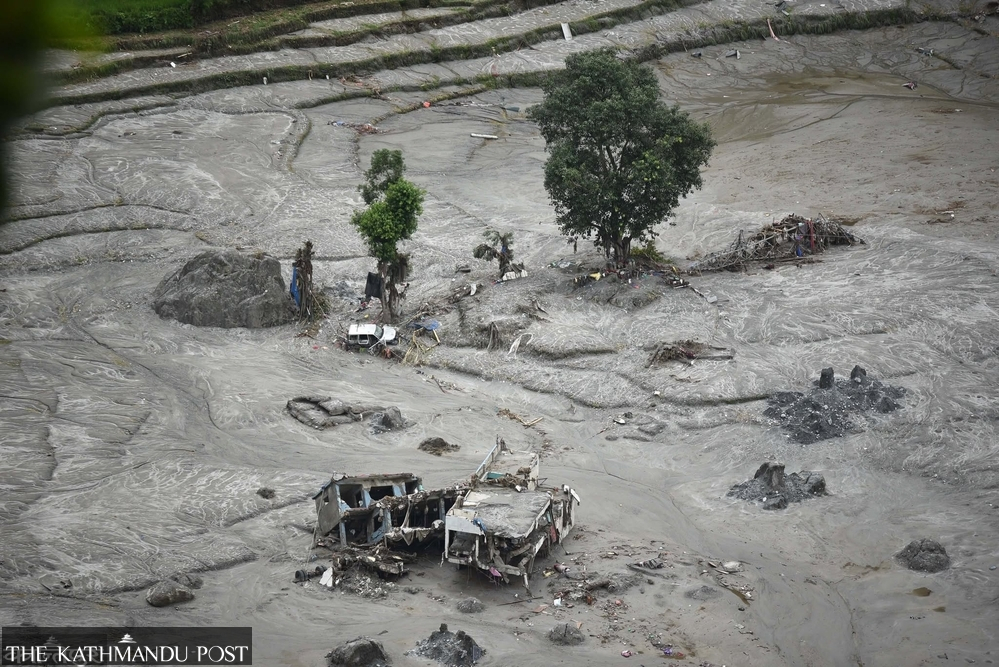
We stopped on a nearby hillside, where Pramod pointed towards a house buried beneath flood debris. “My parents and my daughter are buried in that house. I couldn’t get them out,” he said. Then he pointed towards the school his daughter had attended. “The flood took that too.”
When we reached the home of Prem Bahadur and Maiya Tamang, we collapsed on the ground, filled our bottles with water and rested for a while. Looking around, we could barely see a house that had survived intact.
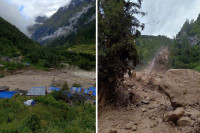
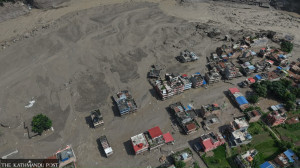
Betrawati Bazar had been turned into a field of debris. Most of the houses had been buried, while some large buildings had been swept into the river and left lying on their sides. The Tamang couple’s house had become a makeshift shelter for people who had lost relatives, survived the flood or were still searching for missing family members. By the time we arrived, around 200 people had already taken refuge there.
Among them was Pasang Tamang of Angitar. She cut up a lemon and offered it to us, then asked whether she should cook something. We declined, but she asked again, offering to make noodles because we had come from far away. This time we agreed, and other people sheltering in the house helped prepare the meal. I asked whether any of them had lost relatives in the flood. The answer came quietly: Pasang’s five-year-old son was still missing.
Pasang told us that she had left her son at the school above her home and was walking back when she suddenly saw a black wall of water, thick with mud and debris, rushing down the Trishuli river. She ran across the fields, trying to get back to him, but before she could reach the school, the flood had swept through the surrounding houses and roads. She said many students had already fled, but she watched helplessly as the flood caught people on their way to school and others who were still inside the school grounds. “Please bring him back if you find him. He is our only child. He was our whole world,” she said before breaking down.
Everyone around her had tears in their eyes. What moved me even more was that, despite having suffered such an unimaginable loss, she was still worrying about whether we had eaten or had enough to drink. We left the shelter and continued on foot. At that point, there was still no visible presence of the federal, provincial or local governments in the village, and relief supplies had not arrived.
After our report was published, the phone calls began. People who knew us called to ask us to look for their missing relatives. Some asked us to contact the police, army and district administration and find out what had happened to their loved ones. I tried to make inquiries wherever I could, but even those involved in search and rescue often did not have the information families were desperately seeking.
The following day, we tried again to reach Rasuwa, only to be stopped by another landslide. On the third day, we prepared for another attempt. At around 4.30am, just as we were about to leave, there was a commotion on the hillside in front of the hotel. People were running around with lights and shouting for others to come over. As we watched, an alert appeared on our phones: “A major flood is coming in the Bhotekoshi. Stay alert.” We decided that if the flood came, we would deal with it when it did, and continued.
After a five-hour journey from Dhikure, we reached Uttargaya Rural Municipality in Rasuwa. When we arrived in Betrawati Bazar, buildings lay collapsed in every direction. The smell of decomposing bodies hung in the air and the river was rising. Several of Arjun Paudel’s relatives had been caught in the flood, and the sight of Betrawati left him visibly shaken. We then reached the holding centre at Laharepauwa in Uttargaya, where we heard accounts from families who had lost as many as seven relatives.
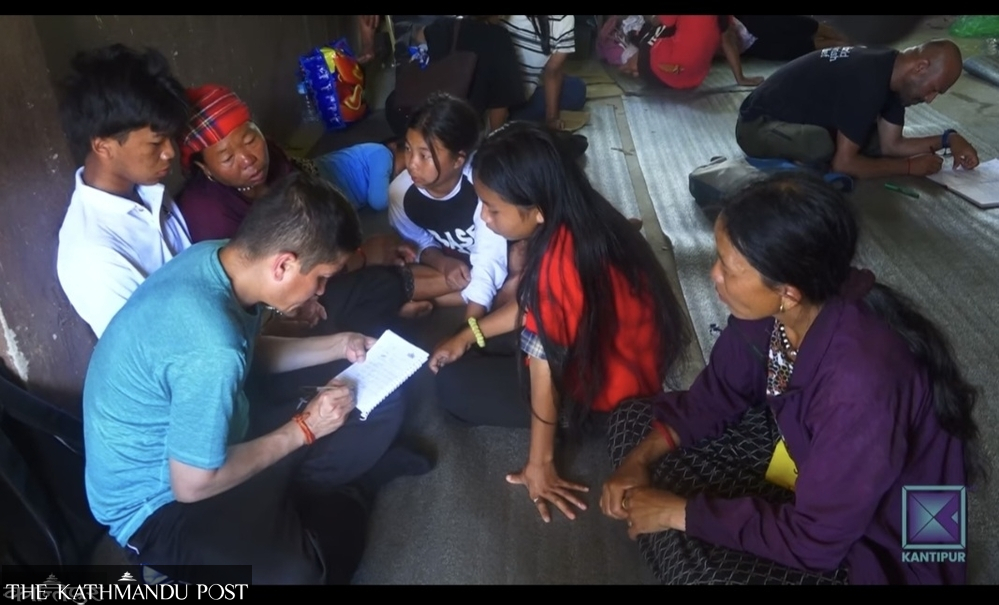
Some had lost parents, others sons and daughters, sisters and brothers. Social activist and resident Biswas Nepali, who had encouraged us to come to Rasuwa, was also there. The children at the centre were carrying packets of instant noodles, which was what many of them were eating to stave off hunger. We had seen the same thing elsewhere: children clutching packets of noodles, with little else to eat.
Ranjina Tamang of Naubise Betrawati told us how she had managed to save her four children, including her four-month-old son. The story sounded almost unbelievable, but while she had managed to save them, the flood had taken almost everything else. It destroyed her home and claimed relatives. Ranjina suffers from asthma but had none of her regular medication with her. She had no money to buy more, and there was nowhere nearby to get it. As she described what had happened, she could barely hold back her tears. Children, elderly people and women who had recently given birth were all being housed in the same room.
Among them was 43-year-old Purna Bahadur Ghale of Khalte in Uttargaya, who was writing down the names of those who had been killed and those who had survived. Ghale, a member of the rural municipal executive and a former ward member elected in 2017, had lost seven relatives in the August 26 flood. He told us that Khalte, Gogane, Tiru and Karmarang had suffered enormous losses of life and property.
“What can I say? I have nothing left to say. My mind has stopped working,” Ghale told us, tears filling his eyes. Around 300 households had once lived in Khalte, but now, he said, not a single house remained intact. “We were victims of the 2015 earthquake. We survived that,” he said. “I must have gone to Singha Durbar more than 100 times, asking the government to move us somewhere safer. They kept saying, ‘Yes, yes, we will do it,’ but they never moved us.”
He paused before adding: “If they had moved us to a safe place, we would not have suffered such a huge loss of life today.” He asked us to make sure that the pleas they had repeatedly made to the federal government to relocate them to safety reached Kathmandu.
We eventually turned back towards Bidur. Fourteen months earlier, we had made it as far as Timure. This time, despite repeated attempts, we never got beyond Uttargaya. As we drove back, one question kept circling in my mind: Can this place ever return to what it was before? Will the bustle and life that once filled these towns ever come back?




 26.12°C Kathmandu