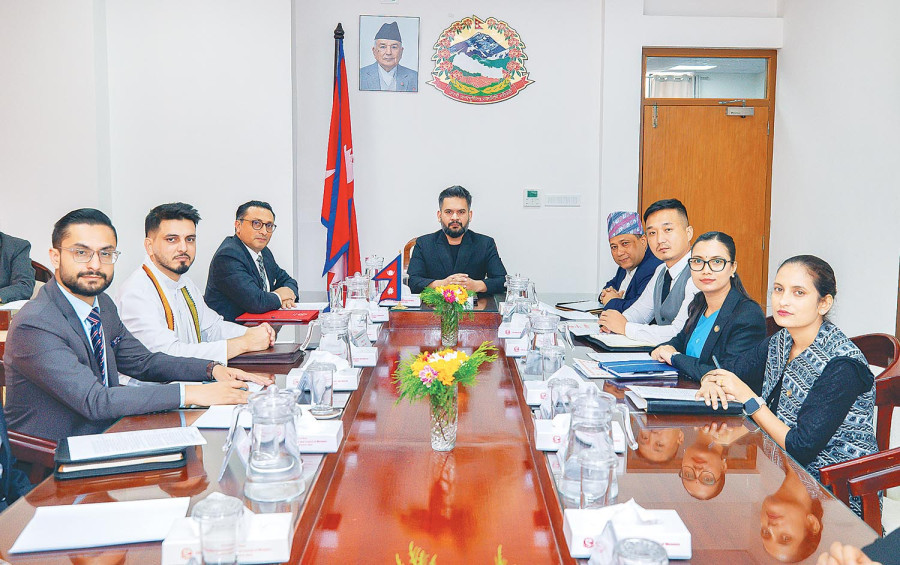
The government has formed a committee led by Gunakhar Bhatta, vice-president of the National Planning Commission, to prepare a Post Disaster Needs Assessment that will officially ascertain the loss and damage caused by the August 26 Bhotekoshi flood.
A PDNA report pulls together information into a single, consolidated report, information on the physical impacts of a disaster, the economic value of the damages and losses, the human impacts as experienced by the affected population, and the resulting early and long-term recovery needs and priorities. On the basis of the PDNA report, the government will organise a donor conference in order to raise funds for reconstruction, rehabilitation and rebuilding of private and public properties, construction of infrastructure and others.
“We have already started groundwork for preparing the report, having been entrusted to complete the report within six weeks,” Bhatta told the Post. “By creating seven clusters, we are analysing the data from the Rapid Damage and Needs Assessment (RDNA).”
With support from the National Planning Commission, the National Disaster Risk Reduction and Management Authority (NDRRMA) has prepared the RDNA, with a report in the final stage of publication.
“We are updating data to release the RDNA,” said Arjun Bhandari, who led the preparation for the RDNA with an aim to release it by Sunday evening.
In an initial report, the RDNA puts the total loss and damage to property at around Rs400 billion. The final PDNA could find a variation of around 20 to 30 percent to this figure, said Bhandari.
The seven clusters formed to assess the loss and damage caused by the flood, according to Bhatta, include infrastructure, social sectors (health, education ), climate change, production, agriculture, and overall economic sectors.
“We will take the support of technology and local units to collect data on loss and damage. Local governments in the affected districts have the data on loss and damage in the public sector,” said Bhatta. The flood has caused considerable damage to the private sector, mostly in houses, banks and hotels.
The RDNA suggests that an early recovery is essential to be done within six months and requires Rs8 billion. The Ministry of Foreign Affairs on Saturday released a partial report of the RDNA.
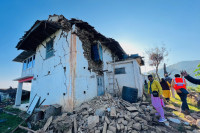
According to a preliminary assessment, approximately 7,570 houses have been damaged, affecting around 32,933 people. The number of government offices impacted is 48. According to the ministry, 55 kilometres of roads, 37 motorable bridges, and 68 suspension bridges have been damaged. Around 1,806 hectares of agricultural land, and 13 hydropower projects, one solar power plant and two transmission lines have also been damaged, affecting 783 MW of hydropower generation capacity.
“Given the scale and extent of the damage caused by this disaster, a comprehensive Post Disaster Needs Assessment is being simultaneously undertaken to determine the full extent of loss and damage and the costs for rebuilding and reconstruction,” said the foreign ministry.
Around 5,000 people still remain missing, including approximately 600 foreigners from 35 countries. As many as 1,344 bodies have been recovered from different areas.
According to the United Nations Development Programme, the estimated affected population is 84,270 over 17 municipalities in the six districts of Rasuwa, Nuwakot, Dhading, Chitawan, Gorkha and Tanahu.
Preliminary modelling estimates $158.6 million in potential building damage, with an uncertainty range of 30 percent.
The highest numbers of affected people are concentrated in a small number of municipalities. Bidur (Nuwakot) has the largest estimated affected population, with 25,354 people (30,1 percent), followed by Benighat Rorang (Dhading) with 11,313 (13.4 percent) and Gajuri (Dhading) with 7,991 (9.5 percent).”
Of the 2,359 assessed buildings, 1,890 are classified as destroyed, 187 as damaged, and 282 as possibly damaged, the UNDP reported. Preliminary modelling estimates approximately $170 million in potential damage to residential and commercial buildings along the Rasuwa and Nuwakot river valleys.
Anil Giri is a Chief Sub Editor covering diplomacy, international relations and national politics for The Kathmandu Post. Giri has been working as a journalist for more than two decades, contributing to numerous national and international media outlets.




 19.37°C Kathmandu