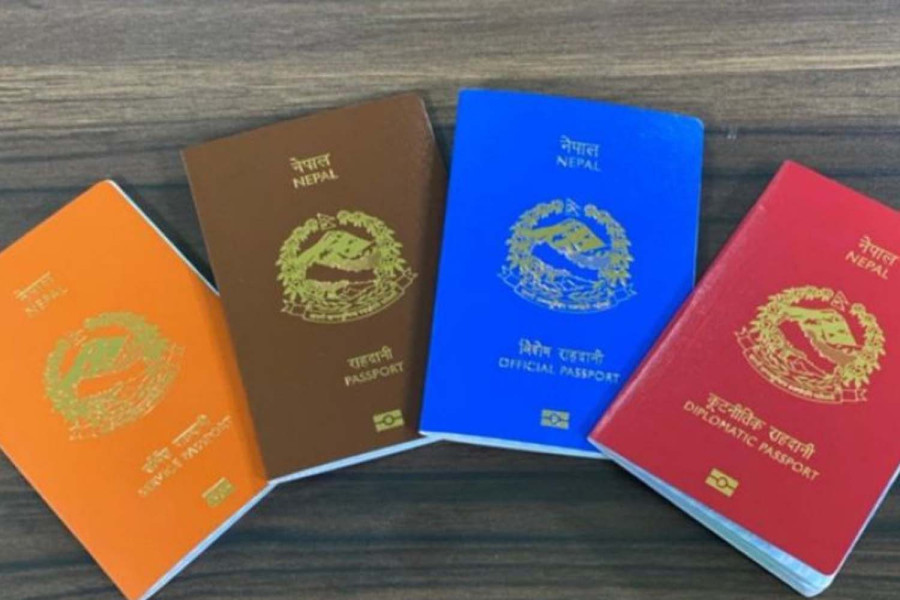
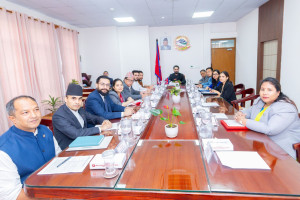
The Prime Minister’s Office has formed a cross-ministerial panel of experts and government officials to investigate technical glitches and support the rollout of the new passport system introduced by the Department of Passports under the Ministry of Foreign Affairs.
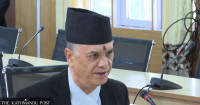
The panel, led by National Planning Commission member Professor Sudan Jha, has been tasked with examining technical problems affecting passport issuance, recommending corrective measures, and reviewing the financial and technical aspects of the passport project, including agreements with two German companies and related operational issues, an aide to Prime Minister Balendra Shah told the Post.
Jha, an information and communication technology expert, is leading a team comprising representatives from the Ministries of Home and Foreign Affairs, Nepal Telecom and other government agencies.
The panel has been asked to submit its report to the Prime Minister’s Office within a week. Besides investigating the technical problems, it will recommend measures to ensure the smooth implementation of the new passport system, the aide said.
Last year, the Department of Passports awarded contracts to German firms Veridos GmbH and Muehlbauer ID Service GmbH, ending the decade-and-a-half-long dominance of the French company IDEMIA Identity and Security France SAS in Nepal’s passport printing. Under the agreement, the German firms began printing and issuing passports on July 14. However, the new system has been plagued by technical problems since its launch.
To facilitate the transition, the department suspended passport services from July 7 for data migration and system upgrades. Although it resumed services through the new system on Monday, officials say it could take at least three months for the system to stabilise fully.
According to a member of the Jha-led panel, one of the biggest challenges is the department’s reliance on the National Identity Card Management Centre to verify applicants’ biometric information. The arrangement has complicated passport processing and contributed to multiple technical problems in enrolment, biometric verification and passport printing.
“The department should have had its own biometric verification system instead of depending on data maintained by another government agency,” the official said.
The official said many applicants have reported errors in their names, addresses, dates of birth and other personal details, forcing them to reapply for passports.
“About five out of every 10 applications are encountering technical problems,” the official said.
Before switching to the new system, the department printed around 6,000 passports a day. Since the rollout, daily production has fallen to fewer than 2,000 as German technicians work to resolve the technical issues, according to the official.
“The department has not been able to issue passports in line with demand because of persistent technical glitches,” the official said. “The problems stem from inadequate preparation by the department, software issues linked to the National Identity Card system and the lack of technical cooperation from IDEMIA, which had been supplying passports since 2010.”
The department has advised applicants to expect delays for up to three months while the system undergoes full transition and stabilisation.
Because the system has yet to stabilise, the department has opened only a limited number of passport appointment slots for applicants from districts, forcing many service seekers to travel to Kathmandu to submit their applications.
“We receive complaints every day from applicants who are unable to submit their passport applications on time,” another department official said. “We are also working to eliminate technical errors before issuing passports.”
According to the official, around 70 district offices are technically capable of conducting live enrolment—including biometric collection—and the same system has been extended to Nepali diplomatic missions abroad. However, technical problems continue to disrupt services.
Following the launch of the new system on Monday, the Department of Passports acknowledged that technical challenges, temporary system slowdowns and delays in passport issuance were expected during the initial phase of such a large information technology project. It said its technical team, department staff and specialists from the system development companies have remained on 24-hour standby to monitor, test and improve the system.
The Post sought comment from the Department of Passports, but spokesperson Dipak Banjade could not be reached.
Anil Giri is a Chief Sub Editor covering diplomacy, international relations and national politics for The Kathmandu Post. Giri has been working as a journalist for more than two decades, contributing to numerous national and international media outlets.




 18.43°C Kathmandu