Some welcome Kishor Shrestha’s arrest, others question it
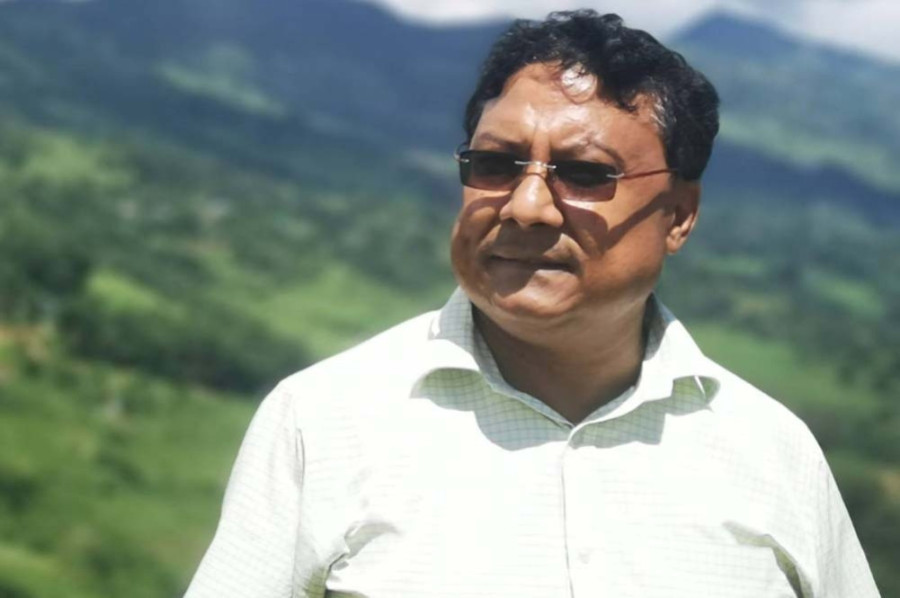
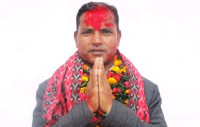
While media groups and press freedom advocates have criticised the police action, others say the veteran journalist’s arrest is justified, pointing to a long record of publishing private and targeted content. Photo: Courtesy of Kishor Shrestha's Facebook
The arrest of journalist Kishor Shrestha has sparked a widespread debate, with opinions sharply divided.
While a large section of the media fraternity has criticised the arrest, calling the move an attack on free press, others have welcomed it, levelling allegations against him that under the guise of journalism he was perpetrating violence against women.
A joint team of the Kathmandu Valley Crime Division and the District Police Range, Kathmandu, arrested Shrestha on Wednesday evening for allegedly violating an individual’s right to privacy. Police said a woman had filed a complaint against him under the Right to Privacy Act.
Several journalists’ organisations, media professionals and press freedom advocates have criticised the arrest, arguing that the matter should be dealt with by the Nepal Press Council rather than the police.
But not everyone — especially women — agrees.
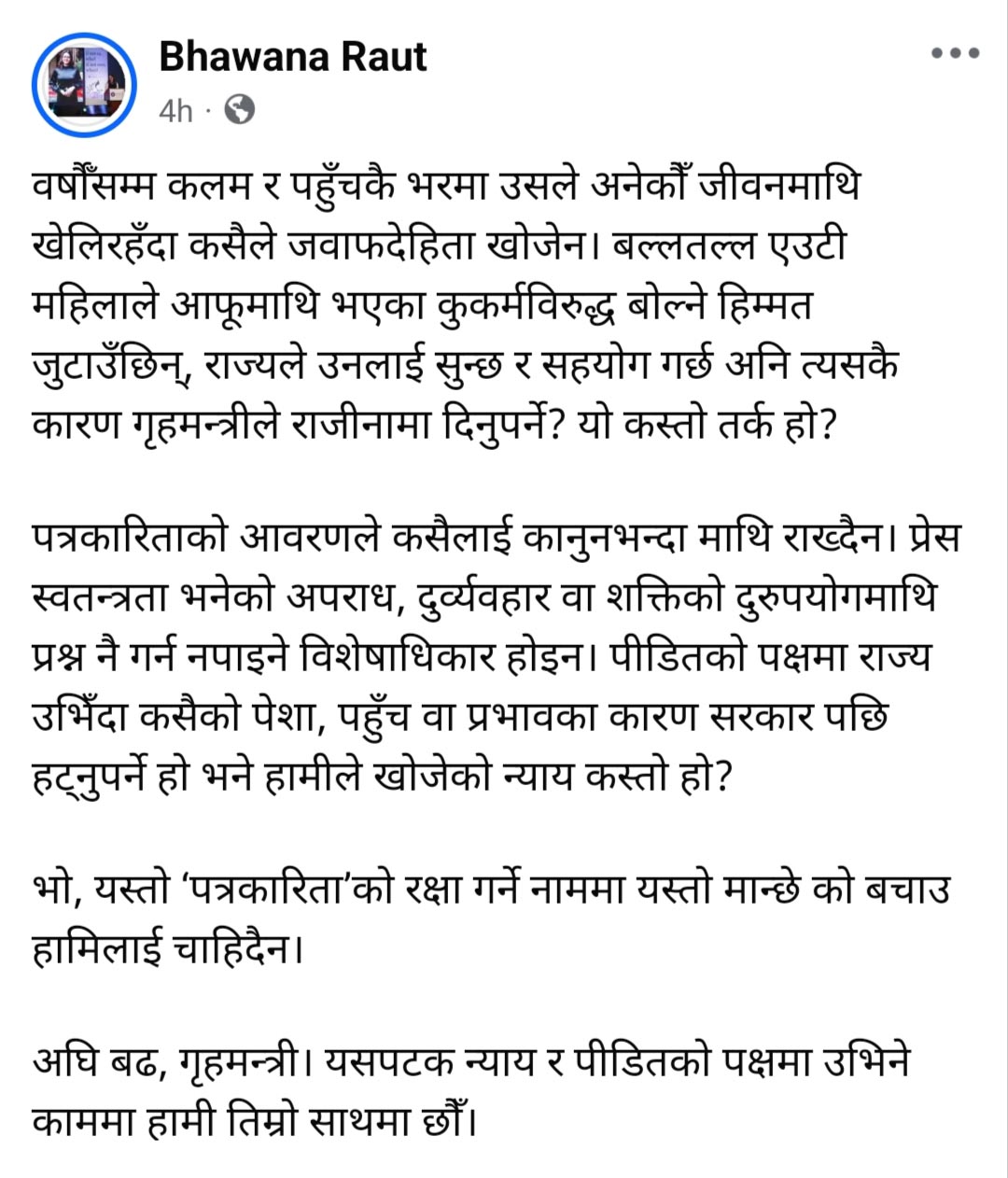
Bhawana Raut, a prominent Gen Z leader, welcomed the arrest, arguing that being a journalist does not place anyone above the law and that press freedom is not a licence to commit wrongdoing or abuse power.
“For years, he has used his pen and influence to meddle in the lives of others, yet no one demanded that he be held accountable,” Raut wrote on Facebook. “Now, when a woman has finally found the courage to speak out against the alleged wrongdoing she suffered, the state has listened to her, taken her complaint seriously and offered her support.”
Last week, Jana Aastha Weekly, owned and edited by Shrestha, published a story along with a video clip allegedly showing a lawmaker kissing a woman. Those welcoming the arrest say the weekly has long published such stories, which they see as a reflection of Shrestha’s attitude towards women.
Bringing a context from more than two decades ago, Srijana Pokhrel, a writer, has claimed it was already late for his arrest. Twenty-three years ago, actor Shreesha Karki’s nude photographs were published in Jana Aastha. Four days later, she died by suicide.
Taking to Facebook, Pokhrel wrote, “The right to privacy is a fundamental right. Those who turn other people’s private lives into public spectacles and make a mockery of their privacy should be held accountable. They should spend the rest of their lives behind bars.”
Anjali Subedi, a journalist, goes further, arguing that what Shrestha has long practised cannot be considered journalism. “When journalism becomes a tool for blackmail, coercion and personal deals, it is no longer journalism,” she wrote.
Claiming that Shrestha had long avoided accountability, she said his national and international positions were themselves evidence of how people with power and influence can be honoured and protected by the system, often becoming seemingly untouchable.
Those who support the arrest aren’t just women. Some men also say the arrest is justified, pointing to what they describe as a repeated pattern of targeting vulnerable people on the basis of gender and unequal power relations. “This is not an isolated incident and should not be dismissed as a one-off mistake. Similar unverified or targeted content has been published repeatedly,” Sarad Sharma, who lives in Australia has written on his Facebook.
As of Thursday afternoon, Shrestha is still in policy custody.
Aarya Chand is a reporter at The Kathmandu Post covering social issues. Before moving to the social beat, Chand was an intern covering culture and lifestyle for the Post.




 20.39°C Kathmandu