The price of the American dream: 14 months, 18 countries and Rs11.5 million in debt
A pharmacy owner from Rukum West returns home after a 14-month smuggling route across 18 countries, burdened by massive loans and broken promises.The route Khadka followed for 14 months from Nepal to the USA. Post Illustration
On December 7, 2023, Rajendra Khadka received a phone call that set his migration plan in motion.
“It’s time to leave for America,” the caller said. “Come to Kathmandu immediately.”
For Khadka, a pharmacy graduate who ran a small chemist’s shop in Salle Bazaar, the district headquarters of Rukum West, the message landed as the long-awaited signal he had been preparing for. He had spent months weighing the idea of leaving Nepal for the United States, driven by the prospect of better income and stability.
The following morning, he packed his belongings, sought blessings from family members and household deities, and left his home in ward 1 of Musikot Municipality.
The agent handling his migration had promised a straightforward journey.
“Within a week or ten days, you will take connecting flights through Mexico and enter the US,” Khadka recalled being told.
Trusting the assurance, he had already handed over his passport to a local intermediary. The call appeared to signal the beginning of a new life. Instead, it marked the start of a 14-month ordeal that would take him across three continents, cost his family more than Rs11.5 million, and ultimately end in deportation.
A journey that never moved forward
Three days after arriving in Kathmandu, Khadka was moved to a hotel and told he would soon fly to Dubai. The plan changed overnight.
The next morning, he and four other aspiring migrants were instructed to travel by bus to Jhapa before crossing into India and heading to Bagdogra. From there, they flew to Mumbai.
In Mumbai, Khadka realised the scale of the operation. Around 80 to 85 Nepalis were staying there, all hoping to reach the United States through similar routes.
The group remained in Mumbai for four days before being told they would proceed to Dubai. Instead, they were unexpectedly sent back to Kathmandu. After another short wait, Khadka finally boarded a flight to the United Arab Emirates.
His arrival in Dubai marked the beginning of repeated demands for money.
The agent first demanded Rs500,000. Khadka contacted his family, who hurriedly arranged the amount and deposited it into the agent’s account. Despite the payment, weeks passed without any progress.
After a month in Dubai, the agent called again, claiming that arrangements had been completed. The agent then demanded an additional Rs4 million.
The amount shocked Khadka. Yet by then he felt he had no option but to continue. His family borrowed heavily from local moneylenders and raised the money.
Even after receiving the funds, the agent failed to move the group forward. Two more months passed before Khadka and his companions discovered that their visas had expired and that they had been blacklisted by immigration authorities.
Under instructions from the same agent, they returned to Mumbai.
Khadka spent another month there waiting for updates that never materialised.
“The agent kept telling us he was sorting out the paperwork and that the delay was only because we were travelling entirely by air,” Khadka said. “We believed him.”
A new plan soon emerged. The group would travel to Uzbekistan.
Khadka and three others were taken to the airport. At the boarding gate, however, the group was split. Khadka and another migrant were unexpectedly sent back to Delhi. After spending a night there, he was flown alone to Uzbekistan.
The instructions were vague.
“They told me not to leave the airport because tickets to Cuba were being arranged,” he said.
No tickets arrived.
After waiting for hours inside the terminal, Khadka eventually followed instructions from the agent and moved to a safe house. What followed resembled his experience in Dubai. He spent two months waiting in uncertainty.
Once again, his visa expired. Once again, he was blacklisted. And once again, he was sent back to Mumbai.
African transit route
By this stage, months had passed and Khadka’s mental state was deteriorating.
“Being moved between Delhi and Mumbai again and again was driving me mad,” he said.
Then the route changed dramatically.
The traffickers flew him to Uganda. After four days in a transit house, he was taken to Kinshasa, the capital of the Democratic Republic of Congo.
Conditions there were harsh.
“The food was difficult to eat and the accommodation was terrible,” Khadka said. “Whenever it rained, water poured through the roof.”
After spending a month in Kinshasa, he was moved across the Congo River to Brazzaville in the neighbouring Republic of Congo.
The accommodation improved slightly, but a new problem emerged. The main trafficker stopped answering his phone.
Nearly two months passed before Khadka and two other Nepalis were told that visas for Brazil had finally been secured. Instead of being flown directly to South America, however, they were sent back to Kinshasa.
Upon arrival, the agent demanded another Rs1 million before releasing their travel documents.
Khadka’s family, already struggling under mounting debt, somehow managed to raise the money.
“As soon as he received the cash, he disappeared,” Khadka said.
Throughout the ordeal, Khadka concealed the full extent of his difficulties from his family. Whenever he called home requesting money, he described the payments as routine travel expenses and assured relatives that he was steadily moving closer to the US border.
Believing success was near and fearing for his safety, family members continued borrowing from local lenders at high interest rates.
His second stay in Kinshasa lasted 28 days.
“The heat was unbearable,” Khadka said. “The only relief came when it rained.”
By then, he had paid more than Rs6 million to traffickers and intermediaries.
Frustrated and desperate, Khadka finally confronted the agent.
“I lost my temper because I had already given him more than six million rupees,” he said.
The confrontation appeared to have an effect.
Soon afterwards, the agent arranged a flight to Ethiopia. Following a 17-hour transit in Addis Ababa, Khadka boarded a flight bound for Brazil.
When he finally landed in South America, he felt a sense of relief for the first time in months.
After nearly 11 months on the move, the United States seemed closer than ever.
But the most dangerous stage of the journey was still ahead.
Kidnappings, extortion and the Darién Gap
Landing in Brazil did not end Khadka’s ordeal. If anything, the exploitation became more brazen.
“Our own agent staged a fake kidnapping using local thugs,” Khadka said. “They assaulted us and took away the $3,000 to $4,000 we had kept for personal expenses.”
By then, he realised he was trapped in a vast network of traffickers, middlemen and criminal groups operating across continents. Determined to escape the cycle of extortion, he tried to find an alternative route. But leaving one network often meant falling into the hands of another.
“At that point, it was just me and another Nepali from Pokhara,” he said. “The new handlers locked us in a windowless room in Brazil for two days. After that, we travelled by bus for eight days without a proper break.”
From Brazil, Khadka moved through Bolivia, Peru and Ecuador before reaching Colombia. Every border crossing came with fresh risks and new demands for money.
“Every kilometre felt dangerous,” he said. “We were robbed at 25 or 30 different places. In Peru, even the police took money from migrants. They stripped us and searched us for hidden cash.”
By the time he reached the Colombian coastal town of Necoclí, the financial burden had become overwhelming. A local handler informed him that moving onwards to Panama would require additional payments because transport costs had supposedly increased.
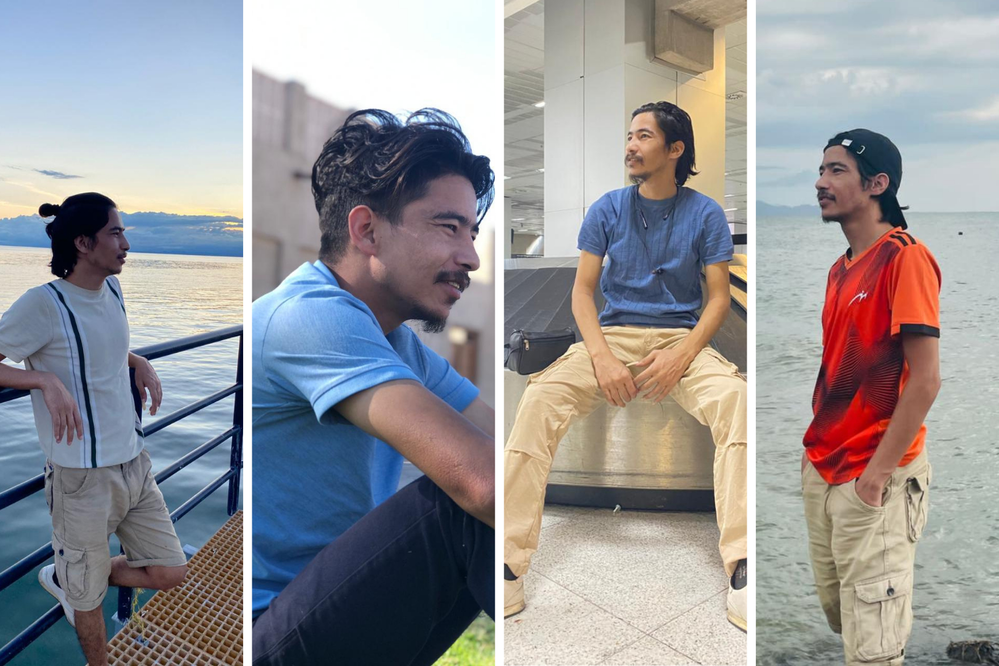
Rajendra Khadka, 32, traversed routes across 18 countries chasing the ‘American dream’. Photo: Courtesy of Rajendra Khadka
Khadka contacted his family once again. Despite already borrowing millions of rupees, they managed to raise another Rs700,000.
“The moment the money arrived, the agent disappeared,” he said.
By then, Khadka’s journey had taken him through Nepal, India, the UAE, Uzbekistan, Uganda, the Democratic Republic of Congo, the Republic of Congo, Ethiopia, Brazil, Bolivia, Peru, Ecuador and Colombia. Yet the most dangerous phase was still ahead.
Abandoned by agents, he and other migrants fell under the control of local “traffickers”, armed guides who controlled illegal migration routes.
In Colombia, one such guide claimed that Khadka’s original trafficker owed money to another smuggling network. Khadka and several others were taken hostage.
“The agent locked me, two companions and ten other Nepalis from a different group inside a compound,” he said.
Three migrants attempted to escape during the night. They were captured within a day.
“They brought them back, beat them and pointed guns at all of us,” Khadka said. “They demanded $20,000 from each person. When we said we had no money left, they stopped feeding us.”
The group remained captive for 47 days.
Even now, Khadka struggles to speak about that period.
Convinced the gang might kill them, he called home and begged his family for help. Already overwhelmed by debt, relatives sought emergency loans from neighbours and moneylenders, eventually raising another Rs1.7 million.
Only after receiving the money did the captors release the group.
“Once they got the payment, they took us to the shore, put us on a boat and sent us onwards,” he said.
For much of the South American journey, he travelled without other Nepalis.
That changed in the Colombian town of Turbo, where he met four fellow Nepalis, including migrants from Dang, Rolpa and Rukum.
“After months of isolation, meeting Nepalis felt like getting oxygen,” he said. “It gave me the strength to continue.”
After resting for two days, the group began the most feared section of the route to the United States—the Darién Gap.
The dense jungle between Colombia and Panama is notorious among migrants. There are no roads, little infrastructure and few guarantees of survival.
Khadka said the journey exposed him to scenes he still struggles to forget.
“We regularly came across bodies in the jungle,” he said. “Some had died from illness, exhaustion or violence.”
He also witnessed migrants being robbed, women subjected to abuse by criminal groups and exhausted travellers left behind along the route.
“I cannot fully describe what I saw there,” he said quietly. “There were moments when I thought I would never make it out alive.”
The Mexican border
After surviving the Darién Gap, Khadka entered Panama and stayed briefly at a migrant reception centre. He contacted his family again and asked for another $300 to cover travel expenses.
From Panama, he moved through Costa Rica and Nicaragua, encountering the same pattern of exploitation at nearly every border.
By then, the principal trafficker who had originally promised a seamless journey had vanished after collecting Rs8.47 million. Additional payments to guides, transporters and intermediaries had cost another Rs1.1 million.
His total expenditure was approaching Rs10 million.
From Nicaragua, he travelled to Honduras and then Guatemala before reaching southern Mexico.
When he finally arrived near the US border, he felt that the ordeal was nearing its end.
“I was happier than I had been in months,” he recalled. “America felt close.”
The feeling did not last.
Human smugglers loaded 45 to 50 migrants into the cargo area of a truck designed for far fewer people and covered it with an airtight tarpaulin.
“The moment the cover closed, I realised we were still in danger,” Khadka said.
The truck was intercepted by Mexican immigration authorities and the migrants were detained in Tapachula.
Khadka spent four days in detention with dozens of others before the group launched a hunger strike.
“After the protest, authorities released us on the condition that we leave Mexico,” he said.
The journey then continued in secrecy. To avoid checkpoints, migrants were shifted repeatedly between vehicles.
“We changed vehicles every 30 minutes,” he said. “We travelled for six days without proper rest.”
Exhausted, hungry and dehydrated, Khadka eventually reached the US border. Moments after stopping to eat a packet of instant noodles, he was robbed again by a local criminal group.
By then, he said, he barely reacted.
“At that stage, all I cared about was reaching the other side.”
Shortly after 2 am on January 24, 2025, he and other migrants climbed a border fence and entered US territory.
Fourteen months had passed since he had left Rukum. His spending had crossed Rs10 million.
But his arrival in “America” would not bring the outcome he had imagined.
Within minutes of crossing into the United States, Khadka’s journey came to an abrupt halt. US Border Patrol agents intercepted the group and took them into custody. He was taken to a detention centre in Arizona, where he remained for four days before being moved to a federal immigration detention facility in Mississippi.
For the first time in more than a year, Khadka was beyond the reach of smugglers, criminal gangs and extortionists. Yet the sense of safety was short-lived. From detention, he called his family in Rukum West.
“I told them I had reached America,” he said. “I didn’t tell them I was speaking from a detention centre.”
The dangers of the journey had been replaced by a different ordeal. Life inside the facility was marked by isolation, uncertainty and constant anxiety about his future.
“For breakfast and dinner, we were given two slices of bread and water,” Khadka said. “In the beginning, I was hungry all the time. Later, my body adjusted.”
The monotony was relentless. He slept on a thin plastic mat under a single sheet and struggled through the winter without adequate warm clothing. Thousands of kilometres away, his family faced mounting pressure from moneylenders as interest on their debts continued to accumulate.
Desperate for proper food, Khadka arranged for a Nepali contact outside to deposit money into his commissary account. Following prison regulations, he used an online ordering system on weekends to purchase instant noodles and biscuits.
“I survived there for 11 months and 16 days,” he said. “Most of that time, I lived on instant noodles.”
While in detention, Khadka sought legal assistance and applied for political asylum. His legal team argued that returning to Nepal would expose him to political persecution and threats to his personal safety.
His final asylum hearing was scheduled for September 12, 2025. Conducted through a video link from inside the detention facility, the hearing was translated by a court-certified interpreter. Khadka listened as his lawyer presented the case before an immigration judge.
What he did not know was that Nepal’s political landscape had changed dramatically just days earlier. The movement widely referred to as the Gen Z movement had led to the collapse of the government that formed the basis of his asylum claim.
During the hearing, the judge questioned the grounds of the application.
“Your claim is based on the argument that you face a security threat from the government in Nepal,” Khadka recalled the judge saying. “However, that government is no longer in power. The circumstances you described no longer exist.”
The ruling was swift. His asylum application was rejected and a deportation order was issued.
“At that moment, everything collapsed,” Khadka said. “All I could think about was the debt, the loans and what was waiting for me back home.”
Although the decision was made in September, deportation did not happen immediately. He remained in detention for another five months while US authorities completed the necessary procedures.
“After the verdict, they sent me back to the facility,” he said. “Every day I waited for my name to be called.”
The call finally came in February 2026.
Before departure, detainees were restrained with shackles linking their hands, waist and legs. Khadka was placed on a deportation flight carrying migrants from several countries, including around 80 Nepalis, along with Bangladeshi and Cambodian nationals.
The group was first transported from Mississippi to a processing hub in Louisiana and then flown to Texas before boarding a long-haul charter flight bound for South Asia.
On February 1, 2026, the aircraft landed at Tribhuvan International Airport.
After more than two years away from home and 14 months spent crossing continents, jungles, deserts, detention centres and international borders, Khadka was back in Nepal.
Relief, however, was mixed with humiliation.
“People were staring at us when we came out,” he said. “Some were taking photos and videos. I kept my head down and walked as quickly as I could.”
Exhausted after days of travel in restraints, he collapsed outside the airport terminal.
“I sat on the pavement for a long time,” he said. “I had nothing left, but I was alive. At that moment, that felt like enough.”
A friend in Kathmandu offered him a place to stay while he recovered. Two months later, in March 2026, Khadka boarded a night bus and returned to Salle Bazaar, the same place he had left full of hope in December 2023.
The American dream that had prompted him to sell his future ended where it began.
By his own calculations, he paid about Rs9.47 million directly to traffickers and middlemen during the journey. A further Rs2.025 million was spent on emergency payments, transport costs, ransom demands and survival expenses along the route.
The total bill exceeded Rs11.5 million.
Today, the 32-year-old former pharmacy owner lives with a burden far heavier than the backpack he carried across 18 countries. His business is gone, his family remains trapped in debt, and the memories of kidnappings, extortion, detention and near-death experiences continue to haunt him.
“I came back with nothing,” Khadka said. “Nothing except the debt.”




 14.71°C Kathmandu