Technicians reach Jumla farms with refractometers to check apple quality
Authorities step up harvesting and export checks to keep unripe apples off the market and protect the reputation of the high-altitude district’s prized crop.Thirty-five agricultural technicians have been deployed across Jumla district to monitor orchards and enforce the quality standards. DB Budha/TKP
As apple orchards across the high-altitude district of Jumla fill with ripening fruit, farmers are coming under pressure from traders eager to buy the season’s crop. But authorities and other local stakeholders have agreed to prevent unripe apples from reaching markets this year in an effort to protect the reputation of Jumla’s apples.
Agricultural technicians have been visiting orchards with refractometers, handheld devices used to measure the sugar content of fruit. They are checking the size and sweetness of apples and advising farmers on when their crops are ready for harvest.
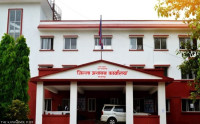
“Most farmers are proactively calling us to their orchards to test their crop,” said Rambhakta Adhikari, head of the Agriculture Development Office in Jumla. “If we rigorously maintain quality this season, we will further enhance the brand identity of the Jumla apple nationally.”
Thirty-five agricultural technicians have been deployed across the district to monitor orchards and enforce the quality standards, according to Adhikari.
Apple farming is a major source of income in Jumla. Of the district’s 18,000 households, about 16,000 grow apples. Orchards cover 4,604.53 hectares, including 2,338 hectares of fruit-bearing trees this season. The Agriculture Development Office expects production to reach 18,000 to 20,000 tonnes.
Refractometers have been distributed among the district’s eight local units, with one in Kanakasundari, three in Sinja, one in Hima, two each in Tila, Tatopani, Chandannath and Guthichaur, and two in Patarasi. Three additional devices are kept at the agriculture development office.
The devices measure sugar content in degrees Brix. Apples with less than 11 degrees Brix tend to be excessively sour, while those measuring 12 to 15 degrees Brix have the sweetness preferred by consumers, according to Adhikari.
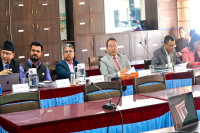
Authorities have also imposed harvesting dates following an all-party meeting. Farmers in Tila Rural Municipality can begin harvesting from August 21, while those in the other seven local units must wait until the final week of August.
Apples cannot be transported outside the district without a written recommendation from agricultural technicians.
Despite the restrictions, demand from traders has prompted attempts to move unripe apples out of Jumla. Six days ago, police at the Raralihi post intercepted 321 cartons of unripe apples being transported towards Surkhet and Nepalgunj. The apples were small and green and failed to meet the required sweetness level.
“The apples are simply not ripe yet, and the local technicians had not issued any export recommendations,” Adhikari said.
Rajesh Bishwakarma, head of the agriculture section at Tila Rural Municipality, said local authorities had stepped up surveillance to prevent the premature harvesting and transport of apples.
The measures are intended to ensure that the growing commercial demand for Jumla’s apples does not come at the expense of their quality and reputation.




 23.26°C Kathmandu