Women leaders seek real influence, not just representation
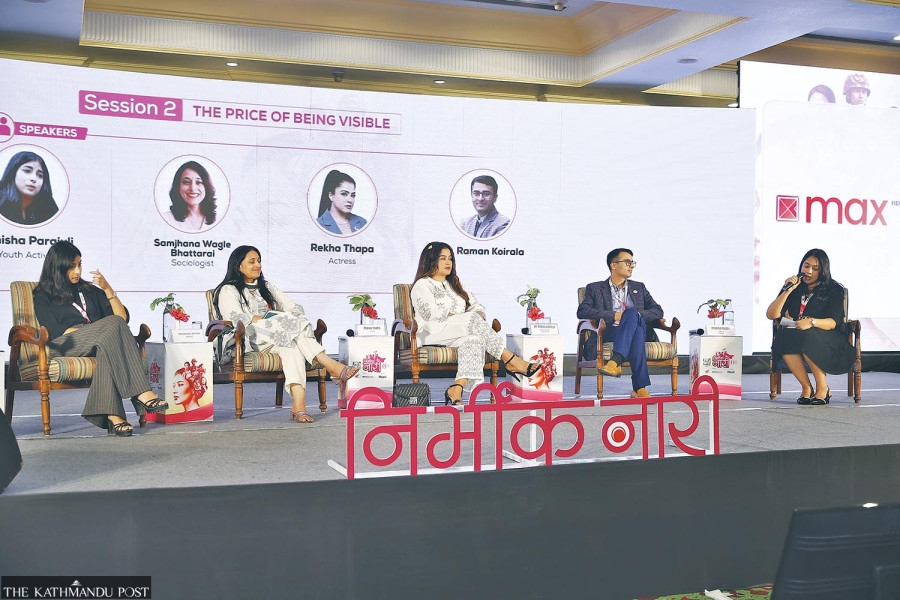
Speakers at the sixth edition of Nirbhik Nari conclave discuss how financial independence, political participation and legal protection are central to advancing women’s leadership and rights.Panellists during the session ‘The Price of Being Visible’ during the Nirbhik Nari conclave organised by Kantipur Media Group on Wednesday. Post photo
Women leaders, entrepreneurs, lawmakers and activists gathered in Kathmandu on Wednesday to discuss the opportunities and challenges facing women in leadership, politics and public life, with speakers emphasising that representation alone is not enough without economic independence, institutional support and meaningful participation in decision-making.
The discussions took place during the sixth edition of Nirbhik Nari, an annual conclave organised by Nari Magazine, a co-publication of the Kantipur Media Group, bringing together voices from business, politics, civil society and advocacy to examine issues surrounding gender equality and women’s empowerment.
The day-long event featured sessions on leadership, online harassment, political participation and inclusion.
The opening session, titled Pathways to Leadership, brought together Sangita Pandey, founder of Aama ko Achar; jewellery entrepreneur Radhika Adukia; Laxmi Uprety, head of finance for KFC and Pizza Hut Nepal; and Binjul Shrestha, a healthcare professional turned entrepreneur. The session was moderated by Moon Pradhan, chairperson of the Leadership Committee at Zonta Club.
Despite coming from different professional backgrounds, the panellists highlighted common themes: self-confidence, financial independence, resilience and family support.
For Pandey, entrepreneurship began with a modest investment of Rs3,000 and a determination to build an identity of her own.
Having received training in pickle-making during a stay in India, she returned to Nepal and started producing pickles from her kitchen. What began with 10 kilograms of chillies has since grown into Aama ko Achar, a brand whose products are exported to more than 50 countries.
“I started this at the age of 49,” Pandey said. “People often think age or educational qualifications determine success. My experience tells me otherwise.”
She said she did not launch the business out of financial necessity but out of a desire for independence.
“My family was comfortable, but I wanted to create my own identity rather than depend on my husband’s income,” she said.
Pandey recalled facing scepticism from relatives who questioned why she wanted to undertake physically demanding work at that stage of life.
“I told them I wanted to create something meaningful. No work is beneath us, and age is just a number,” she said.
The journey, however, was not without setbacks. Pandey said the company lost products during international shipments and struggled to meet customs requirements in overseas markets.
“In the beginning, we lost entire consignments because of spoilage or clearance issues. But business teaches you that problems are constant. You have to keep finding solutions,” she said.
She also highlighted the importance of family support, noting that her son and daughter-in-law eventually returned from abroad to join the business.
“Society talks about equality, but often expectations change when a daughter-in-law enters a household. Family support remains essential for women who want to build careers outside the home,” she said.
Adukia said she deliberately chose to establish an independent career after completing her undergraduate studies instead of joining her family business.
Her motivation came from concerns about transparency in the jewellery sector.
“While buying and selling jewellery, I realised how often customers are misled because they lack information. I wanted to ensure transparency, honesty and consumer protection,” she said.
Mahesh Pradhan/Kantipur
Adukia credited her family for encouraging her to take risks and learn through failure.
“They never pressured me to succeed immediately. I was encouraged to experiment, fail and improve,” she said.
Uprety, a chartered accountant who obtained her qualifications in India before returning to Nepal, said financial independence is fundamental to women’s empowerment.
After joining KFC and Pizza Hut Nepal as a deputy manager in 2020, she rose to lead financial operations for both brands.
“Leadership requires constant learning,” she said. “Young people should use digital platforms not only for entertainment but also to improve financial literacy and understand money management.”
Economic autonomy, she argued, remains the foundation of genuine leadership.
“Women must be financially independent. That is the basis of real leadership,” she said.
She also encouraged young professionals to embrace workplace challenges.
“Growth comes through struggle. Challenges prepare you for leadership responsibilities,” she said.
For Shrestha, entrepreneurship emerged from motherhood. After the birth of her daughter, she began preparing infant food at home and sharing the process through social media.
Interest from other mothers quickly grew.
“They asked if I could prepare similar products for their children,” she said. “I agreed, but I did not have enough capital and had to rely on advance orders to purchase ingredients.”
She said social media helped her reach customers but building trust required far more effort.
“Social media visibility is easy to gain, but turning that into a sustainable business is difficult. In food and health products, trust and safety are everything,” she said.
Rather than responding to criticism online, she said she focussed on improving operations and maintaining consistency.
The discussion later shifted from leadership and entrepreneurship to the challenges women face once they become visible in public life.
During the second session, titled The Price of Being Visible, speakers discussed the rise in online harassment targeting women and the need for stronger legal and institutional responses.
Youth activist Amisha Parajuli recounted her experience of sustained online abuse after making public remarks during a protest related to the arrest of KP Sharma Oli.
What began as criticism soon escalated into trolling, repeated tagging and abusive messages.
Parajuli said she initially believed the backlash would subside within a few days, but the harassment intensified and eventually pushed her to seek legal recourse.
“If someone turns to the authorities or seeks legal recourse, it is because they have been pushed into unbearable suffering,” she said. “To reach the point of asking for justice, the pain has to be severe.”
She said victims often expect understanding and sensitivity when they approach institutions, but that is not always their experience.
“Sympathy matters. It feels like the system does not always recognise that,” she said.
Actor Rekha Thapa said criticism in the past often helped public figures reflect and improve, but social media has increasingly turned criticism into abuse.
“Earlier, criticism helped us improve. Now, a woman expressing herself freely or holding leadership positions is met with fear and hostility,” she said.
She argued that women are often judged more harshly than men and that public debate frequently shifts from ideas to personal attacks.
“When someone disagrees with a woman’s voice, the response often becomes personal and abusive. It reflects an unhealthy social mindset,” she said.
Sociologist Samjhana Wagle Bhattarai said such behaviour reflects broader structural inequalities that begin within families.
“We say sons and daughters are treated equally, but the roles assigned to them are often different,” she said.
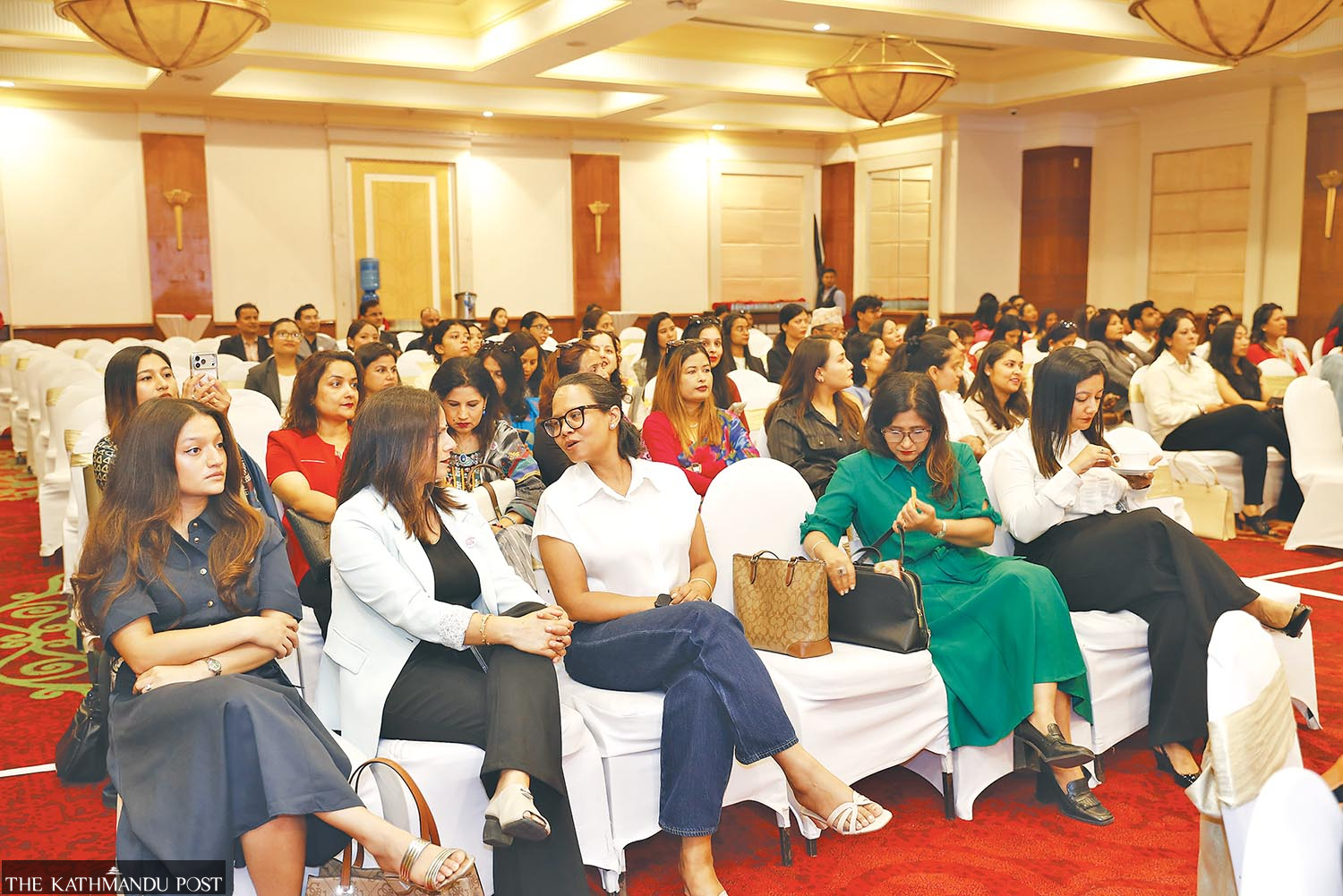
Members of the audience pictured during the conclave. Post photo
According to Bhattarai, patriarchal social structures continue to place decision-making power primarily in male hands, creating resistance when women enter leadership positions.
“When women enter decision-making spaces, it is often perceived as a shift in power. That fear contributes to backlash,” she said.
She stressed that online abuse should be addressed through legal accountability.
“If someone spreads abusive content or uses harmful language online, they must be held accountable under the law,” she said.
Psychiatrist Raman Koirala of HAMS Hospital highlighted the psychological toll of online abuse, warning that prolonged harassment can contribute to anxiety, depression and other mental health challenges.
“People respond differently. Some confront abusers, while others internalise blame,” he said.
He advised victims to seek support from trusted individuals, distance themselves from sources of abuse and seek professional help if symptoms persist.
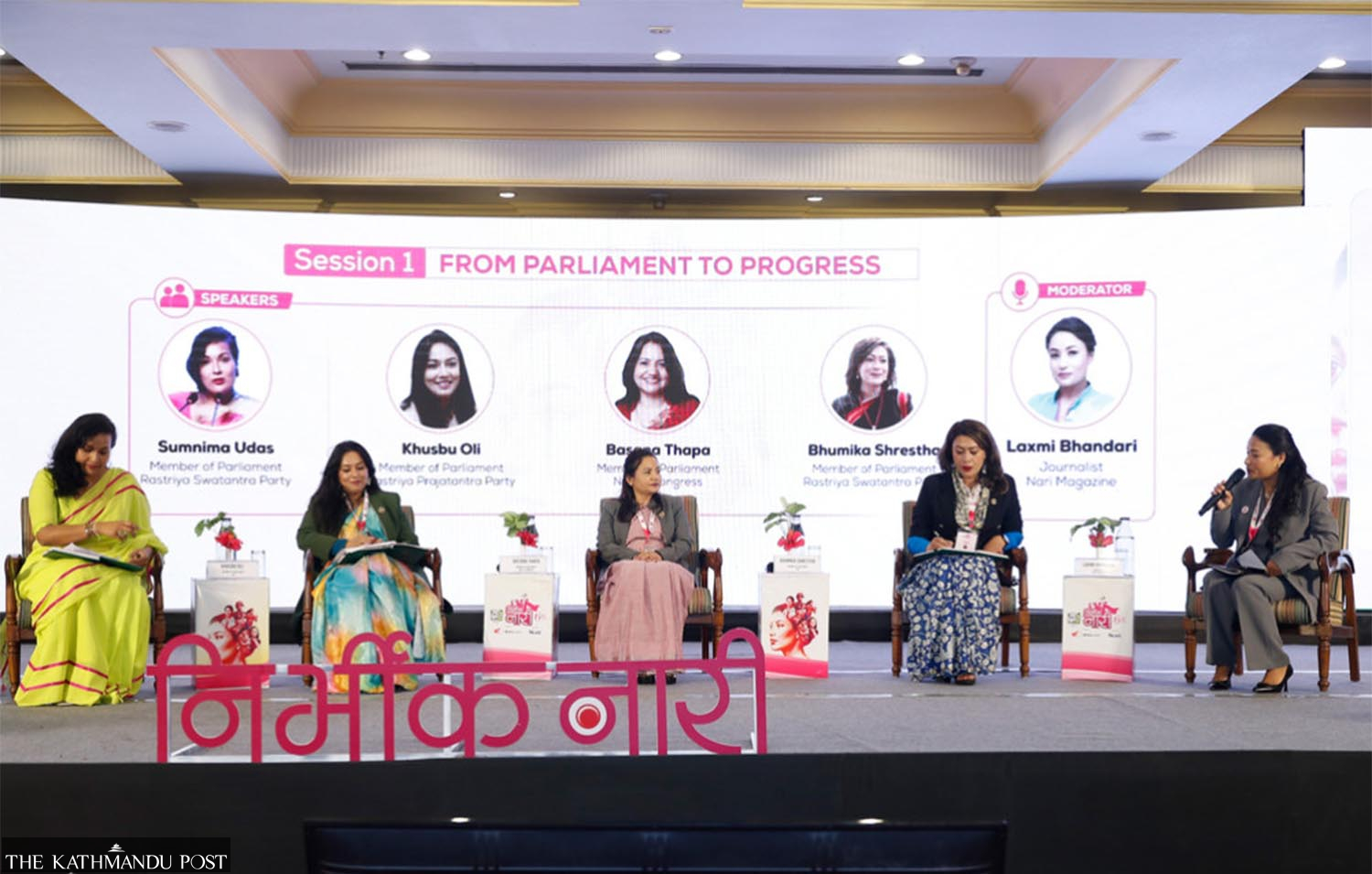
The third session, From Parliament to Progress, turned attention to women’s political representation and participation in decision-making.
The panel featured Rastriya Swatantra Party MPs Sumnima Udas and Bhumika Shrestha, Rastriya Prajatantra Party MP Khusbu Oli and Nepali Congress MP Basana Thapa. The discussion was moderated by journalist Laxmi Bhandari.
Former journalist Udas reflected on her transition from reporting stories to shaping policy.
“When I was at CNN, my job was to report the story. Now I have the responsibility to make the story from the parliamentary microphone,” she said.
Oli said her political journey was influenced by witnessing child marriage and teenage pregnancy in Jhapa and by experiences from other parts of the country where access to education and healthcare remains limited.
She noted that while women’s representation in Parliament has increased, the focus must now shift to influence.
“There are 96 women MPs in Parliament today. But the key question is how much influence women actually have in decision-making,” she said.
“Women’s signatures must move from households and local bodies to Parliament and national decision-making.”
Thapa highlighted continuing challenges in Karnali, including child marriage, malnutrition and inadequate access to basic services.
“Development cannot be designed from Kathmandu alone,” she said. “Policies must reflect local realities and geography.”
Bhumika Shrestha, who represents sexual and gender minorities, said constitutional guarantees must be translated into practical rights and protections.
“Society has recognised our identity, the streets have given us space for livelihood, now Parliament must ensure our rights,” she said.
She said awareness of gender diversity has improved, but patriarchal attitudes remain deeply rooted.
The speakers agreed that representation must go beyond numbers and lead to meaningful participation in policymaking and governance.
Across the three sessions, participants repeatedly returned to a common message: women’s advancement depends not only on access to leadership positions but also on the ability to exercise influence, challenge discrimination and participate fully in decisions that shape society.




 15.76°C Kathmandu