Rights groups urge Nepal to strengthen human rights safeguards
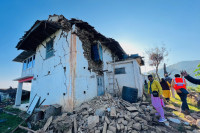
Cite concerns over evictions, transitional justice, and protections for women, Dalits, migrants, and LGBTI people. They raised concerns over early actions by the government, including the forced eviction of landless people from informal settlements. Post photo
International rights organisations have urged the Balendra Shah-led government to introduce lasting reforms to strengthen human rights and the rule of law.
Human Rights Watch, Amnesty International and the International Commission of Jurists said in a joint letter published on Friday that the Rastriya Swatantra Party (RSP)-led government should use its electoral mandate to address long-standing rights concerns.
The groups issued recommendations across 13 areas, including transitional justice, women and girls’ rights, Dalit and minority rights, migrant workers’ protections, LGBTI rights, housing, and freedom of expression and association.
They raised concerns over early actions by the government, including the forced eviction of landless people from informal settlements and a proposed ordinance that could weaken the independence of the constitutional council. These acts, they said, appear to violate housing rights and due process protections, and show an alarming disregard for procedure and the rule of law.
“The protests by young Nepalis were a demand to end entrenched inequities, and that can only be addressed with transparent and accountable governance,” said Elaine Pearson, Asia director at Human Rights Watch.
The organisations stressed that building accountability should begin with a credible and timely transitional justice process in line with international standards, covering violations during the 1996–2006 armed conflict. They said survivors of conflict-related sexual violence were still awaiting relief.
They noted that while amendments in 2024 improved the transitional justice law in some respects, the process has stalled after victims’ groups raised concerns over the appointment of commissioners they considered lacking independence or expertise.
“Victims and survivors of crimes that were committed during the conflict have waited far too long for justice, while the culture of impunity that took root in that period has contributed to ongoing violations, including the killing of Gen-Z protesters,” said Mandira Sharma, director for the Asia and Pacific programme at the International Commission of Jurists. “Completing the transitional justice process in line with international legal standards is crucial to building a rights-respecting system under the rule of law.”
The groups also called for accountability for rights violations during the Gen-Z protests, release of unpublished official reports on past incidents of lethal force against protest movements since 1990, and implementation of recommendations by the National Human Rights Commission where evidence of criminal conduct exists.
On gender and social rights, the organisations said women and girls remain at heightened risk of sexual violence, while child marriage persists despite being illegal. They also highlighted continued discrimination against Dalits and marginalised communities, noting weak enforcement of the 2011 Caste-Based Discrimination and Untouchability (Offence and Punishment) Act and lack of official data on caste-based crimes.
They further criticised the state’s approach to LGBTI rights, including implementation gaps in same-sex marriage rulings and recognition of gender identity in official documents.
The statement also flagged poor protections for migrant workers, who often face unsafe working conditions, exploitation and high recruitment fees. It called for stronger safeguards, particularly amid current labour conditions in the Persian Gulf.
On child welfare, the organisations said about 40 percent of Nepal’s population is under 18, while only around four percent of social security spending is directed towards children. They recommended expanding the Child Grant programme beyond its current coverage in 25 of 77 districts.
“The people of Nepal have demanded change, and that is what Balendra Shah and the RSP promised during the election campaign,” said Smriti Singh, South Asia director at Amnesty International.
“Now the government needs to seize the opportunity and walk the talk to deliver real and lasting change built on respect for Nepal’s international human rights obligations.”




 23.73°C Kathmandu