Nepal’s new government led by Prime Minister Balendra Shah has moved swiftly to enforce long-ignored diplomatic protocol rules and has tightened control over how officials and ministers interact with foreign diplomats.
On April 8, the prime minister met with 17 ambassadors and diplomats jointly, breaking with the tradition of meeting ambassadors individually and received a rousing welcome from different fraternities. Previously, newly appointed prime ministers met ambassadors individually at their office or residence within days of assuming office, a practice that had drawn criticism from public intellectuals and sections of the public.
Surprised by the decision to meet ambassadors jointly, some ambassadors from influential nations initially had expressed serious concerns about meeting the prime minister in a group. After the government insisted that the prime minister would not hold separate meetings any time soon, they eventually agreed to attend, according to officials involved in arranging the meeting.
Since April 8, despite several requests and attempts, the prime minister has not met any foreign ambassador or diplomat, and even told his aides, advisors and officials assisting him that they should not meet foreigners.
If found meeting with foreigners, they will face action, said an aide to the prime minister, on condition of anonymity because he is not authorised to speak to the media.
After the prime minister started following strict diplomatic protocol, the diplomatic code of conduct has gone into “ autopilot” mode, said the official. This incident helped implement the code of conduct in an uniform way, he told the Post.
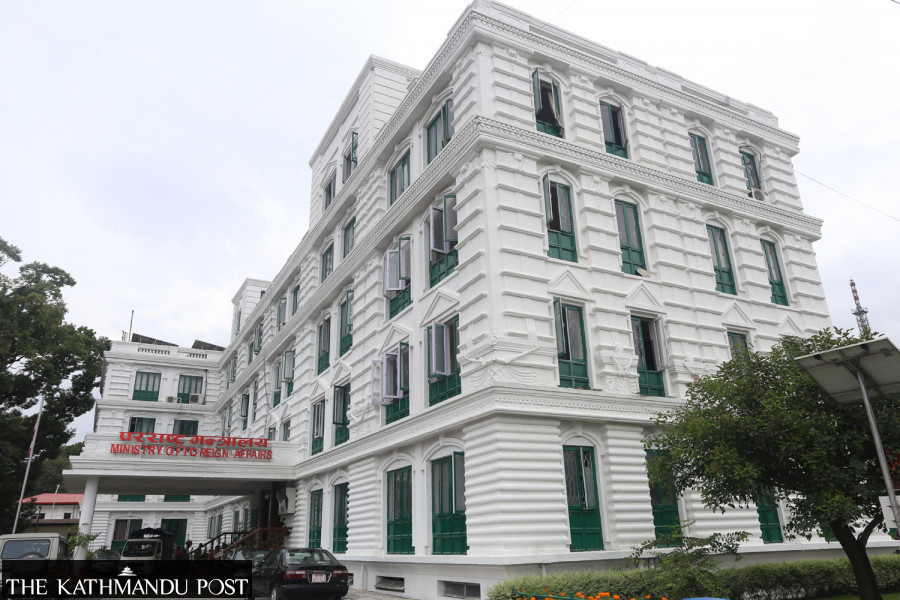
On the same day (April 8 ), the Ministry of Foreign Affairs also trained and educated the ministers about diplomatic conduct and what they should and should not do while dealing with foreign countries, foreign diplomats, making correspondence, and undertaking foreign trips, among others. Such orientation has also been extended to lower levels, said officials.
Since then, according to the foreign ministry officials, the execution process of the diplomatic code of conduct has moved swiftly like never before.
Prime Minister Shah has indicated that he will not meet foreign diplomats for some months and has since avoided meetings after taking office on March 27, including with US Assistant Secretary of State, Samir Paul Kapur, who visited in the third week of April.
An official at the foreign ministry said that after educating ministers, the Department of Protocol briefed and educated private and personal secretaries of all ministers. To deal with foreign nations and relations, every ministry has entrusted one joint secretary.
The foreign ministry has repeatedly urged ministries to adhere to the diplomatic code of conduct for systematic and dignified meetings with foreign leaders, officials as well as diplomatic contacts and communications. But the code has rarely been enforced and this has drawn criticism from political leaders, civil society members, media, experts and others.
“We keep circulating that any meetings or correspondence should come under the purview of the foreign ministry. And if meetings and correspondence are not made through the ministry, the foreign ministry will not own up and take responsibility for any decision or correspondence,” said a foreign ministry official. This is also an international practice too, he added.
In Western countries too, despite freedom of travelling for diplomats under the Vienna Convention, there must be official representation by the foreign ministry during visits of foreign leaders, officials, diplomats, and ambassadors.
Soon, the protocol division of the foreign ministry is going to hold an orientation on the diplomatic code and conduct and protocol for secretaries and joint secretaries of various ministries entrusted with external relations.
Time and again, the foreign ministry has also written to Kathmandu-based foreign embassies that they should follow the practice of informing the foreign ministry before meetings with leaders, officials and bureaucrats. To implement the diplomatic code of conduct, the ministry has deputed one official at each of the offices of the seven governors (province heads) to monitor and report activities, meetings, and correspondence involving foreign diplomats. Separately, the ministry has also conducted orientation training on the diplomatic code of conduct at provincial level. Ministers, officials and others are invited to attend such orientation.
“We have already conducted such orientation in Lumbini and Bagmati provinces and found that people are interested,” the official added.
One foreign ministry official admitted that they failed to implement the code of conduct in the past due to several reasons, but with a new government with a strong mandate in place, the ministry now feels better positioned to implement the code.
“There is a conducive environment for implementing the code of conduct and the foreign ministry is also proactively pushing it,” said Lok Bahadur Poudel Chettri, spokesperson of the foreign ministry.
The code, first introduced in 2011, was widely praised by political, bureaucratic and the security apparatuses and even by some sections of Kathmandu’s diplomatic circle. It aims to regulate meetings between foreign leaders, officials and diplomats with government officials. It also seeks to prevent government communications and correspondence from being sent abroad bypassing the foreign ministry.
The code applies to all those holding public office, those exercising public authority or responsibility, Nepali diplomatic missions abroad, foreign missions in Nepal, international organisations, foreign diplomats and leaders, administrative, technical and supporting staff of diplomatic missions, local staff working at Nepali embassies, and foreign missions in Kathmandu. Article 3 of the code states that it applies to persons holding public office and officials drawing remuneration and perks from the state treasury.
Initially, only serving politicians and bureaucrats were within the code’s ambit.
It was revised in 2012 and a fresh draft was tabled in the Cabinet, but it did not go into the implementation. The original draft of the code was amended several times and broadened in 2013 and 2014, according to officials.
The code has been revised to bring the prime minister, ministers, top leaders of political parties, office bearers and incumbent and former government officials under its ambit.
As per the code, the aforementioned officials and leaders must obtain prior approval from the foreign ministry before meeting with foreign diplomats and officials. They are also required to brief the ministry on the meeting. The code also attempts to regulate political parties and asks them to set up a separate protocol section to record meeting details for institutional memory.
Parties are also required to share details of their agenda with government ministries concerned when meeting foreign dignitaries, if sought.
The code has proposed designated venues for meetings between party leaders and foreign diplomats, though this does not apply to courtesy and farewell calls. It also has provisions to curtail the frequent movements of diplomats. Besides setting guidelines for diplomatic meetings, the code states how office bearers should present themselves at diplomatic meetings and functions. The code makes it mandatory for even former prime ministers to inform the Ministry of Foreign Affairs before meeting ambassadors, diplomats and foreign leaders.
Anil Giri is a Chief Sub Editor covering diplomacy, international relations and national politics for The Kathmandu Post. Giri has been working as a journalist for more than two decades, contributing to numerous national and international media outlets.




 22.06°C Kathmandu