School closures push families to leave villages for children’s education
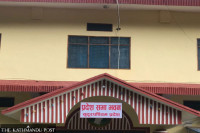
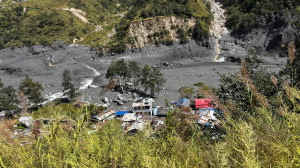
School mergers, shutdowns, relocation in remote areas due to dwindling student numbers are making access to education difficult. Thongthong Basic School, which once provided education up to grade 3, was merged with another public school in Gogar due to dwindling student numbers. Kedar Shiwakoti/TKP
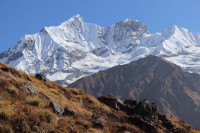
In the remote settlement of Thongthong, located within ward 1 of Bigu Rural Municipality, most of the houses are padlocked. This high-altitude village of 43 households has been transformed into a ghost town, with only nine families remaining. The reason is not a lack of resources or a desire for urban luxury, but a desperate quest for basic education.
In this northern corner of Dolakha, a hill district of Bagmati province, parents are forced to abandon their ancestral lands simply to ensure their children can attend basic school.
The crisis intensified four years ago when the Thongthong Basic School, which once provided education up to grade 3, was merged with another public school in Gogar due to dwindling student numbers. This was part of a wider trend across the country of merging or scrapping small schools due to poor enrollment and shortage of resources.
The structures built with international aid following the 2015 earthquake stand as decaying ruins, reclaimed by weeds. With the local school closed, families have been faced with an impossible choice—keep their children at home or lock their doors and migrate elsewhere.
Lal Bahadur Tamang, a local of Thongthong who chose to migrate for children’s education, explained the physical toll of the journey. "To reach the nearest school in Gogar, our children must navigate treacherous cliffside trails for at least four hours every day. It is an impossible commute for a six-year-old,” said Lal Bahadur. “I had to lock my house and move to Lamabagar, where I now live in a rented room and work as a labourer at the local hydroelectric project just to keep my children in the classroom."
The exodus from Thongthong is not merely an educational issue but a symptom of total systemic neglect. The village, primarily inhabited by the Tamang community, remains isolated from health services and transport. Swasti Tamang, another resident, highlighted the dangers of this isolation. "Two years ago, I was forced to give birth at home because labour started and it was impossible to make the three-hour walk to the nearest health post. We suffered through these hardships, but when the school closed, that was the final blow,” she said. “If you have no school, you have no future in the village. Those who cannot afford to move simply stop educating their children."
According to Lal Bahadur, more than 20 children from Thongthong village, studying in various grades up to grade 10, have been forced to leave their homes to pursue their education.
The situation in Lapchi, which also lies in ward 1 of Bigu Rural Municipality and borders China, is equally dire. The nomadic residents move between Lapchi and Lumnang depending on the season, yet the mobile school intended for their children exists only on paper. Karma Waisar Sherpa, a local of Lapchi, said that 18 children from Lapchi are currently studying in Kathmandu, supported by an organisation. "We refuse to let the government officially scrap our local school, even though the building is a ruin. We hold onto the hope that once the road reaches us, the school will breathe again,” said Sherpa.
This pattern of displacement is echoed in Riku, a village in ward 9 of neighbouring Gaurishankar Rural Municipality where the local school also shuttered due to a lack of pupils. Riksang Tamang, the former chairperson of the school management committee in Thongthong, argued that geography is the primary enemy. "Small children cannot walk for hours through landslide-prone zones. When the state merges schools based on numbers alone, they ignore the physical reality of the mountains. They are effectively telling us to leave our homes,” he said.
In an attempt to mitigate the crisis, Bigu Rural Municipality has established a hostel at Jagat-based Gaurishankar Secondary School in ward 1. Currently, as many as 83 students from remote villages like Thongthong, Tasinam, and Simigaun reside there.
Hiramani Gautam, headmaster of Gaurishankar Secondary School, acknowledged the limitations of this solution. "The hostel provides food and lodging free of cost, which is a relief for many. However, it is emotionally difficult to keep very young children in a hostel away from their parents,” said Gautam. “If we had school buses, we could bring them from the heights in the morning and return them by evening, but the terrain makes that a distant dream."
School mergers in sparsely populated mountain regions have often left children without practical access to education. While such consolidation is intended to improve efficiency, it has had the unintended effect of pushing families out of remote settlements.
As the school enrollment campaign of the current academic year is about to begin, the houses in Thongthong and beyond remain closed. The cost of education is no longer just financial. For many families, it now means abandoning their homes altogether—trading ancestral land and community ties for the hope of a better future for their children.




 17.84°C Kathmandu