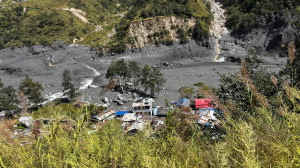
Residents of Lapchi, a remote settlement in Dolakha district bordering China, have been left in despair as Himalayan bears break into homes and consume stored food.
During winter, all houses in Lapchi are locked as residents drive their yaks and chauris down to Lumnang in Bigu Rural Municipality-1 to escape the biting cold.
Kunju Norbu Sherpa, a local, said Himalayan bears frequently break into these vacant houses to eat grain and other essentials that villagers procure from the Tibetan market in Tashigang. To protect their supplies, locals have started placing planks studded with iron nails at the main entrances of their homes.
“We descend to Lumnang around mid-November to escape the cold, and that is when the bears break through the front doors and cause destruction,” Sherpa said. “To save our food from the bears, we have placed planks with iron nails at the entry points of our houses.”
Sherpa added that continuous snowfall has prevented residents from returning to Lapchi this year. Usually, villagers drive their yaks and chauris back from Lumnang starting in the third week of March. However, heavy snowfall has delayed their return, and they plan to head back once the snow melts and the weather improves. He said the use of nail-studded planks has reduced bear break-ins in previous years.
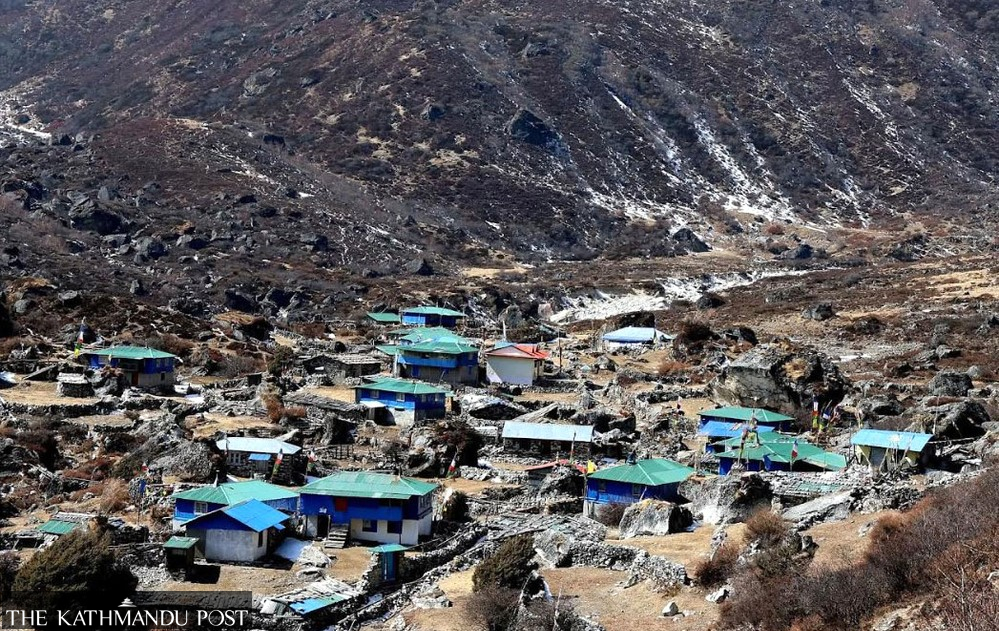
Lapchi is a Himalayan village bordering Tibet, China. Due to freezing temperatures in winter, locals maintain second homes farther down in Lumnang, within the same ward.
Lapchi village Post Photo
Every year from November to March, they move downhill to avoid the cold. “As Lapchi is covered in snow, we secure the windows firmly before moving to our second homes in Lumnang,” Sherpa explained.
There are 26 houses in Lapchi. Karma Waisar Sherpa, another resident, said most houses rebuilt after the 2015 earthquake have low roofs, making it easier for bears to enter. “It is not possible to carry all our food supplies when we move to Lumnang for the winter,” he said. “The entire village remains empty from November to March, and we only trek up during this period if we urgently need food.”
The primary occupation of Lapchi residents is rearing yaks, chauris and horses. They sell yak calves, horses and yak ghee in the Tibetan market of Tashigang, from where they also purchase food and other essential commodities.
In recent years, however, an increasing number of residents have abandoned yak farming due to frequent attacks by wild animals and occasional difficulties at the border. While there were once nearly 1,500 yaks and chauris across 20 to 30 sheds, the numbers have declined significantly.
Locals say only around 400 yaks and chauris now remain in seven to 10 sheds in Lapchi. Sherpa said bears and leopards often attack and kill livestock during seasonal migration. In search of grazing land, residents sometimes take their animals into Tibetan territory, for which they pay taxes to the Chinese authorities. Currently, only a few sheds continue this practice.




 17.84°C Kathmandu